Over 130,000 Vacant Houses Nationwide
Government Launches Vacant House Improvement Project
Number of Vacant Houses Projected to Reach 2.39 Million by 2040
and 3.24 Million by 2050
As the number of vacant homes continues to rise nationwide, transactions of these properties are increasingly taking place through the government's vacant home trading platform.
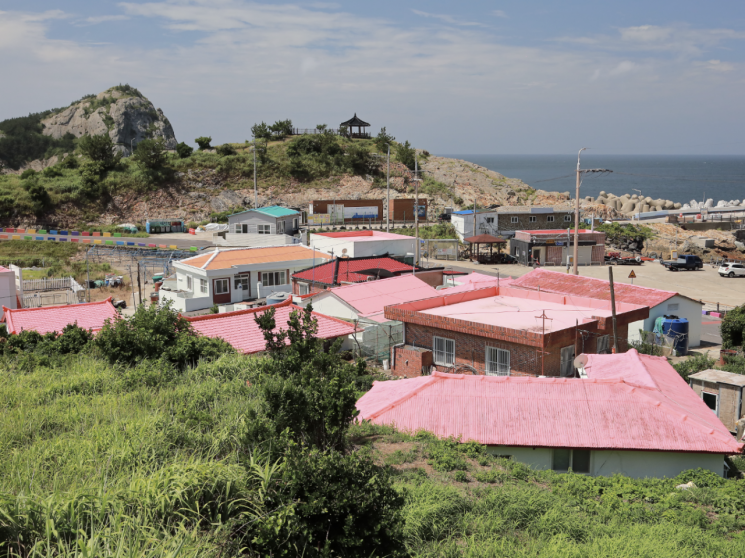 A property listing on Chuja Island, Jeju, posted on the Ministry of Agriculture, Food and Rural Affairs' integrated platform for returning to farming and rural living, "Greendaero." Greendaero
As of September 3, a total of 85 listings have been registered on "Greendaero," the Ministry of Agriculture, Food and Rural Affairs' integrated platform for returning to farming and rural living, which also operates a vacant home bank. Out of the registered properties, 80 have been listed for sale, 1 for monthly rent, and 4 for annual rent. A total of 19 cities and counties are participating in the platform.
More than 130,000 Vacant Homes Nationwide... Government Launches Vacant Home Improvement Project
Since last month, Greendaero has been facilitating the sale of vacant homes, and some properties have already been successfully transacted. For example, a 179-square-meter single-family house on Riverside Road in Sangdong, Geochang-eup, Geochang County, South Gyeongsang Province, and a 615-square-meter rural tile-roofed house (176 square meters building) in Wolsan-myeon, Damyang County, South Jeolla Province, have both been sold.
The prices of vacant homes currently on the market range from 10 million won to over 300 million won. Notably, an 84-square-meter land lease near Tangeum Lake tourist site in Chungju, North Chungcheong Province, is listed for 10 million won. On Chuja Island, Jeju, a 39.67-square-meter detached pension is available for an annual rent of just 1 million won, which amounts to only 83,000 won per month.
According to the Ministry of the Interior and Safety, as of the end of last year, an administrative survey of 243 local governments nationwide found a total of 134,009 vacant homes. Of these, 87,689 were deemed usable, while 46,320 were identified as needing demolition. By region, South Jeolla Province had the most with 20,006, followed by North Jeolla Province with 18,300, South Gyeongsang Province with 15,796, North Gyeongsang Province with 15,502, and Busan with 11,471.
Although vacant homes are concentrated in rural and fishing villages, a significant number have also been identified in the Seoul metropolitan area. There were 6,711 vacant homes in Seoul, 4,178 in Incheon, and 6,714 in Gyeonggi Province.
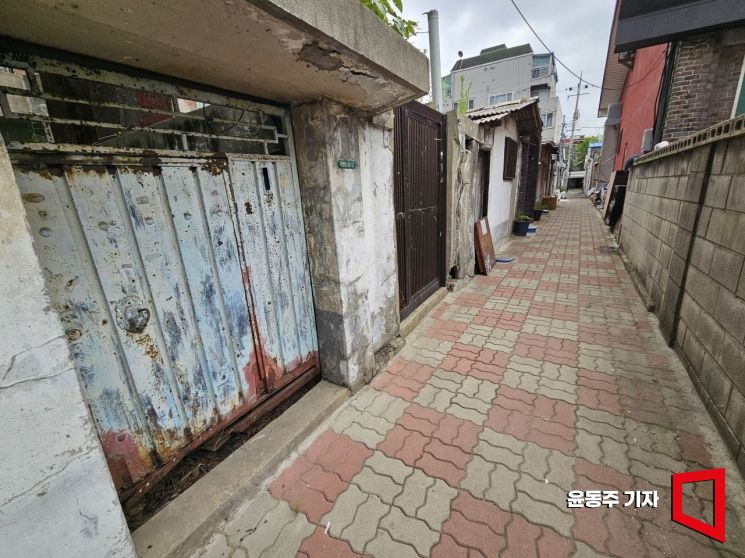 An alley lined with vacant houses in the Michuhol District of Incheon. It exudes a gloomy atmosphere even in the middle of the day. 2025.05.22 Photo by Dongjoo Yoon
Vacant Homes Expected to Reach 2.39 Million by 2040, 3.24 Million by 2050
The increase in vacant homes is primarily due to the lack of proper management by owners, even though these are privately owned properties. The absence of sufficient legal grounds to enforce management responsibilities has also played a role. The Korea Future Research Institute predicts that, as the total number of households in the country begins to decline around 2040, the number of vacant homes will reach 2.39 million in 2040 and 3.24 million by 2050.
Abandoned vacant homes cause various social and economic problems, including deteriorating local hygiene and safety, worsening residential environments, and lowering the value of surrounding areas. In particular, a single vacant home can trigger the "broken windows effect," accelerating the occurrence of additional vacant homes and prompting residents to leave the area, thereby contributing to the decline of local communities.
In response, the government announced a "Comprehensive Government Plan for Vacant Home Management" in May, expanding the responsibility for managing vacant homes from local governments to the national and provincial levels. To encourage the improvement of vacant homes, a new property tax reduction (50% for five years) for land after demolition has been introduced. In addition, if a new building is constructed within three years after demolition, the acquisition tax will be reduced by 50%. The Ministry of Land, Infrastructure and Transport also plans to launch "Binjibae," a vacant home management platform operated by the Korea Real Estate Board, by the end of this year.
© The Asia Business Daily(www.asiae.co.kr). All rights reserved.
![Clutching a Stolen Dior Bag, Saying "I Hate Being Poor but Real"... The Grotesque Con of a "Human Knockoff" [Slate]](https://cwcontent.asiae.co.kr/asiaresize/183/2026021902243444107_1771435474.jpg)

















