Request to Reconsider Cost Recovery Rate and Temporarily Freeze Fees
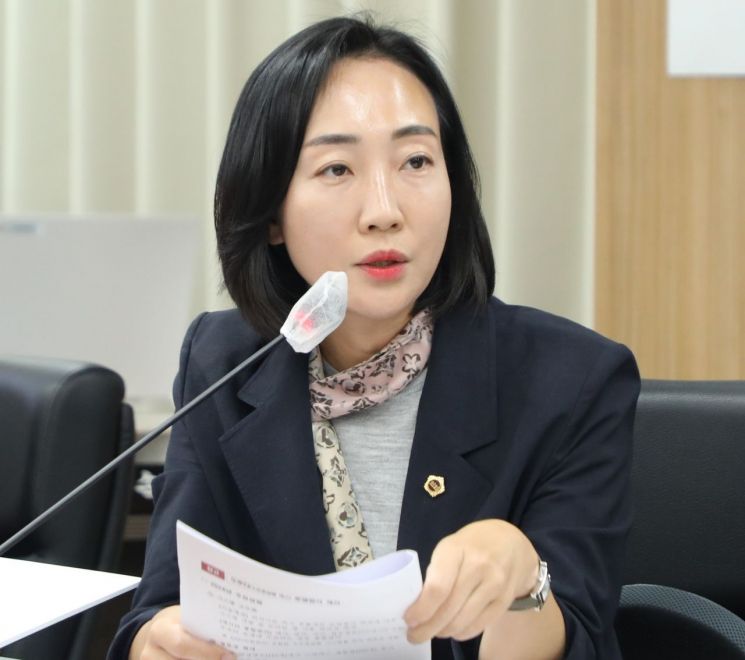
HyoSook Kim, a member of the Sejong City Council, urged the city’s administrative authorities to make multifaceted efforts to reduce the burden on citizens caused by the nation’s highest sewage fees. She made this call during a report on the actions taken in response to issues identified in the administrative audit of the Water and Sewage Management Office.
It was found that Sejong City’s sewage fee in 2024 stands at 1,106.7 KRW, the highest in the country. Compared to neighboring Chungcheong regions-Chungnam (696.3 KRW), Daejeon (706.9 KRW), and Chungbuk (875.1 KRW)-the difference is significant, and the city’s fee is nearly double the national average.
In particular, Sejong City has set a five-year goal of achieving a sewage fee cost recovery rate in the 50% range. The rate has increased sharply from 22.2% in 2022, to 29.3% in 2023, remained at 29.3% in 2024, and is set to rise to 38.7% in 2025.
According to materials submitted to the council by the Water and Sewage Management Office on September 3, the city aims for a cost recovery rate of 51.1% in 2026. If implemented as planned, the household flat rate will rise by 320 KRW, from the current 1,180 KRW to 1,500 KRW.
Moreover, for general use related to small business sectors, the monthly rate for usage up to 50 cubic meters will increase by 855 KRW, from 2,135 KRW to 2,990 KRW. For usage between 50 and 100 cubic meters, the rate will rise by 1,070 KRW, from 2,680 KRW to 3,750 KRW. For usage over 100 cubic meters, the rate will increase by 1,160 KRW, from 2,920 KRW to 4,080 KRW. For industrial use, the flat rate is expected to go up by 365 KRW, from 1,135 KRW to 1,500 KRW.
Assemblywoman Kim explained, "Because sewage facility construction was recently carried out, depreciation costs account for a higher proportion of expenses compared to other local governments. Additionally, due to the slowdown in population growth, the utilization rate of sewage treatment facilities is only 62.6% relative to capacity, resulting in higher costs. As a result, fees are relatively high compared to other regions, imposing a significant burden on citizens." She added, "Among self-employed individuals such as restaurant owners, there is even talk of relocating to other regions due to the burden of public utility fees."
She continued, "Relevant departments are considering various measures, such as reducing costs through asset revaluation, installing solar panels on unused land at sewage treatment plants to cut energy expenses, and replacing high-consumption lighting equipment with high-efficiency LED lights to save on power costs. However, these measures are difficult to implement immediately next year." She emphasized, "It is necessary to seek multifaceted approaches, such as gradually increasing the cost recovery rate over a long period to minimize the impact on citizens, or temporarily freezing the rates next year and adjusting the amounts after asset revaluation, rather than sharply increasing the rates."
© The Asia Business Daily(www.asiae.co.kr). All rights reserved.

















