Analysis by Assemblyman Choo's Office
It has been confirmed that some public institutions have been operating excessive in-house loans in disregard of government guidelines. The scale of in-house loans in violation of these guidelines reached 3,624 cases, amounting to 319 billion won, from 2022 to July of this year.
On September 3, the office of Assemblyman Choo Kyungho of the People Power Party conducted a comprehensive survey on the status of in-house loans at public institutions and found that 10 public institutions were providing in-house loans in violation of guidelines set by the Ministry of Economy and Finance.
Some institutions were found to have breached the revised guidelines for several years since their amendment in 2021, only recently updating their regulations belatedly. According to the revised "Guidelines on Innovation of Public Institutions," housing loans are limited to a maximum of 70 million won per person, with the interest rate set at no lower than the Bank of Korea's rate, and are only available to non-homeowners purchasing a residence of 85 square meters or less.
Public institutions have been operating in-house loans for the purchase or lease of housing as part of employee welfare, using their own funds. Since these loans are not subject to government lending regulations such as the Debt Service Ratio (DSR), there have been concerns that they are being used as a regulatory loophole. In response, the Ministry of Economy and Finance revised the relevant guidelines in July 2021.
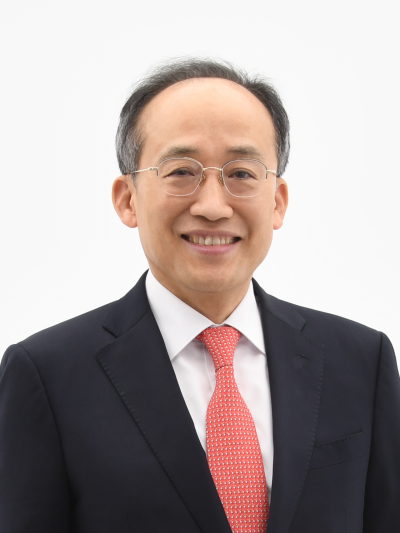
After the guideline revision, a comprehensive survey of in-house loans at public institutions from 2022 to July of this year revealed that 10 institutions, including Korea Credit Guarantee Fund, Korea Asset Management Corporation, Housing and Urban Guarantee Corporation, and Korea Real Estate Board, were operating in-house loans by circumventing government guidelines through their internal regulations, according to Assemblyman Choo's office.
Among these, seven institutions, including Housing and Urban Guarantee Corporation, Korea Asset Management Corporation, Korea National Oil Corporation, and Korea Real Estate Board, exceeded the loan limit of 70 million won for in-house loans. Housing and Urban Guarantee Corporation provided up to 200 million won for housing purchase loans, Korea Asset Management Corporation up to 160 million won, Korea National Oil Corporation up to 150 million won, and Korea Real Estate Board up to 140 million won in in-house loans.
The restriction on loan interest rates (no lower than the Bank of Korea's household loan rate) was also not properly observed. In July, Housing and Urban Guarantee Corporation issued a loan of 150 million won, exceeding the limit, at an interest rate of 2.5%, while the Bank of Korea's household loan rate at that time was 4.36%. Korea Development Bank also provided loans of 95 million won and 100 million won at an interest rate of 3.23% in July, citing approvals made before the system revision.
In addition, Korea Agro-Fisheries & Food Trade Corporation issued in-house loans to homeowners, and Korea Mine Rehabilitation and Mineral Resources Corporation provided loans for the purchase of homes exceeding 85 square meters, both in violation of the guidelines.
Assemblyman Choo emphasized, "It is a dereliction of duty by the government to allow public institutions to neutralize government guidelines through their own internal rules while imposing harsh lending regulations on actual demanders," adding, "Strict management and supervision are necessary to ensure that in-house loans at public institutions are operated in accordance with government guidelines."
© The Asia Business Daily(www.asiae.co.kr). All rights reserved.

















