The concentration of fine particulate matter (PM-2.5) in Gyeonggi Province has reached an all-time low.
On September 3, Gyeonggi Province announced that the annual average concentration of fine particulate matter (PM-2.5) measured last year at four Atmospheric Component Monitoring Stations in Pyeongtaek, Gimpo, Pocheon, and Icheon was observed at 18 micrograms per cubic meter, marking the lowest level since measurements began in 2015. This figure represents a 14% decrease compared to 2023, when the concentration was 21 micrograms per cubic meter.
The concentrations of fine particulate matter by monitoring station were as follows: Pyeongtaek, 20 micrograms per cubic meter; Gimpo, 20 micrograms per cubic meter; Pocheon, 16 micrograms per cubic meter; and Icheon, 19 micrograms per cubic meter.
By component, ions accounted for the largest proportion at 44% to 50%, followed by carbon at 23% to 30%, and heavy metals at 2% to 3%.
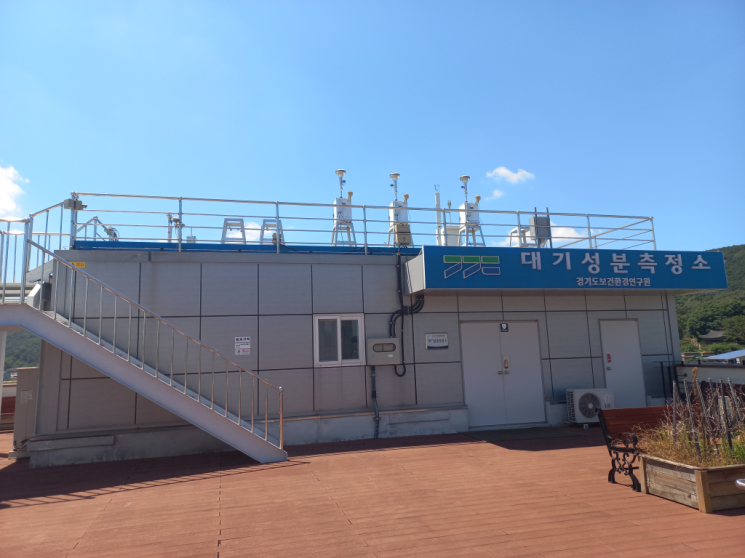
The high proportion of ion components indicates that a significant share of the fine particulate matter consists of "secondary generated fine dust," which forms through chemical reactions in the atmosphere from emissions produced by factories or vehicles.
The concentrations of lead and benzene, both hazardous substances mainly generated by transportation and industrial processes, were all below legal standards.
The Gyeonggi Institute of Health and Environment cited several factors for the reduction in fine particulate matter concentrations: strengthened management of emission sources in the industrial, transportation, and residential sectors; continued implementation of policies to reduce air pollutants; increased precipitation; and improved atmospheric diffusion conditions.
© The Asia Business Daily(www.asiae.co.kr). All rights reserved.
![Clutching a Stolen Dior Bag, Saying "I Hate Being Poor but Real"... The Grotesque Con of a "Human Knockoff" [Slate]](https://cwcontent.asiae.co.kr/asiaresize/183/2026021902243444107_1771435474.jpg)











