Bloomberg Reports on U.S. Revocation of VEU Status
TSMC Joins Samsung and SK Hynix in Facing Stricter Export Controls
Impact Expected to Be Greater for Korean Companies
The U.S. government has denied permission for Taiwan Semiconductor Manufacturing Company (TSMC) to bring equipment into its factory in China.
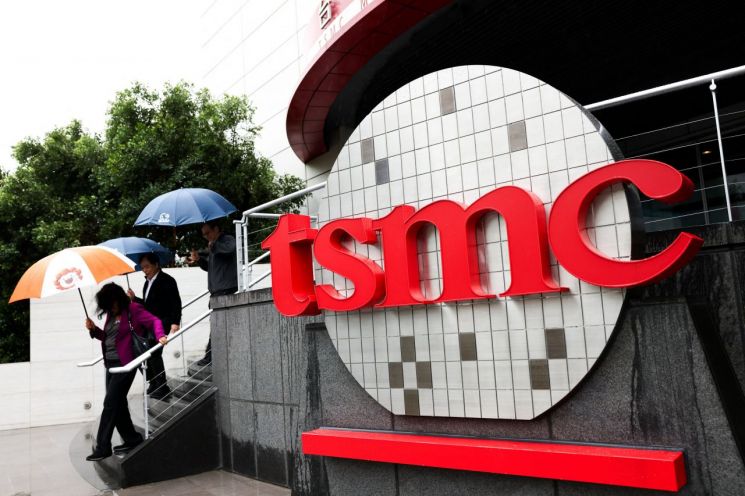
According to Bloomberg News on September 2 (local time), U.S. government officials recently notified TSMC that the company's Nanjing plant will lose its "Validated End-User (VEU)" status as of December 31.
The VEU system allows U.S. government pre-approved companies to import designated items under a comprehensive export license. Until now, TSMC's Nanjing plant had been designated as a VEU, which meant it could import semiconductor equipment relatively freely, even after the U.S. imposed export controls on China in October 2022.
In a statement, TSMC said, "We have received notification from the U.S. government regarding the withdrawal of VEU status," adding, "We will assess the situation and take appropriate actions, including consulting with the U.S. government, to ensure the stable operation of the Nanjing plant."
On July 29, the U.S. Department of Commerce announced that it would also remove Samsung Electronics and SK Hynix's Chinese factories from the VEU list. As a result, starting next year, both companies will have to apply for individual licenses from the U.S. government every time they wish to bring semiconductor equipment subject to export controls into China. The Department of Commerce officially published the removal of Samsung Electronics and SK Hynix from the VEU designation in the Federal Register on that day. While TSMC was not included in the Department's initial announcement, it has now been added to the list of companies losing VEU status.
Bloomberg News noted that, compared to Samsung Electronics and SK Hynix, which have a significant portion of their production in China, TSMC's production scale there is relatively small. Therefore, the impact on the Korean companies may be greater.
The Nanjing plant, which began production in 2018, accounted for only a small portion of TSMC's total revenue last year. This plant produces 16-nanometer semiconductors, a technology that has been commercially available for more than a decade.
© The Asia Business Daily(www.asiae.co.kr). All rights reserved.

















