EEG Test "Fastball" Detects Early Alzheimer’s Risk in Just Three Minutes
Passive Memory Measurement Method Shows High Sensitivity for Undiagnosed High-Risk Patients
Experts: "An Early Step Toward a Clinically Usable Test"
Early Diagnosis Em
A brainwave test that can detect the risk of Alzheimer's disease early in just 3 minutes has been introduced.
 A brainwave test that can detect the risk of Alzheimer's disease early in just 3 minutes has been introduced. Photo by Getty Images
On September 2, Yonhap News reported on the "Fastball" brainwave test, which was jointly clinically tested by the University of Bath and the University of Bristol, citing the British daily The Guardian. Fastball is said to have identified patients with mild cognitive impairment (MCI) who are at high risk of progressing to Alzheimer's disease.
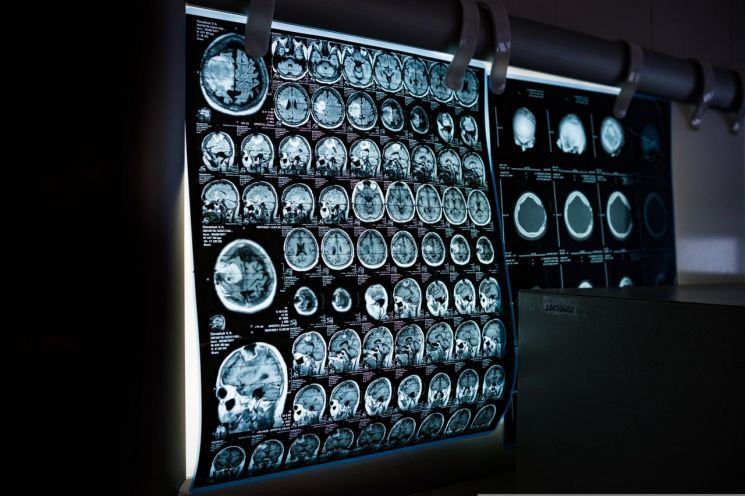
This test uses an electroencephalogram (EEG) method, which records the brain's electrical activity by attaching small sensors to the scalp. While the subject views hundreds of rapidly appearing images on a screen, the test measures the brain's automatic responses.
Before the test, eight images are shown in advance and the subject is asked to name them. The test then analyzes how well the brain recognizes these images when they reappear randomly, in order to determine memory impairment.
The study involved 54 healthy adults and 52 patients with MCI. Patients with MCI had problems with memory, thinking, and language abilities, but did not experience significant difficulties in daily life.
The analysis found that patients with "amnestic MCI," whose memory-related functions are particularly impaired, showed a significantly reduced brainwave response compared to healthy individuals or those with non-amnestic MCI. It is known that patients with amnestic MCI are more likely to progress to Alzheimer's disease.
This test could not confirm the progression of Alzheimer's disease. However, experts described this research as "an early step toward developing a clinically usable test." Future tasks include determining whether this test can predict changes in a patient's condition and whether it can actually assist in treatment planning.
Dr. George Stothart of the University of Bath, who developed the test, explained, "Our new passive memory measurement method, designed for Alzheimer's diagnosis, has shown that it can sensitively respond even to high-risk patients who have not yet been diagnosed."
A representative from the Alzheimer's Research Association told The Guardian, "Early diagnosis is crucial because treatments for Alzheimer's dementia are more effective in the early stages," emphasizing the need for long-term research involving more diverse populations.
© The Asia Business Daily(www.asiae.co.kr). All rights reserved.



















