On August 29 at Lotte Concert Hall, the rarely seen early music instrument, the viola da gamba, appeared on stage. The viola da gamba is similar in size and shape to the cello, but it has six or seven strings, more than the cello's four. Its sound is quieter than other string instruments, so it gradually disappeared from concert stages, but it still possesses a unique, meditative, and gentle tone that is highly attractive.
The piece performed on the viola da gamba that day was Bach's Brandenburg Concerto No. 6. As part of the second day of the "Classic Revolution," a classical music festival presented every summer by the Lotte Foundation for Arts, a rare full performance of all six Brandenburg Concertos was held.
This year marks the first time that early music has been performed at the Classic Revolution, which began in 2020. Early music generally refers to music from the Medieval and Renaissance periods, and in a broader sense, also includes Baroque music from the era of Bach and Handel. It refers to music composed before the advent of modern instruments and performance techniques. This year, Classic Revolution focuses on the music of Dmitri Shostakovich (1906-1975) and Johann Sebastian Bach (1685-1750), who lived more than 300 years before Shostakovich. By highlighting Bach's music, the festival also offers an opportunity to appreciate the unique sound of the viola da gamba.
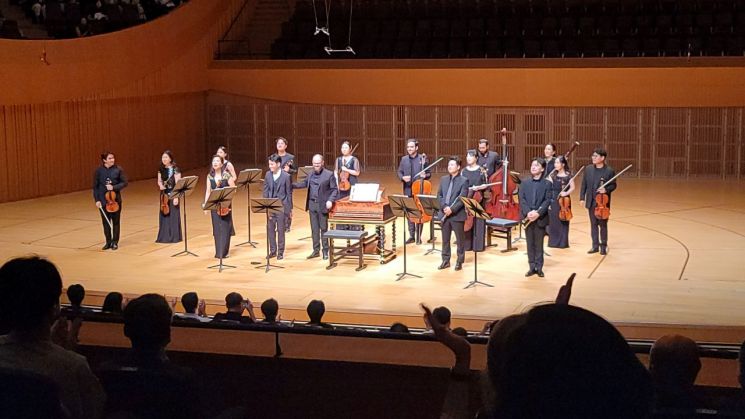 Members of the early music ensemble Camerata Antiqua Seoul and the Apollon Ensemble are greeting the audience after performing Bach's Brandenburg Concertos at Lotte Concert Hall on the 29th of last month.
The six Brandenburg Concertos feature several early music instruments that are now rarely used and difficult to obtain, including the viola da gamba, making a full performance of all six concertos a rare event.
According to a representative from Camerata Antiqua Seoul, which performed that day, the clarino trumpet and violino piccolo used by Bach in the Brandenburg Concertos are so rare that no one in Korea owns them. Therefore, in this performance, the clarino trumpet was replaced with a piccolo trumpet, the violino piccolo was substituted with a regular violin, and the hunting horn used by Bach was performed on a standard horn. Instead, other early music instruments such as the harpsichord, viola da gamba, and recorder showcased their charm on stage.
This fall, an unusually large number of early music performances are scheduled, drawing attention.
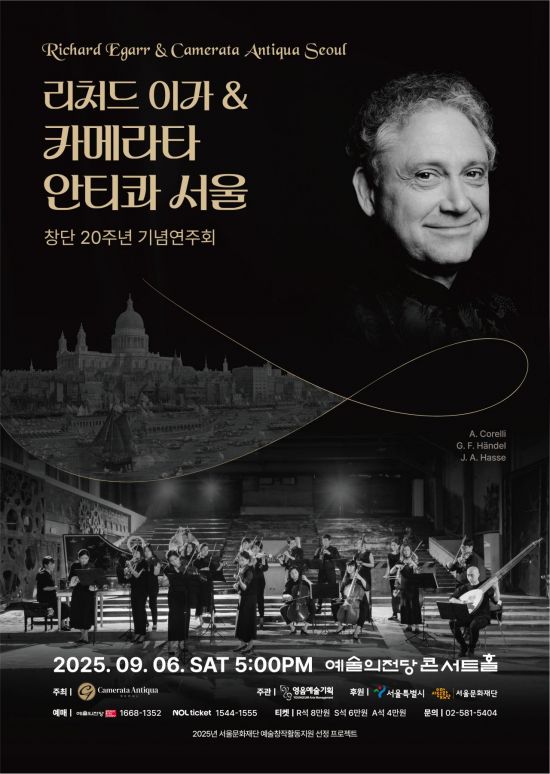
Camerata Antiqua Seoul, the early music ensemble that participated in Classic Revolution, will perform with world-renowned conductor and harpsichordist Richard Egarr at the Seoul Arts Center Concert Hall on September 6. They will perform three works by Handel, including the Water Music Suite No. 2, as well as pieces by Baroque composers Arcangelo Corelli (1653-1713) and Johann Adolf Hasse (1699-1783).
Another domestic early music ensemble, Collegium Musicum Seoul, will perform works by Italian composer Antonio Vivaldi (1678-1741), known for the violin concerto "The Four Seasons" and who lived before Bach and Handel, at Banpo Sinsan Art Hall on September 3.
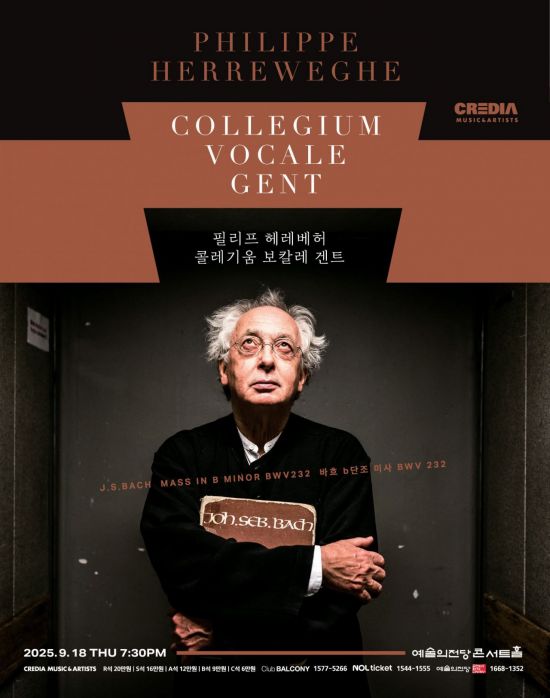
World-renowned Belgian conductor Philippe Herreweghe will visit Korea with Collegium Vocale Gent, the globally acclaimed Baroque music ensemble he founded. On September 18, at the Seoul Arts Center Concert Hall, they will perform the Mass in B minor, considered one of Bach's two great religious masterpieces alongside the St. Matthew Passion. Herreweghe will also perform in Daejeon at the Daejeon Arts Center on September 19 and in Incheon at the Art Center Incheon on September 20.
The Mapo Foundation for Arts and Culture is also presenting two Baroque music performances as part of the "M Classic Festival," which began on August 22 and continues until December 6. On September 26, cellist and Yonsei University professor Yang Sungwon will showcase the essence of Bach's music on the viola da gamba. Professor Yang will perform Bach's "Cello Suite No. 2" and other pieces with pianist Enrico Pace. The second concert, on October 2, will feature the Belgian Baroque ensemble Il Gardellino, who will perform rarely heard works by Bach, including "The Musical Offering."
Classical music critic Ryu Taehyung explained the background behind the increase in early music performances, saying, "The base of historically informed performance, which used to be very small, has expanded, and the number of people studying and performing early music, as well as the number of ensembles, has increased significantly." He added, "The changing awareness among fans who have been exposed to many early music recordings has also been important, and the belief that early music is closer to how the composers originally intended is having an impact."
© The Asia Business Daily(www.asiae.co.kr). All rights reserved.
![Clutching a Stolen Dior Bag, Saying "I Hate Being Poor but Real"... The Grotesque Con of a "Human Knockoff" [Slate]](https://cwcontent.asiae.co.kr/asiaresize/183/2026021902243444107_1771435474.jpg)


















