Narcotic Ingredients Detected in Imported Foods from Legalized Countries
42 Out of 50 Products Blocked from Entry by the Ministry of Food and Drug Safety
Consumption May Result in Penalties Under the Narcotics Control Act
Ingredients suspected to be narcotics, including cannabis, have been detected in imported foods directly purchased from online shopping malls in countries where cannabis use is legalized, such as the Netherlands, Canada, and certain states in the United States.
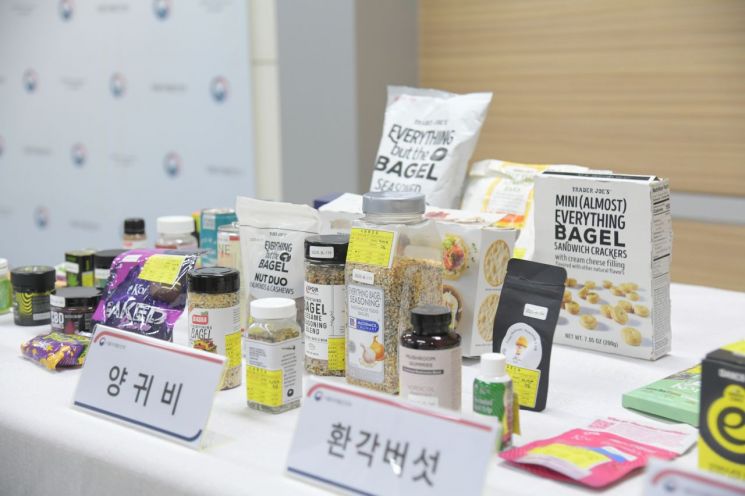 The Ministry of Food and Drug Safety is disclosing imported overseas foods purchased directly that contain narcotics or raw materials and ingredients subject to import restrictions, identified through a planned inspection on the 2nd. Ministry of Food and Drug Safety
The Ministry of Food and Drug Safety announced on the 2nd that it conducted a planned inspection of 50 imported foods directly purchased from these countries. As a result, narcotics or raw materials and ingredients subject to import restrictions in South Korea were identified in 42 products, which were subsequently blocked from entry.
The Ministry initiated this inspection in response to growing concerns that preference foods such as jellies and snacks containing narcotic ingredients found in cannabis, poppies, and hallucinogenic mushrooms were being brought into the country through direct overseas purchases. The inspection targeted products suspected of containing narcotic substances.
In this inspection, the Ministry not only tested for 49 types of narcotics for which testing methods had already been established, but also developed and implemented simultaneous testing methods for 12 additional narcotics, including morphine, thebaine, and psilocin. Morphine, codeine, thebaine, and psilocin were newly designated and announced as raw materials and ingredients subject to import restrictions in South Korea.
The inspection found a total of 19 types of narcotic substances-including cannabis (CBD, THC, etc.), narcotics (morphine, codeine, thebaine), and psychotropic drugs (such as psilocin)-in 42 products. In addition, four pharmaceutical ingredients, including theobromine and citicoline, and two raw materials not permitted for use in food, such as bacopa, were also identified.
The Ministry of Food and Drug Safety took swift action to prevent these products from entering or being sold in South Korea by requesting the Korea Customs Service to withhold customs clearance, the Korea Communications Standards Commission to block access to online sales sites, and the Korea Agency for Technology and Standards to halt sales through its hazardous product blocking system. Furthermore, to help consumers make informed decisions when purchasing imported foods directly from overseas, the Ministry posted information, including photos of products containing narcotics, on the "Overseas Direct Purchase Foods Properly" section of the Food Safety Korea website.
Bringing or consuming foods containing cannabis or similar substances into South Korea may result in punishment under the "Narcotics Control Act." The Ministry emphasized, "When purchasing imported foods directly from overseas, consumers must first check whether the products contain raw materials or ingredients subject to import restrictions in South Korea, and must not purchase products registered as hazardous imported foods."
© The Asia Business Daily(www.asiae.co.kr). All rights reserved.

















