KITA Report Highlights Intensifying U.S. Protectionism
Stronger Measures Under Biden and Both Trump Administrations
Unilateral Approach Continues Despite Legislative and Judicial Pushback
"Adapt Strategies and Strengthen Cooperation for the 'New Normal'"
The International Trade and Commerce Research Institute of the Korea International Trade Association analyzed in its report, "Trends in U.S. Legislative and Judicial Checks on Trump Administration Trade Measures," released on September 1, that the United States' protectionist trade policy is structurally strengthening regardless of changes in administration.
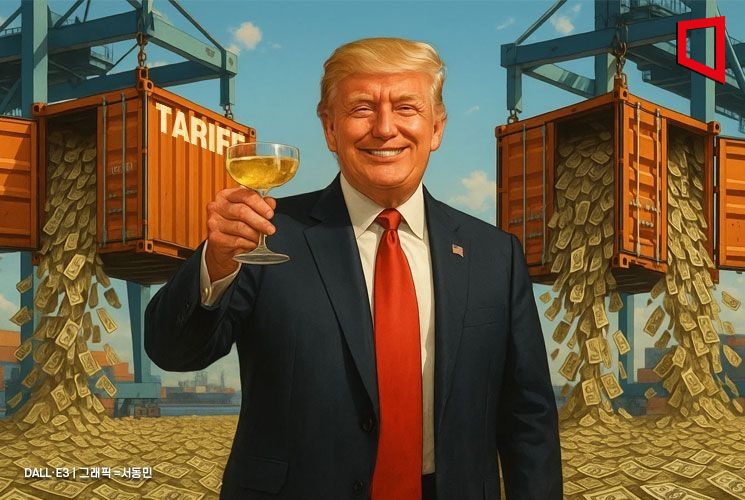
The report noted that while the Joe Biden administration criticized the unilateral approach of the first Donald Trump administration, it maintained many of the protectionist measures implemented by the previous administration. This includes keeping most tariffs on Chinese goods, as well as tariffs on steel and aluminum, and further strengthening export controls focused on advanced technologies.
The subsequent second Trump administration is now taking even faster and stronger protectionist measures than in the first term, and legislative and judicial opposition within the United States is spreading in response. The federal legislature has introduced numerous bills to limit the president's tariff authority, continuing from the first to the second Trump administration.
On August 29, the U.S. Court of Appeals for the Federal Circuit ruled that while the International Emergency Economic Powers Act (IEEPA) grants the president the authority to regulate imports, it does not include the authority to impose tariffs through executive orders. President Trump had issued executive orders imposing reciprocal tariffs based on the IEEPA, and this ruling has put a brake on such actions.
However, the report analyzed that the checks by Congress or the judiciary are likely to have only a limited impact on the United States' protectionist trade measures. This is primarily because, under the U.S. Constitution, which limits presidents to two terms, President Trump is expected to continue pursuing aggressive trade policies for the remaining three years and four months of his term without the burden of seeking re-election.
Even if the current tariffs are ultimately ruled illegal, the Trump administration is highly likely to respond by imposing new tariffs based on Section 122 of the Trade Act, which addresses trade deficits, or Section 338 of the Tariff Act, which targets unfair trade practices by other countries.
Given the current composition of the Supreme Court, it is also uncertain whether the Federal Circuit's ruling that tariffs based on the IEEPA are illegal will be upheld. Six Supreme Court justices were appointed by Republican presidents, compared to three appointed by Democratic presidents, and the Court has recently issued a series of rulings favorable to the Trump administration. The report also noted that with the midterm elections coming up in November next year, it will be difficult for the Supreme Court to issue rulings that restrict the executive branch.
Han Juhui, a researcher at the Korea International Trade Association, stated, "The United States' unilateralism and the normalization of tariffs represent a new standard for U.S. trade policy." She added, "Korean companies exporting to or investing in the United States should develop fundamental and long-term strategies to adapt their production and product strategies to this 'new normal,' strengthen cooperation with state governments and Congress, and secure technological and quality competitiveness."
© The Asia Business Daily(www.asiae.co.kr). All rights reserved.

















