Plastic water bottles release maximum levels of endocrine disruptors at high temperatures
An average of 240,000 microplastics found per liter
As microplastics are emerging as a real threat to health by penetrating deep into human tissues, a new study has found that plastic water bottles left in hot vehicles or sweltering indoor environments can release toxic substances that may cause cancer. On August 28 (local time), the British media outlet Daily Mail reported that about 80% of bottled water sold on the market contains microplastics and undisclosed substances, which are linked to various metabolic diseases such as cancer and infertility.
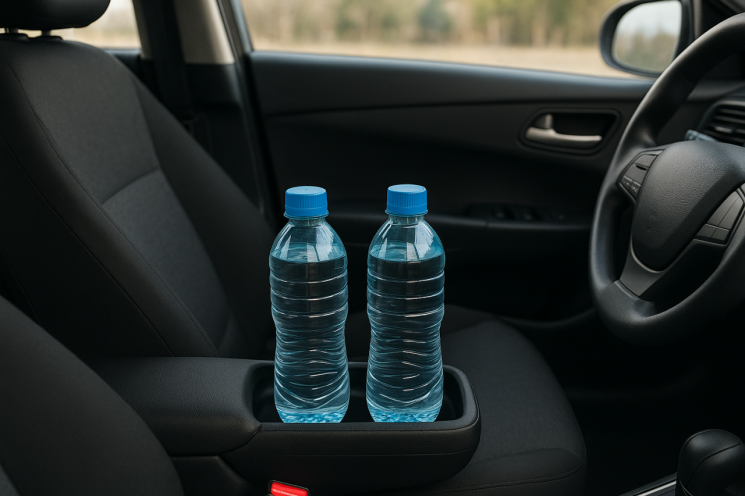 A study has found that plastic water bottles left in hot vehicles or sweltering indoor environments can release toxic substances that may cause cancer. The photo is an AI-generated image to help understand the article content.
A research team at Nanjing University in China conducted an experiment by exposing plastic water bottles to intense heat of about 70 degrees Celsius for four weeks. As a result, they found that toxic heavy metals such as antimony and bisphenol A (BPA) leached into the water from the plastic bottles. Exposure to antimony can cause headaches, dizziness, vomiting, abdominal pain, and sleep disturbances. Long-term exposure can also lead to lung inflammation and gastric ulcers. In addition, bisphenol A (BPA) is known to be associated with cancer, infertility, cardiovascular diseases, and premature death.
The Nanjing University research team therefore advised against storing plastic bottled water at warm temperatures. Researchers at McGill University in Montreal, Canada, also found that when plastic water bottles are heated to about 37 degrees Celsius, they release micro- and nanoparticles. In contrast, almost no particles were released from bottles stored in a refrigerator at about 4 degrees Celsius.
Plastic water bottles contain hundreds of thousands of microplastics
A similar result was found in a 2023 study by McGill University in Canada. When researchers investigated the effect of high temperatures on plastic water bottles, they found that heating plastics such as polyethylene to 37 degrees Celsius caused the release of micro- and nanoparticles. However, almost no particles were released from control samples stored in a dark refrigerator at 4 degrees Celsius.
According to the U.S. Centers for Disease Control and Prevention (CDC), the interior temperature of a car can reach 43 degrees Celsius in just 20 minutes when the weather is around 27 degrees Celsius. After 40 minutes, it rises to 47 degrees, and after one hour, it can soar to 50 degrees. Therefore, in environments where the temperature rises rapidly, such as inside a car with the air conditioning turned off during summer, toxic substances are released from plastic water bottles much more quickly. Experts advise that plastic water bottles should never be left in high-temperature environments, such as inside cars during summer or in direct sunlight. They also recommend avoiding long-term storage of plastic water bottles and consuming them as soon as possible after purchase.
Meanwhile, regardless of brand, plastic water bottles have already been found to contain hundreds of thousands of microplastics. A research team at Columbia University in the United States analyzed three bottled water brands and found an average of 240,000 microplastics in a 1-liter bottle, 90% of which were nanoplastics only one hundred-thousandth the thickness of a human hair. Furthermore, phthalates are added to bottled water to increase durability and flexibility, but these chemicals disrupt hormone production and pose risks to developmental, reproductive, brain, and immune functions. Experts estimate that phthalate exposure is linked to about 100,000 premature deaths annually in the United States alone.
© The Asia Business Daily(www.asiae.co.kr). All rights reserved.


















