Government Postpones UAM Commercialization Plan from 2025 to 2028
Global UAM Market Entry Delayed Worldwide
Hyundai Motor Group Prepares for AAM Commercialization with Leadership Change
FAA Certification for Hyundai Aircraft Lags Behind Competitors
"Safety First": Hyundai Motor Group Chooses Precision Over Speed
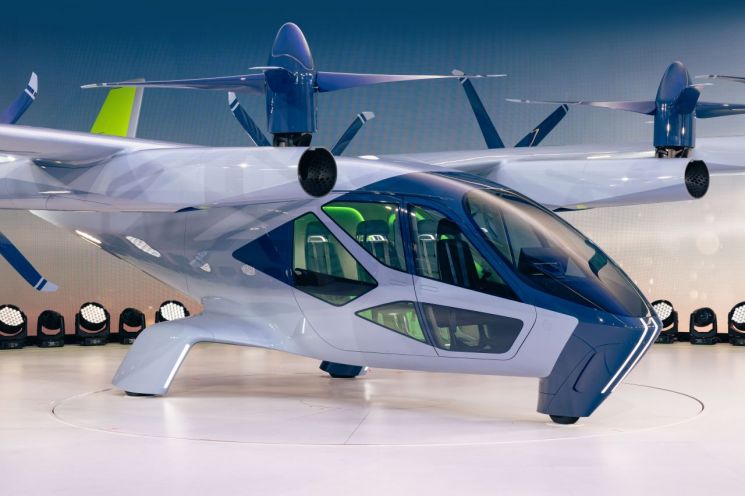 A full-scale model of the S-A2 aircraft unveiled by Hyundai Motor Group's Supernal at CES 2024. Provided by Hyundai Motor Group
This was the statement made by Baek Wonkook, then Vice Minister of the Ministry of Land, Infrastructure and Transport, at the "K-UAM (Korean Urban Air Mobility) Grand Challenge" demonstration event held in Goheung, South Jeolla Province in 2023. The government's initial vision was to develop electric vertical takeoff and landing (eVOLT) aircraft with domestic technology, conduct integrated operational demonstrations of the aircraft and traffic management system, and make it possible to see air taxis (or air buses) flying over Korea by 2025. The plan was to carry out the first phase of demonstrations in wide-open areas such as flight test sites or city outskirts by the end of 2024, then conduct the second phase in urban areas by the first half of this year, and finally move toward commercialization by year-end.
However, the path to commercializing air taxis has proven more difficult than expected. Recently, the government postponed its target for urban air mobility (UAM) commercialization to 2028. This was due to delays in aircraft development and certification not only in Korea but also in global markets, as well as a lack of economic feasibility and business viability, which has made it increasingly difficult to attract external funding. At the same time, safety verification requirements have been strengthened, presenting the industry with practical challenges.
For example, the Paris government had planned UAM demonstration flights during the Paris Olympics last year, but the project was ultimately scrapped after failing to obtain commercial flight certification from the European Union Aviation Safety Agency. There was also strong opposition from Paris residents and environmental groups, who raised concerns about noise pollution and pointed out that the environmental assessment regarding greenhouse gas emissions during the manufacturing of UAM aircraft and the construction of vertiports was incomplete.
Above all, one of the most difficult aspects in persuading Paris residents was likely the anxiety over "unsafe objects flying over our rooftops." In September last year, a demonstration of UAM passenger transport services was also canceled at the Osaka Expo in Japan. This was not only due to technical and certification issues, but also because of difficulties in meeting safety requirements. As a result, the demonstration was limited to test flights without passengers.
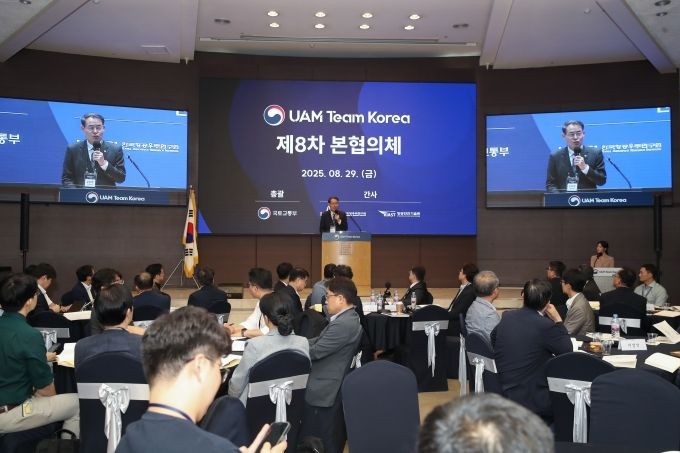 The scene of the UAM Team Korea main council meeting hosted by the Ministry of Land, Infrastructure and Transport on the 29th of last month. Photo by Ministry of Land, Infrastructure and Transport
With UAM demonstration projects being delayed or canceled worldwide, the Korean government also decided to slow down its plans. On August 28, the Ministry of Land, Infrastructure and Transport held a "UAM Team Korea" main council meeting and unveiled a new commercialization roadmap reflecting the updated K-UAM vision. The most significant change is that the commercialization target has been pushed back by about three years, from 2025 to 2028. The "K-UAM Operational Concept," the national-level foundational document for UAM business operations, has also been updated.
The key points of the revised operational concept are to ease regulations for business operations while maintaining safety standards. Previously, UAM businesses required separate entities for transportation, traffic management, and vertiport operations. Now, a single operator can take on all these roles depending on the situation. Installation standards and operating entities for vertiports have also been made more flexible, allowing for small-scale or various types of vertiports, which reduces cost burdens for operators. Whereas previously commercial communication networks like 5G were mandatory, the revision allows them to be used optionally, with existing aviation communication networks remaining available, further lowering initial investment costs for operators. The requirement to limit UAM flight paths to designated "corridors" has also been changed, allowing operators to autonomously adjust flight routes as needed.
The government aims to reduce operators' cost burdens through regulatory easing and to stimulate the early market by encouraging private sector participation. The goal is to accept and implement what the industry and market deem feasible, step by step. According to the new government roadmap, air taxis or air buses are expected to be seen on the outskirts of Korean cities from 2028. By 2032, UAM is expected to enter urban centers, and from 2037 onward, remotely piloted air taxis will be able to operate regardless of weather conditions. After 2040, autonomous UAM vehicles are expected to fly freely within cities and become a widely used mode of transportation in daily life.
How Advanced Is Hyundai Motor's AAM Technology?
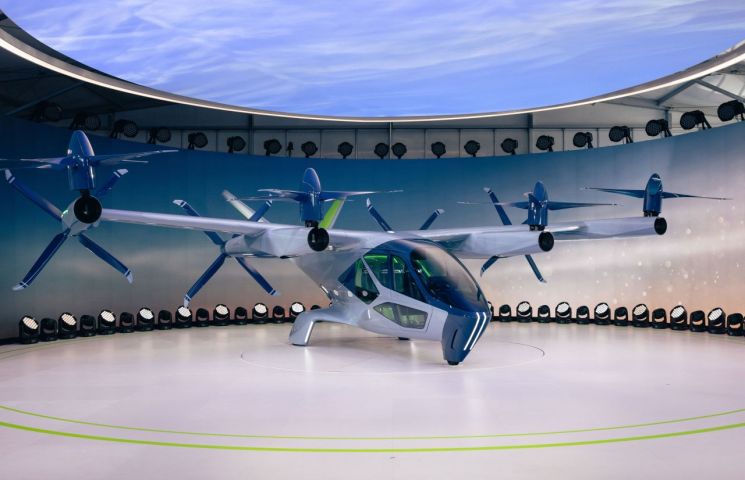 A full-scale model of the S-A2 aircraft unveiled by Hyundai Motor Group's Supernal at CES 2024. Provided by Hyundai Motor Group
As the Korean government's UAM strategy reaches a turning point, Hyundai Motor Group is also overhauling its strategy for the advanced air mobility (AAM) business. In 2021, Hyundai Motor Group expanded its business framework to AAM, which includes both UAM and regional air mobility (RAM). The most notable recent change is in personnel: Shin Jae-won, who has led the AAM business since 2019, has stepped down from the front line and been appointed as an advisor.
Advisor Shin is an aerospace expert with over 30 years of experience at NASA. He joined Hyundai Motor Group in 2019 and has led the AAM business. Since 2021, he has served as both the president in charge of AAM at Hyundai Motor Group and the CEO of Supernal, Hyundai's independent AAM corporation in the United States. He laid the groundwork for the business by leading eVOLT aircraft development, establishing regulatory frameworks for commercialization, strengthening global partnerships, and spearheading demonstration projects.
Under Advisor Shin's leadership, Hyundai Motor Group's AAM division has grown steadily over the past six years. However, as the market enters its growth phase, there remain significant challenges to address. While the main focus so far has been on aircraft development and securing basic performance, the time has come to prepare for full-scale commercialization. Hyundai Motor Group believes that a leadership change is necessary to find new breakthroughs and plans to transition business operations to the second phase for AAM commercialization while searching for a new president.
The eVOLT "S-A2," jointly developed by Hyundai Motor Group's AAM division and Supernal, is currently awaiting certification from the U.S. Federal Aviation Administration (FAA). The S-A2 is designed to carry five people, including the pilot. It features a "tilt rotor" structure, with eight rotors that can tilt more than 90 degrees up and down, maximizing operational efficiency. The goal is to fly about 60 kilometers at an altitude of 400 to 500 meters and a speed of 200 km/h. The noise level must also be kept at 45 to 65 dB, similar to a dishwasher. Supernal's short-term goal is to launch large-scale UAM commercialization services in the United States in time for the 2028 LA Olympics.
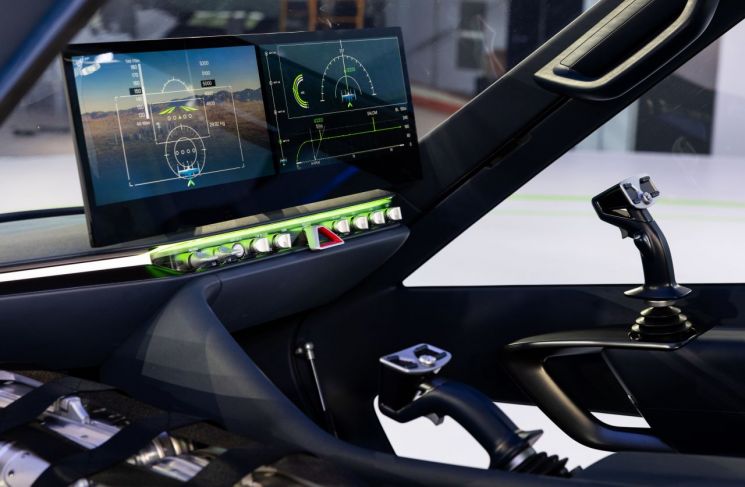 Hyundai Motor Group Supernal's S-A2 aircraft physical model interior unveiled at CES 2024. Provided by Hyundai Motor Group
In Korea, Hyundai Motor Group is conducting demonstration projects for domestic commercialization through a consortium with Korean Air, Incheon International Airport Corporation, KT, and Hyundai Engineering & Construction. In April last year, Hyundai Motor Group and four other companies announced the successful completion of the first phase of the "K-UAM Grand Challenge." They jointly verified the aircraft, operational conditions, traffic management, and vertiports, and successfully tested the integrated system between the eVOLT aircraft, operational systems, and 5G communication networks.
However, it appears that it will take some time before Supernal's "S-A2" aircraft is deployed in domestic demonstrations. The aircraft used in the first phase last year was not the S-A2. It also seems unlikely that the S-A2 will be deployed immediately in the second phase of demonstrations scheduled to begin in November this year. An industry official participating in the consortium said, "It will take more time before the aircraft developed by Supernal can be used in demonstrations," adding, "We plan to use other aircraft to comprehensively check the operational systems and related processes."
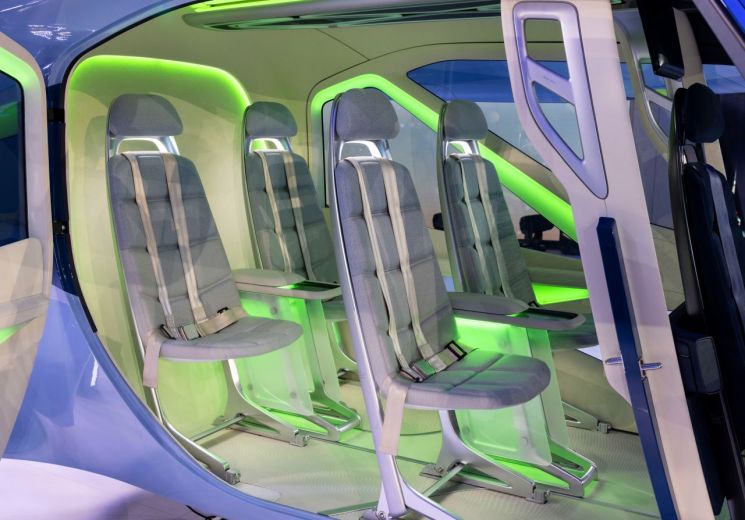 Interior of the full-scale model of the S-A2 aircraft unveiled by Hyundai Motor Group's Supernal at CES 2024. Provided by Hyundai Motor Group
"Safety First": Hyundai Motor, Slower but More Precise
As certification from U.S. authorities and the deployment of aircraft in domestic demonstration projects are delayed, some have raised concerns that Hyundai Motor Group's AAM business may be falling behind competitors. Issues regarding delays in AAM certification and business schedules have been consistently raised at CES 2024, the world's largest electronics and IT exhibition, and at Hyundai Motor Group's 2025 shareholders' meeting.
In response, Advisor Shin emphasized Hyundai Motor Group's differentiated strategy. Unlike competitors, Hyundai Motor Group has aimed from the outset to develop aircraft that meet the high safety standards of civil aviation, which inevitably requires significant time. He said, "For AAM to become a transportation mode for the general public, the market will not open unless we meet current civil aviation safety standards," adding, "It will take time to secure a level of safety that can obtain both U.S. and European certifications simultaneously." From the initial planning and R&D stages of the aircraft development project, Supernal has adopted a cautious and conservative approach. It is true that more time has been devoted to ensuring design stability and technical verification than competitors, resulting in a later timeline for certification preparation.
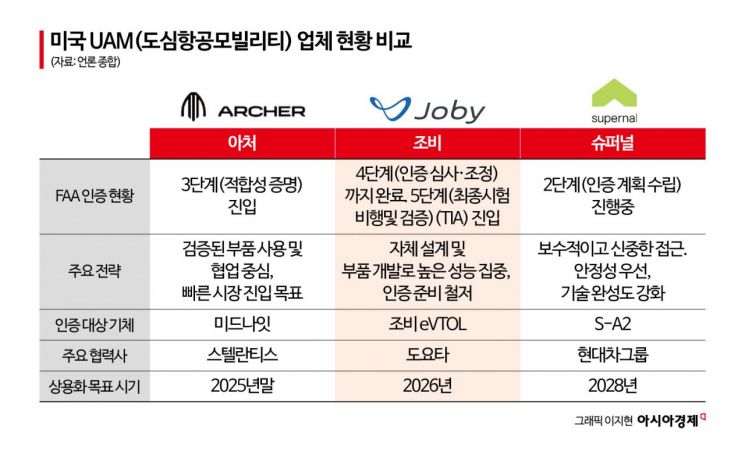
The United States is expected to see the fastest activation of the UAM market, thanks to its advanced technology, large-scale investment, systematic regulatory and certification system, vast demand, and infrastructure. Currently, the companies furthest along in the FAA's aircraft certification process are Joby and Archer. The FAA's aircraft type certification process consists of five stages. Once final certification is obtained, commercial operation and mass production become possible.
Currently, Joby has completed stage 4 review and certification and has entered the fifth and final stage of flight testing and verification, while Archer is undergoing stage 3 certification. Although Joby is ahead in aircraft certification, Archer has a faster commercialization timeline. Archer plans to begin commercialization as soon as certification is completed, targeting the end of 2025, while Joby's goal is 2026. Archer has already secured operational infrastructure by obtaining certifications necessary for commercial services, such as pilot training academy certification and air operator certification. In aircraft manufacturing, Archer has partnered with Stellantis, a major automaker. By actively sourcing already-verified parts from the aviation market, Archer aims to rapidly enhance the completeness of its aircraft production. The strategy is to build service-related infrastructure in advance and launch services immediately upon certification.
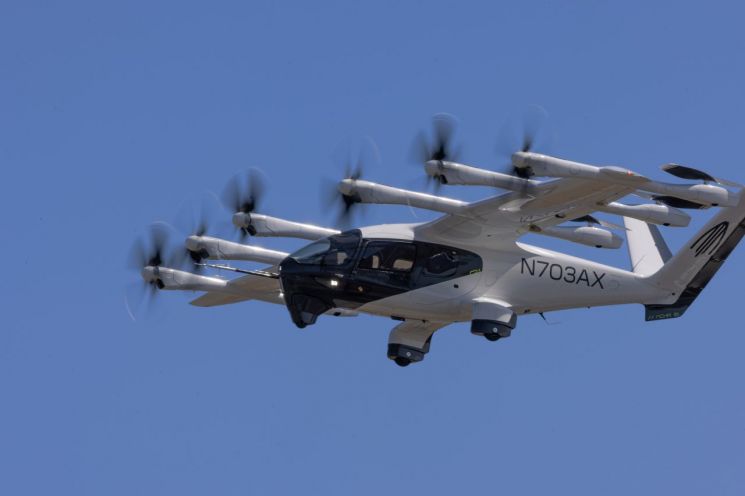 Electric vertical takeoff and landing aircraft 'Midnight' under development by Archer. Photo by Archer
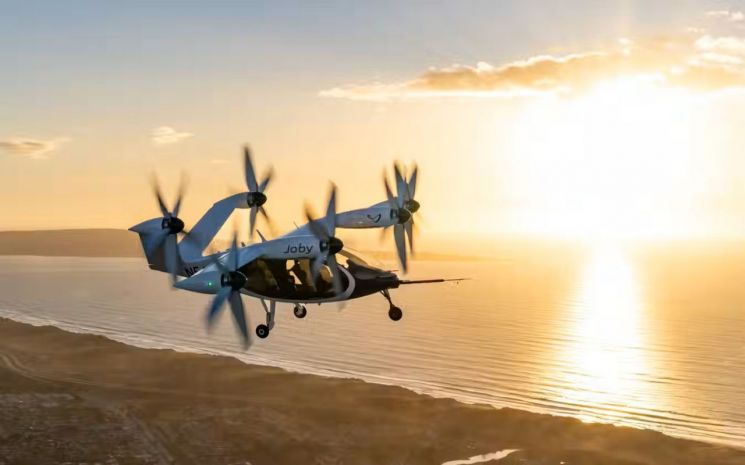
Joby is investing significant effort in aircraft development and certification. The company is pursuing vertical integration of parts suppliers and increasing the proportion of in-house development and production. As in-house production increases, the company gains greater control over suppliers, which helps maintain manufacturing quality and improves profitability. Toyota Group is a major investor in Joby, having invested more than 1 trillion won since 2020. The strategy of enhancing the stability of parts and aircraft development through vertical integration is aligned with Toyota's approach to mass automobile production.
In contrast, Hyundai Motor Group's Supernal has completed the first stage of certification-application and preliminary consultation-and has entered the second stage of establishing a detailed certification plan. In March, it succeeded in its first test flight in preparation for full-scale certification. Hyundai Motor Group acknowledges that certification may take longer but aims to differentiate itself from competitors by raising its own standards for safety and verification. The goal is to develop an aircraft that not only meets U.S. standards but also satisfies the stringent European certification requirements in a single step. Furthermore, the ultimate aim for UAM services is not just aircraft production, but also to provide a comprehensive mobility solution that includes vertiport construction and operation, as well as integration with ground transportation. As an automaker, Hyundai Motor Group seeks to maximize its mass production capabilities and provide seamless "last-mile services" from the vertiport to the final destination.
The reason why Hyundai Motor Group and other automakers are actively investing in the UAM market is because the projected size of the global UAM market, including aircraft manufacturing and passenger/cargo transport services, is immense. Morgan Stanley projects the global UAM market will reach $1.5 trillion (about 2,086 trillion won) by 2040. Global consulting firm KPMG has identified 70 cities where UAM is expected to flourish rapidly by 2050. KPMG cited megacities in Asia-such as Seoul, Tokyo, Beijing, and Shanghai-as the markets with the highest potential for UAM growth, considering factors such as population density, economic growth, and road congestion.
© The Asia Business Daily(www.asiae.co.kr). All rights reserved.



















