Exports: Temporary Increase from Front-Loading, Followed by U.S. Import Demand Slowdown
"Tariff Uncertainty Has Negative Impact with a Time Lag"
Korea-U.S. Tariff Negotiation Settlement and Summit Ease Uncertainty
This Year’s Growth Rate Ri
"The shock from uncertainty in U.S. trade policy is expected to lower our economic growth rate by 0.13 percentage points this year and 0.16 percentage points next year, regardless of whether tariffs are actually imposed."
The Bank of Korea made this announcement on September 1 in its publication, "BOK Issue Note - The Impact of U.S. Trade Policy Uncertainty on Korea's Growth" (authors: Joo Jincheol, Park Byungguk, Yoon Hyukjin). This conclusion was drawn from an analysis using a structural model (DSGE model) that explicitly incorporates the mechanism by which economic agents form expectations about tariffs. Joo Jincheol, Deputy Head of the Financial Modeling Team at the Economic Modeling Division of the Bank of Korea, stated, "In particular, exports and investment saw significant declines," adding, "This is because heightened uncertainty hinders companies' decisions to enter overseas markets and make investments, especially when large fixed costs are involved."
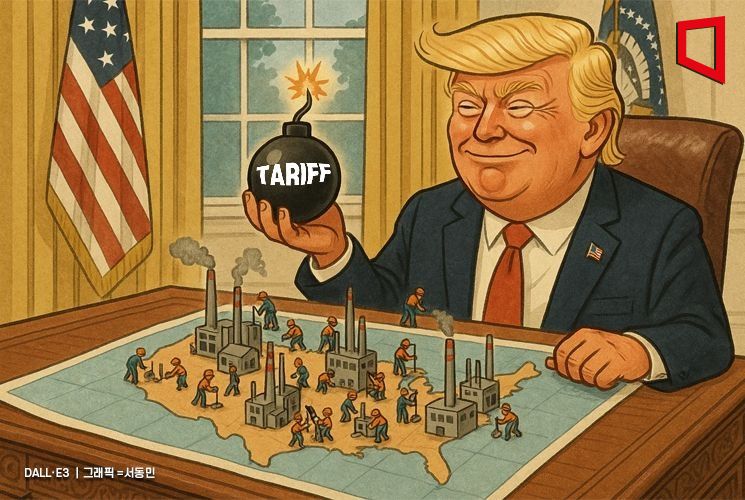
Exports: Temporary Increase from Early Shipments, Followed by Decline in U.S. Import Demand... Negative Impact Appears with a Time Lag
Uncertainty surrounding U.S. trade policy can have a significant impact on the Korean economy. This is because the rapid changes in U.S. trade policy following the launch of the second Donald Trump administration, and the resulting uncertainty, can burden the Korean economy regardless of whether tariffs are actually imposed. Deputy Head Joo explained, "We quantitatively analyzed the impact of trade policy uncertainty on our growth," and added, "According to an empirical analysis using a VAR model, the negative effects of uncertainty shocks spread throughout the economy via dampened sentiment among economic agents and falling stock prices."
In the case of exports, there is a temporary increase at the onset of uncertainty shocks due to front-loading in anticipation of future tariff hikes. However, as U.S. import demand subsequently weakens, the negative effects of the uncertainty shock become visible with a time lag. Corporate investment was found to decrease due to lower expected returns on capital from potential future tariffs and delays in decision-making caused by uncertainty. Households, when faced with high external uncertainty, were also found to reduce consumption as they strengthened precautionary motives.
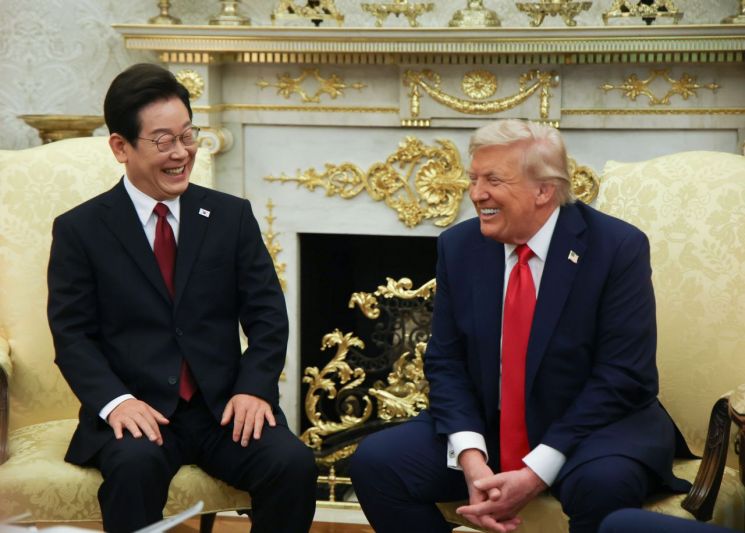
Conclusion of Korea-U.S. Tariff Negotiations and Summit "If Delayed Until Next Year, This Year's Growth Rate Rises by 0.04 Percentage Points"
Recently, the conclusion of Korea-U.S. tariff negotiations and the Korea-U.S. summit were evaluated as having contributed to mitigating the negative effects of uncertainty in U.S. trade policy. Simulation results estimated that the conclusion of tariff negotiations with the United States would raise Korea's growth rate by about 0.04 percentage points this year and 0.11 percentage points next year, compared to a scenario where negotiations are delayed until next year and the period of uncertainty shock is prolonged. Deputy Head Joo pointed out, "This suggests that resolving uncertainty in the trade environment plays an important role in Korea's economic recovery."
Deputy Head Joo emphasized, "Since uncertainty in the trade environment can have a considerable impact on our economy, it is important to continue close trade consultations between the two countries in detail so that uncertainty related to U.S. trade policy concerning Korea does not increase again in the future." He added, "In this process, it will also be necessary to strengthen trade finance support for export companies and enhance policy efforts to improve investment conditions."
© The Asia Business Daily(www.asiae.co.kr). All rights reserved.


















