Korea Institute for Industrial Economics and Trade Releases Report on Response to U.S. Tax Reduction Act
EV Subsidies to End After September 30, Consumer Demand Expected to Shrink
Chinese Companies Lose Price Competitiveness Due to Prohibited Foreign Entity Rule and High Tariffs
Production Facility Tax Credit for ESS Remains in Place
"Batteries for Drones and Humanoids Offer Advantages for Allied Nations"
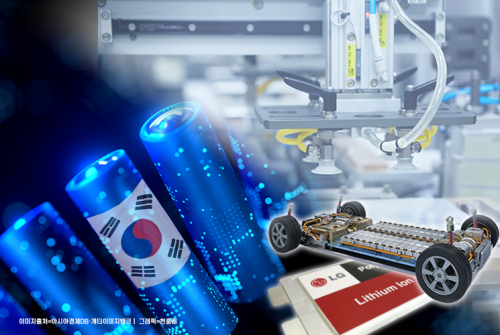
In the United States, the implementation of the "One Big Beautiful Bill Act (OBBBA)" is set to end electric vehicle purchase subsidies at the end of September. As a result, domestic battery companies are once again facing a major test, as demand for electric vehicles in the U.S. is expected to decline. However, the exclusion of the Chinese supply chain from the Advanced Manufacturing Production Credit (AMPC) is anticipated to be a positive factor. Korean battery companies are expected to seek new opportunities in areas such as energy storage systems (ESS), drones, and robotics.
The Korea Institute for Industrial Economics and Trade stated in its report, "Diagnosis of the Crisis and Strategies for Overcoming in Korea's Battery Industry: Focusing on the Impact and Countermeasures of the U.S. Tax Reduction Act (OBBBA)," published on the 31st, "After the rollback of electric vehicle subsidy programs, electric vehicle sales in Germany, Sweden, and France decreased by 27%, 16%, and 3%, respectively, in 2024. Similarly, the United States, where the electric vehicle purchase tax credit will end at the end of September, is also likely to see a decline in electric vehicle battery sales."
The report projected that if the U.S. battery market stagnates due to the impact of OBBBA, Korean battery companies, which are currently pursuing large-scale investments totaling approximately 570 GWh in the U.S., will face negative short-term effects.
To overcome this, the report emphasized the need to strengthen entry into the U.S. ESS market by leveraging opportunities created by OBBBA, and to actively create new demand in next-generation promising sectors such as drones and humanoids.
With the implementation of OBBBA, the electric vehicle purchase tax credit, which provides direct subsidies to U.S. consumers, will be abolished after September 30. If the electric vehicle purchase tax credit is eliminated in the United States, which is the most important market for domestic battery companies, battery demand is expected to shrink due to higher purchase prices.
In the case of AMPC, contrary to previous concerns, it has been finally confirmed that it will remain in effect until 2032 as stipulated in the original Inflation Reduction Act (IRA). AMPC has greatly contributed to ensuring profitability for Korean battery companies pursuing large-scale investments in the U.S.
However, since AMPC is structured to be directly proportional to production and sales volumes in the U.S. (up to $45 per kWh), if battery production and sales by Korean companies decrease after the abolition of the purchase tax credit, the benefits from AMPC could also decrease accordingly.
The report noted that while a decline in battery sales in the U.S. market due to the abolition of the electric vehicle purchase tax credit seems inevitable, it is unlikely that Chinese companies will take market share in the U.S. as they have in Europe.
This is primarily because, under the newly introduced Prohibited Foreign Entity (PFE) regulation established by OBBBA, Chinese battery companies will find it difficult to receive AMPC benefits. In addition, if a second Trump administration imposes higher tariffs on China than on Korea, it will be difficult for Chinese battery companies to secure price competitiveness.
The report suggested that, as the demand base for electric vehicles could weaken in the U.S. following Europe, Korean battery companies should seek opportunities in new future demand sectors beyond electric vehicles to overcome the crisis and achieve a new leap forward.
In particular, unlike solar and wind power, which are excluded from the clean energy production facility investment tax credit (IRA Section 48E) due to the enactment of OBBBA, ESS remains eligible for support, and demand for ESS in the U.S. is expected to continue to grow.
Hwang Kyungin, Director of External Cooperation at the Korea Institute for Industrial Economics and Trade, stated, "As a contraction in electric vehicle battery demand is expected, it is necessary to either convert existing production lines in the U.S. to ESS battery lines or expand new investments."
Military drones are also expected to provide new market opportunities for the Korean battery industry. As the commercialization of military drones advances, the role of batteries becomes increasingly important, and demand for high-performance batteries, such as those with lighter weight and higher density, is expected to grow.
Furthermore, due to the nature of weapons systems, building supply chains centered on allied countries is essential for military drone production. In fact, earlier this year, the United States announced a preliminary regulatory notice called ANPRM (Advanced Notice of Proposal Rulemaking) regarding Chinese-made drones.
Another promising area for new battery demand is humanoids. The report stated, "As the application of AI technology improves the learning and reasoning capabilities of humanoids, their power consumption will inevitably increase. If the use of humanoids spreads across industries, demand for batteries for robots is also expected to rise significantly."
© The Asia Business Daily(www.asiae.co.kr). All rights reserved.
![Clutching a Stolen Dior Bag, Saying "I Hate Being Poor but Real"... The Grotesque Con of a "Human Knockoff" [Slate]](https://cwcontent.asiae.co.kr/asiaresize/183/2026021902243444107_1771435474.jpg)
















