Attendance List Differs from SCO Summit
Mainly Includes Southeast Asian and Central Asian Countries
Analysts have pointed out that the list of leaders attending China’s “Victory Day” military parade vividly reflects the current dynamics of international politics. While the leaders of North Korea, China, and Russia will stand together for the first time, it appears that not only the leaders but even high-ranking officials from Western advanced nations will be absent from the event.
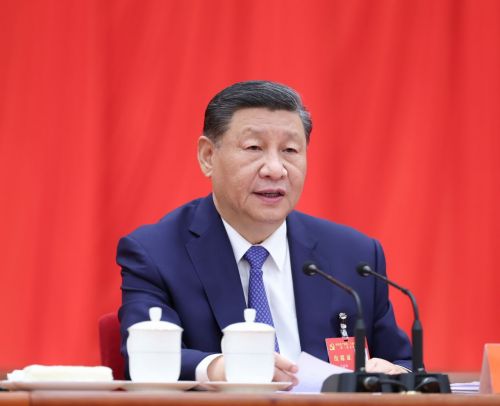
According to major international media outlets on August 30, among the 26 countries whose leaders will attend the “80th Anniversary of the Victory in the Chinese People’s War of Resistance Against Japanese Aggression and the World Anti-Fascist War” (Victory Day 80th Anniversary) parade scheduled for September 3 at Tiananmen in Beijing, the list primarily includes Southeast Asian, Central Asian, and African nations, in addition to North Korea and Russia.
Foreign media have interpreted the absence of major world leaders from the parade’s invitation list as a window into China’s ongoing efforts to expand its ambitions and influence. The Associated Press reported that this year’s parade will take place immediately after the conclusion of the Shanghai Cooperation Organization (SCO) summit, which is led by China. However, the participants in the two events do not completely overlap, highlighting both China’s interests and its limitations in relations with neighboring countries.
Indian Prime Minister Narendra Modi is at the top of the guest list for the SCO summit, but he will leave China without attending the parade. Egyptian Prime Minister Mostafa Madbouly and Turkish President Recep Tayyip Erdogan are also expected to attend only the SCO summit and not the parade.
Like their Western counterparts, the leaders of India and Turkey generally refrain from standing alongside China’s top leadership at a military parade in which China displays its military strength to the world.
In contrast, North Korean State Affairs Commission Chairman Kim Jong Un will not attend the SCO summit but is scheduled to watch the Chinese military parade together with Chinese President Xi Jinping and President Vladimir Putin of Russia.
What stands out is the dominance of Southeast Asian and Central Asian countries, as well as other “Global South” nations (a term typically referring to emerging and developing countries in the Southern Hemisphere) on the list. Leaders from major ASEAN (Association of Southeast Asian Nations) countries such as Vietnam, Malaysia, and Indonesia, as well as from developing nations like Cuba, the Democratic Republic of the Congo, and Zimbabwe, will visit China.
The leaders of South Korea and Japan will not attend. Woo Wonshik, Speaker of the National Assembly, is scheduled to represent South Korea, while Japan, citing the event’s anti-Japanese undertones, has not only declined to participate but has also discouraged other countries from attending, taking a negative stance toward the event.
Among European leaders, only Serbian President Aleksandar Vucic and Slovak Prime Minister Robert Fico, both known for their pro-Russian leanings, will attend. In this context, Taiwan’s Central News Agency (CNA) commented, “The list of 26 countries mirrors China’s current international position and the present configuration of global relations,” adding, “China’s ongoing friction with Western countries over issues such as trade, science and technology, the war in Ukraine, and human rights may have influenced the decision of many not to attend the parade.”
© The Asia Business Daily(www.asiae.co.kr). All rights reserved.