Fish Deaths at Aquaculture Farms Surge Due to Red Tide
Heatwave and Heavy Rain Create Ideal Conditions for Harmful Algal Blooms
Damage Expected to Increase as Red Tide Advisory Expands
Due to the heatwave and localized heavy rainfall, a red tide phenomenon has caused the seawater to turn red, resulting in an increasing scale of fish deaths at aquaculture farms.
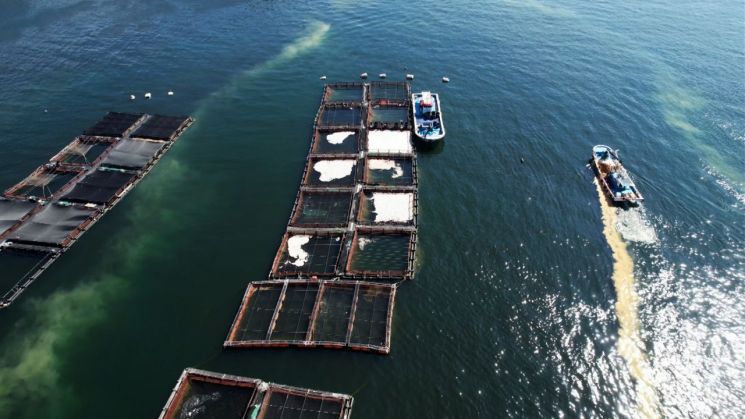
According to South Gyeongsang Province, from around August 27 to 4 p.m. on August 30, a total of 268,000 farmed fish-including flatfish, mullet, black porgy, sea bass, and sea bream-died at 20 aquaculture farms in Namhae County and Hadong County, where a red tide advisory was issued. Both offshore cage farms and land-based farms that use seawater were affected.
Namhae County and Hadong County are visiting the affected aquaculture farms to verify the exact causes and scale of the fish deaths. The province expects the damage to increase further, as reports of fish deaths continue to come in from these two regions.
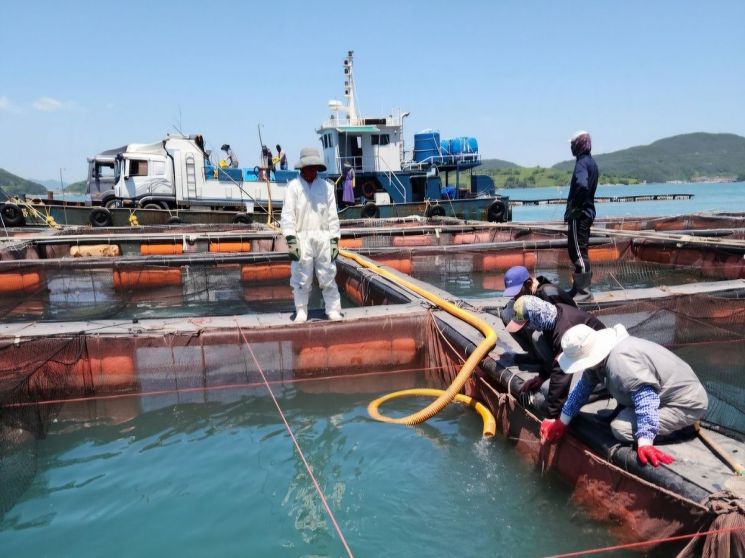
Harmful red tides began causing damage as soon as they were observed along the coast of South Gyeongsang Province in late August. The National Institute of Fisheries Science issued a preliminary red tide alert for the western coast of South Gyeongsang, including Namhae County, on August 26. On August 27, a red tide advisory was issued for the western coast of the province, and the advisory has since been expanded to cover the central coast, including the western waters of Geoje Island.
Red tide refers to a phenomenon in which the rapid growth of microplankton turns the seawater red. Cochlodinium attaches to the gills of fish, secreting mucus that blocks respiration and threatens survival with toxic substances. Growth is particularly active at water temperatures between 24 and 27 degrees Celsius.
This summer, the southern coast of Korea experienced repeated heatwaves and localized heavy rainfall, creating optimal conditions for the outbreak of red tides. According to the National Institute of Fisheries Science, the surface water temperature of Korean seas has risen by 1.44 degrees Celsius over the past 56 years, and this trend is expected to continue until 2100. If high water temperatures and localized heavy rainfall persist during the summer, red tides and mass fish deaths could become a routine occurrence.
Currently, South Gyeongsang Province is operating 20 pieces of response equipment, such as loess spreaders, and deploying 62,000 tons of loess to combat the red tide. In May, the government announced the "2025 Comprehensive Measures for High Water Temperatures and Red Tides," which included proactive actions such as supporting aquaculture farms with response equipment, encouraging early shipment of vulnerable fish species, and streamlining emergency release procedures.
© The Asia Business Daily(www.asiae.co.kr). All rights reserved.


















