"Do not speak loudly in Japanese in public"
Ahead of China's Victory Day on the 3rd of next month, the Japanese Embassy in China has issued a warning to its nationals residing in China.
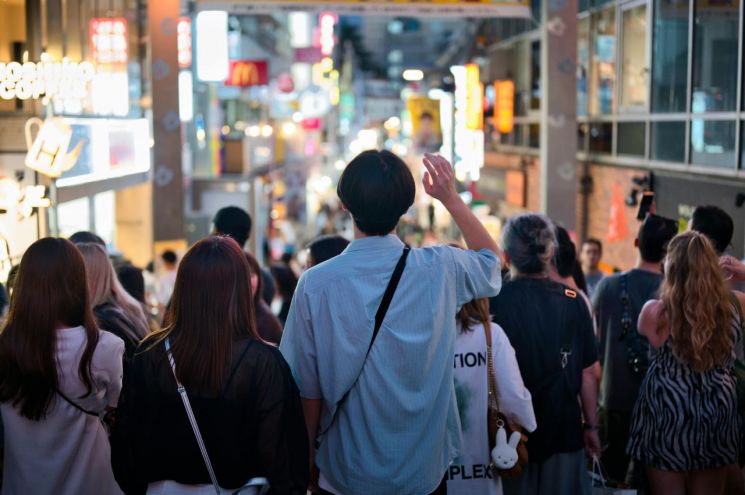 Ahead of China's Victory Day on the 3rd of next month, the Japanese Embassy in China has issued a warning to its nationals residing in China. The photo shows Japanese tourists. Pexels.
According to Japanese media outlets such as Nihon Keizai Shimbun (Nikkei) on the 28th, the Japanese Embassy in China stated in a notice posted on its website the previous day that "September 3 is the so-called 'Victory over Japanese Aggression Day'" and added, "As this is a day related to Japanese history, anti-Japanese sentiment among Chinese people tends to rise significantly, so caution is necessary."
This year, China has designated the year as the "80th Anniversary of the Victory of the Chinese People's War of Resistance Against Japanese Aggression and the World Anti-Fascist War (Victory Day 80th Anniversary)." In connection with this, films and TV dramas have been aired, and a variety of events, including military parades, are also planned.
 The Japanese Embassy in Korea stated in a notice posted on its website the previous day that "September 3 is the so-called 'Victory over Japan Day,'" adding that "it is a day related to Japanese history, and Chinese people's anti-Japanese sentiment tends to be particularly high, so caution is necessary." The photo shows citizens passing through Beijing. Pexels.
The embassy also provided specific behavioral guidelines. It advised paying close attention to one's surroundings, such as being aware of suspicious individuals when going out, and emphasized the need for extra caution, especially when accompanied by children.
"Do not speak loudly in Japanese in public"
It further requested that Japanese nationals respect local customs and refrain from speaking loudly enough in Japanese to be overheard in public. The embassy also advised, "Please do not wear clothing or carry items that would make it obvious at a glance that you are Japanese," and added, "If possible, avoid visiting large public squares or places that are likely to be frequented by Japanese people."
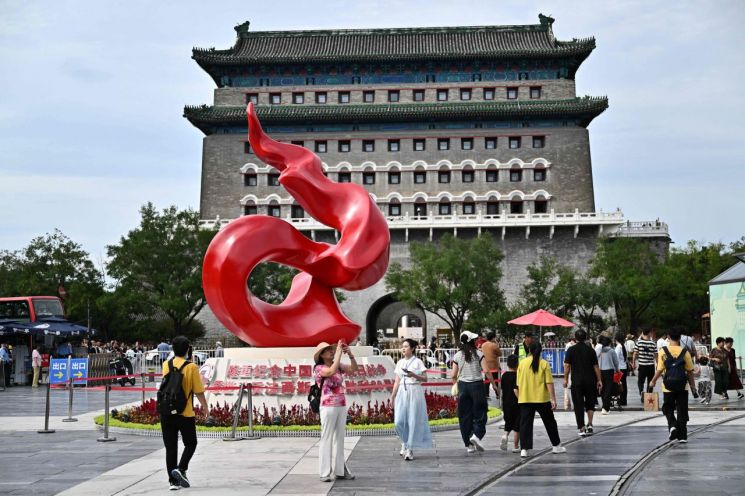 People are gathered in front of the commemorative sculpture for the "80th Anniversary of the Victory of the Chinese People's War of Resistance Against Japanese Aggression and the World Anti-Fascist War (Victory Day 80th Anniversary)" on Qianmen Street in Beijing, China, on the 28th. Photo by AFP Yonhap News
Crimes targeting Japanese nationals occasionally occur in China. Last month in Suzhou, Jiangsu Province, a Japanese woman walking with her child was attacked by an assailant. Previously, in September of last year, an elementary school student on their way to a Japanese school in Shenzhen, Guangdong Province, was fatally stabbed by a Chinese national wielding a weapon.
The Japanese government has reportedly requested, through diplomatic channels, that European and Asian countries refrain from attending the 80th Anniversary Victory Day commemorative ceremony and military parade in China, citing the strong anti-Japanese tone of the events.
In response, Chinese Foreign Ministry spokesperson Guo Jia-kun stated at a briefing on the 26th that "a stern diplomatic protest has been lodged with the Japanese side (a Chinese expression meaning a protest through diplomatic channels) and an explanation has been demanded," adding, "Japan should properly recognize the history of its aggression."
© The Asia Business Daily(www.asiae.co.kr). All rights reserved.



















