119 Emergency Calls Decrease in Gwangju in First Half of Year
Fire and Extreme Weather Reports Rise,
Significant Drop in Unanswered and Misdialed Calls Attributed to Public Awareness Campaign
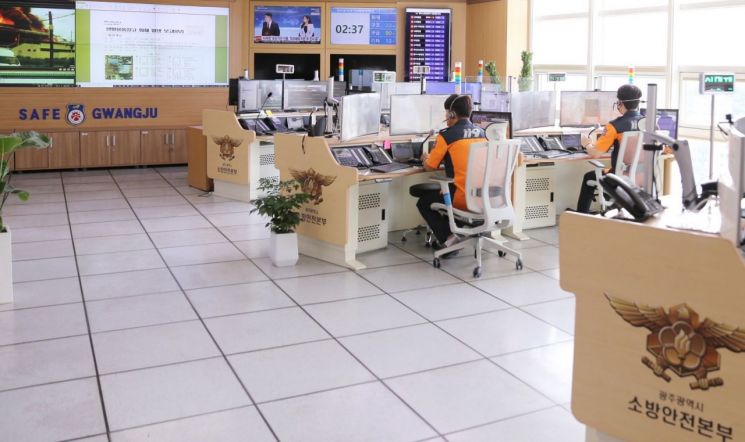
The Gwangju Fire Safety Headquarters announced on August 27 that the number of 119 emergency calls in the first half of this year was tallied at 128,500. This equates to an average of 710 calls per day, or one call every two minutes, representing a 4.4% decrease compared to the same period last year.
An analysis of emergency dispatch calls by type revealed the following: 4,407 fire reports (a 4.7% increase), 7,653 rescue reports (a 3.9% decrease), 34,384 ambulance reports (a 6.3% decrease), and 4,208 other dispatch calls (a 35.2% increase).
The increase in fire and other reports was mainly attributed to weather factors such as dry conditions in spring and heatwave or heavy rain advisories in summer. In contrast, the decrease in ambulance reports was explained by improved access to medical institutions and the establishment of a culture in which non-emergency patients refrain from using ambulances following COVID-19.
For non-dispatch calls, there were 22,891 medical consultations (a 1.7% increase), 20,634 civil service inquiries (a 0.3% increase), and 1,103 cases referred to other agencies (a 10.6% increase), all showing growth compared to the previous year.
This increase is analyzed as a result of citizens moving beyond perceiving 119 solely as a means to request emergency vehicle dispatch, and instead recognizing the value of emergency situation management services that provide rapid assistance in emergencies, such as hospital and pharmacy information, medical consultations, and guidance on medical procedures.
Notably, the number of unanswered calls dropped significantly by 17.9% to 21,738, and misdialed calls also decreased by 14% to 8,291. This is evaluated as an achievement of the "Reducing Non-Emergency Calls" public awareness campaign that the Gwangju Fire Safety Headquarters has been promoting for the past two years.
Chae Deokhyeon, head of the 119 Integrated Situation Room, stated, "Although 119 emergency calls showed a slight decrease in the first half of this year compared to last year, reports related to large-scale fires and extreme weather events have increased. When extreme weather events such as heavy rain occur, I ask citizens to refrain from making non-emergency calls such as simple drainage requests or safety measures, so that urgent situations can be prioritized."
© The Asia Business Daily(www.asiae.co.kr). All rights reserved.