Research by Chinese Team Finds
Higher Concentrations of Microplastics in Stool
Among Those Consuming Plastic-Packaged Foods More Than Three Times a Day
There are growing concerns that microplastics from plastic packaging used in food delivery may negatively affect the balance of gut microbiota.
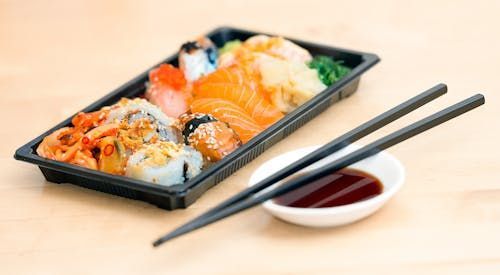
According to a recent paper published in the international journal Environmental Pollution, a research team from Shanxi Medical University in China analyzed stool samples from 24 college students and found that every participant had between 171 and 269 microplastics per 100 grams of stool. The majority were polyethylene terephthalate (PET) and fiber-type particles, while nanoplastics accounted for about 0.14%. Microplastics are plastic fragments between 1 micrometer (1μm, which is one millionth of a meter) and 5 millimeters in size, while nanoplastics are much smaller plastic particles, ranging from 10 nanometers (10nm, which is one billionth of a meter) to 1μm.
The researchers also reported that students who consumed plastic-packaged foods more than three times a day had higher concentrations of microplastics in their stool compared to those who did not. They also found a correlation between the amount of drinking water consumed and the concentration of a specific plastic (PVC). This suggests that not only food delivery, but also disposable cups, plastic water bottles, and packaged beverages can be sources of microplastic exposure.
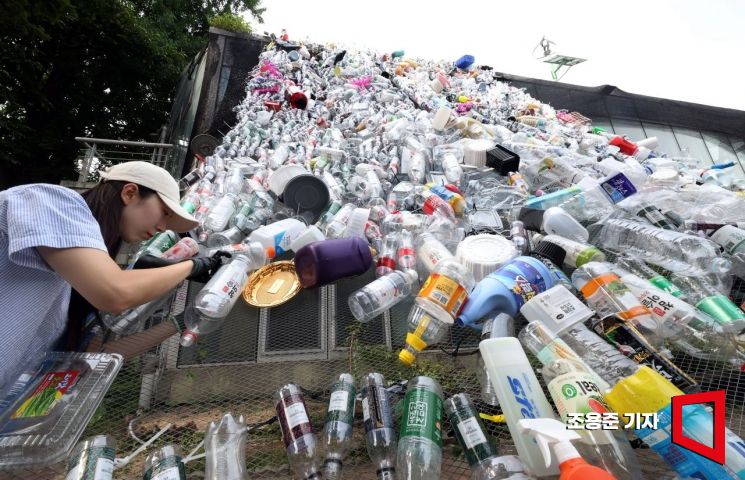 On June 5 last year, Environment Day, at the 'Plastic Vomit' event held at the Korean Federation for Environmental Movement in Jongno-gu, Seoul, a participant is hanging waste plastic on a large net sculpture.
In the analysis of gut microbiota, there was no significant change in overall diversity, but students with higher concentrations of microplastics showed changes in the composition of their gut bacteria. In contrast, among students with almost no nanoplastics, there was a tendency for certain specific bacteria to increase and for beneficial bacteria that support gut health to decrease.
This suggests that exposure to microplastics and nanoplastics can alter the balance of gut bacteria, particularly reducing the beneficial bacteria that are important for gut health.
The researchers stated that this is the first study to confirm a link between nanoplastics and gut microbiota imbalance in humans, highlighting plastic packaging as a major route of exposure. However, they noted that the study was limited by the small number of participants and the short observation period.
The research team emphasized, "Given the potential long-term impact of food delivery and single-use plastic consumption on the health of young people, there is a need for stronger regulations and further research."
© The Asia Business Daily(www.asiae.co.kr). All rights reserved.


















