Busan's Bid to Lead the Arctic Corridor
Strategy Report for Securing the Home Port of the Next-Generation Icebreaker Research Vessel
Establishing a Global Maritime Hub through Infrastructure and Policy Innovation
The Busan Research Institute (President Shin Hyunseok) has unveiled a strategy to attract the next-generation icebreaker research vessel's home port to Busan in preparation for the era of Arctic shipping routes.
The plan is based on the idea that Busan must establish itself as a national hub city to secure a leading position in the Arctic Corridor, which is drawing attention as an alternative to the global supply chain crisis.
On August 27, the institute published a report titled "Strategy for Attracting the Next-Generation Icebreaker Research Vessel Home Port to Busan to Secure the Arctic Corridor," presenting a comprehensive response plan that covers both hardware infrastructure and institutional foundations.
This report was prepared in line with the government's "K-Maritime Powerhouse Construction" national policy and the ongoing project to build an icebreaker research vessel, which is scheduled for completion in 2029.
According to the report, as the melting of Arctic sea ice accelerates and the utilization of shipping routes increases, the establishment of an integrated transport system encompassing land, shipping, and aviation-namely, the "Arctic Corridor"-is becoming a reality. Countries such as Russia and China are already pursuing strategies to actively use Arctic routes as alternatives for their supply chains, and competition among local governments in Korea to host the home port is expected to intensify.
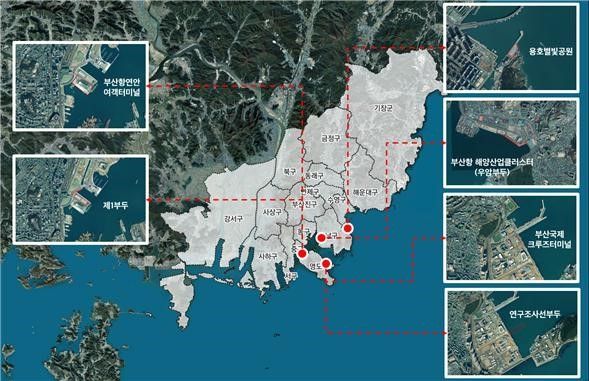
The research team analyzed home port operation cases in gateway cities to the Antarctic and Arctic, and derived selection criteria for the home port through expert surveys. As a result, port infrastructure, operational support systems, regional connectivity, and research infrastructure were identified as the most important factors, in that order. In Busan, the International Cruise Terminal and North Port Pier 1 were selected as the optimal candidate sites.
Key strategies proposed include: ▲enacting a Busan city ordinance and establishing a master plan ▲strengthening international networks such as the Arctic Economic Council (AEC) ▲and preparing a phased roadmap for 2025 to 2032. The report particularly emphasized the need to ensure objectivity and transparency by introducing a national public contest for the home port selection process.
President Shin Hyunseok stated, "This study is a strategic response plan for Busan to become a global maritime hub in the Arctic Corridor era," adding, "By attracting the home port of the icebreaker research vessel, we can secure national interests, and for Busan to establish itself as a leading city in pioneering Arctic shipping routes, innovative support from both the government and Busan city is essential."
© The Asia Business Daily(www.asiae.co.kr). All rights reserved.

















