Report Delivered to Policy Advisor in Absence of Council Member
Controversy Over "Acting as a Council Member"
Attending Officials Testify: "Unacceptable, Caused Confusion on Site"
Union Points Out: "Support Staff Should Not Receive Reports"
Policy Advisor Explains: "Only Intended to Collect Materials, Misunderstanding Occurred"
Conflicting Accounts Persist
Civil Groups Say: "Undermines Purpose of the System"
Council Member Denies Involvement
A controversy has erupted after it was revealed that, at the Gwangju Bukgu Council, a policy advisor-not a council member-received a report on the supplementary budget. On-site public officials testified that "the policy advisor effectively received the report as if they were a council member in the absence of an actual member." The public officials' union demanded a public apology, stating, "It goes against the purpose of the system for support staff to directly receive such reports." Although the policy advisor immediately posted an apology, conflicting explanations and on-site testimonies have kept the controversy alive.
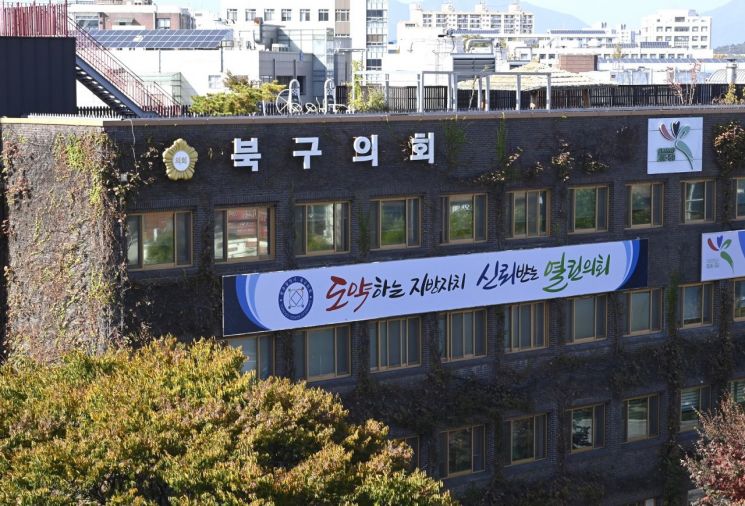
According to a compilation of Asia Economy's coverage on the 27th, a post appeared on Bukgu District Office's internal bulletin board on the 25th, stating, "A council member, citing personal matters, was unable to come to work and delegated the supplementary budget report to the policy advisor. Department heads and team leaders gave their reports directly to the policy advisor in the council member's office." The post was immediately followed by critical comments from public officials, such as "Do we now have to serve the policy advisor as well?", "Pre-session explanations are not a legal obligation. Questions during the session are sufficient," and "The reporting process only caused more confusion on site."
Several public officials who participated in the report told our publication in interviews, "The policy advisor essentially received the report as if they were a council member, even though no actual member was present." One team leader, who requested anonymity, said, "I saw the lights on in the council member's office and went in, only to find the policy advisor sitting in the member's seat, telling us to come in. Everyone was surprised, hesitated at the door, but ultimately had no choice but to proceed with the explanation." The team leader added, "No matter what, it is hard to accept that a policy advisor would sit in the council member's seat and receive reports."
He also pointed out, "In the subsequent apology, the policy advisor explained that the council member could not attend the standing committee and that there was a misunderstanding because they only intended to receive the materials. However, those materials had already been submitted as supplementary documents."
Other senior officials reported similar experiences. One department head said they entered the office expecting the council member, but the policy advisor told them, "Since the member cannot come, report to me," so they explained the materials, albeit reluctantly, and felt uncomfortable about the entire process.
The Bukgu District Office branch of the public officials' union defined this as a wrongful case, emphasizing that policy advisors are meant to assist council members, not directly receive reports. The union demanded that the policy advisor apologize to the department heads, team leaders, and the audit office, as well as post an apology on the internal bulletin board visible to all staff.
In response, the policy advisor immediately posted an apology, stating, "The council member only asked me to collect the materials, but I rashly listened to explanations and asked questions, which caused misunderstandings. This was a clear mistake on my part, and I will ensure it does not happen again." However, on-site public officials continued to testify that "the policy advisor demanded the report, claiming it was on the council member's orders," resulting in conflicting accounts.
The policy advisor system was introduced in 2022 with the revision of the Local Autonomy Act, aiming to supplement council members' expertise and strengthen their policy response capabilities. Currently, there are 10 policy advisors working at the Bukgu Council. However, in practice, public officials have repeatedly raised concerns about the burden of "double reporting," as policy advisors sometimes receive reports in place of council members or request excessive documentation. The union also pointed out, "The practice of pre-session reporting is actually causing more problems," and suggested, "It would be better for council members to study the materials themselves and ask questions as needed."
Civil society groups also expressed concern. A representative from Participation Autonomy 21 said, "Policy advisors are supposed to assist council members in their legislative activities, not replace them. This incident should serve as an opportunity to enhance transparency and accountability in council operations."
Within the district office and council, there was a cynical response that "the issue will be quietly wrapped up with the apology." Some employees commented, "It is unclear what immediate action the council can even take at this point."
The council member in question told our publication by phone, "I was unsure if I could participate in the supplementary budget review due to personal reasons, but I never instructed the policy advisor to receive the report. The policy advisor acted on their own judgment."
© The Asia Business Daily(www.asiae.co.kr). All rights reserved.

















