Mandatory Cancellation of Treasury Shares to Directly Impact the Stock Market
Reintroduction of "No Discrimination Against Minority Shareholders in M&A" After 20 Years
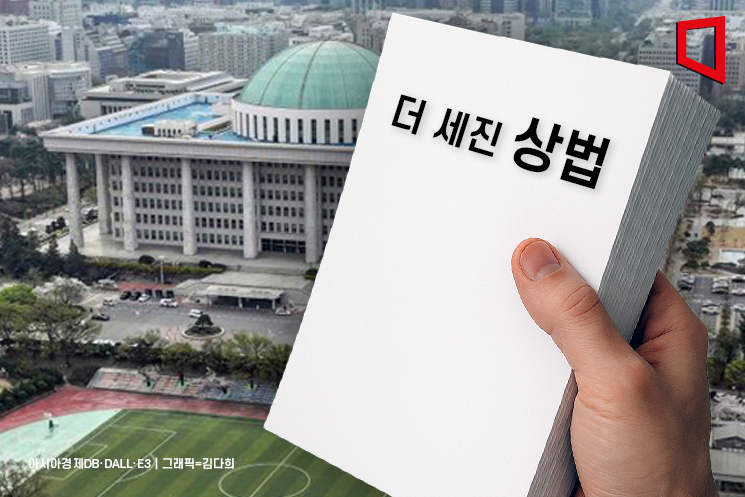
The so-called "Stronger Commercial Act," which mandates cumulative voting and expands the number of separately elected audit committee members, passed the National Assembly on the 25th. This is not the end. The Democratic Party, which is the ruling party, has announced its intention to process a third amendment to the Commercial Act in the National Assembly next month, aiming to fulfill its presidential campaign pledge to make treasury share cancellation mandatory. The issue of treasury shares is expected to have a significant impact on the stock market. Even after the Commercial Act is amended, discussions are likely to continue on "megaton-level" amendments to the Capital Markets Act, such as introducing mandatory tender offers during mergers and acquisitions (M&A).
Mandatory Treasury Share Cancellation to Directly Impact the Stock Market
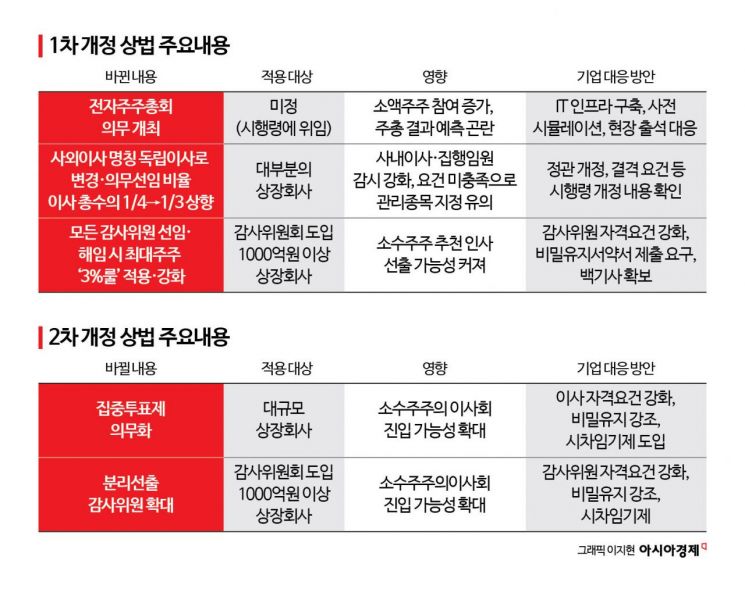
With two rounds of amendments to the Commercial Act, several measures have been introduced, including the "fiduciary duty of directors to shareholders," changes to the appointment of independent outside directors, mandatory electronic general meetings of shareholders, application of the 3% rule to all audit committee appointments, expansion of separately elected audit committee members, and mandatory cumulative voting. Most of these measures are aimed at expanding the rights of minority shareholders, who have often been sidelined at general meetings. However, the third amendment will introduce the mandatory cancellation of treasury shares, which will have a more direct impact on the stock market.
The five Commercial Act amendment bills proposed by the ruling party differ only in terms of the deadline for cancelling newly acquired treasury shares. For example, Assemblywoman Kim Hyunjung's bill requires cancellation "immediately upon acquisition," while Assemblymen Kim Namgeun and Min Byungdeok propose "within one year," and Assemblyman Lee Kangil suggests "within a period specified by Presidential Decree." Assemblyman Cha Kyugeun of the Korea Innovation Party has proposed "within six months." All bills share a common exception for cases such as employee compensation.
Separate from the National Assembly’s discussions on amending the Commercial Act, the government is also preparing measures to promote treasury share cancellation through disclosure systems and other means. The "Five-Year National Governance Plan" includes proposals to expand the disclosure requirement for treasury share holdings from 5% to 1% of total issued shares, and to specify forms for disclosing substantial plans for disposal or cancellation of treasury shares. An amendment to the Fair Trade Act has also been announced, which would exclude treasury shares from the total number of issued shares.
Due to these moves by both the National Assembly and the government, companies that have used treasury shares for purposes such as defending management control or raising funds are likely to face new restrictions. However, in the stock market, there are growing expectations that transparency in the use of treasury shares will increase and that shareholder value will be enhanced through the cancellation of treasury shares.
Ban on Discrimination Against Minority Shareholders in M&A Reintroduced After 20 Years
With the introduction of the "fiduciary duty of directors to shareholders" in the first Commercial Act amendment, if the Capital Markets Act is also amended to require mandatory tender offers, domestic M&A practices are expected to change significantly. Mandatory tender offers require that when acquiring a sufficient number of shares to gain control of a listed company, a certain percentage or more of shares must be acquired through a public tender offer. This system was introduced in Korea in the late 1990s but was abolished due to concerns that it hindered smooth corporate restructuring. As a result, there have been many cases where controlling shareholders sold their shares at high prices during M&As, while minority shareholders suffered losses as share prices fell.
Recently, the National Assembly’s Political Affairs Committee announced that it is discussing amendments to the Capital Markets Act centered on introducing a mandatory tender offer system. Proposals under discussion include one requiring a mandatory tender offer for all remaining shares (100%) when acquiring more than 25% of shares (proposed by former Democratic Party lawmaker Kang Hunsik), and another requiring a tender offer for 50% plus one share, as specified by Presidential Decree (proposed by People Power Party lawmaker Kang Myunggu and included in the government's 2022 proposal).
If the proposal requiring a 100% tender offer is adopted, the cost of acquiring listed companies is expected to rise significantly. Critics argue that such changes could actually make M&As involving listed companies more difficult, thereby hindering corporate restructuring.
In addition, other amendments to the Capital Markets Act are expected to be discussed, such as codifying the principle of calculating fair merger prices in mergers between listed companies, setting net asset value as the minimum price, and allowing parent company shareholders to be preferentially allocated a certain number of new public shares when a subsidiary is listed after a physical division.
Jung Dasom, an analyst at Korea Investment & Securities, stated, "While consensus within the ruling party was already reached for the first and second amendments to the Commercial Act, the third amendment and the measures included in the national governance plan have not yet been fully discussed within the party, so there may be significant changes in details and timeline." She added, "Although recent tax reforms and other factors have weakened investor expectations for government policy, the mandatory cancellation of treasury shares, which will be discussed in the third amendment, is expected to have a substantial impact on the domestic stock market and increase market attention."
© The Asia Business Daily(www.asiae.co.kr). All rights reserved.
![From Bar Hostess to Organ Seller to High Society... The Grotesque Con of a "Human Counterfeit" [Slate]](https://cwcontent.asiae.co.kr/asiaresize/183/2026021902243444107_1771435474.jpg)

















