High Risks for Both Mothers and Fetuses
Need for Research and Policy Support on the Realities of Multiple Births
While South Korea's overall birth rate is among the lowest in the world, its multiple birth rate-including twins and higher-order multiples-is one of the highest globally. In particular, the birth rate for triplets and above ranks first worldwide. This phenomenon is attributed to an increase in infertility treatments and procedures as the average age of childbirth rises.
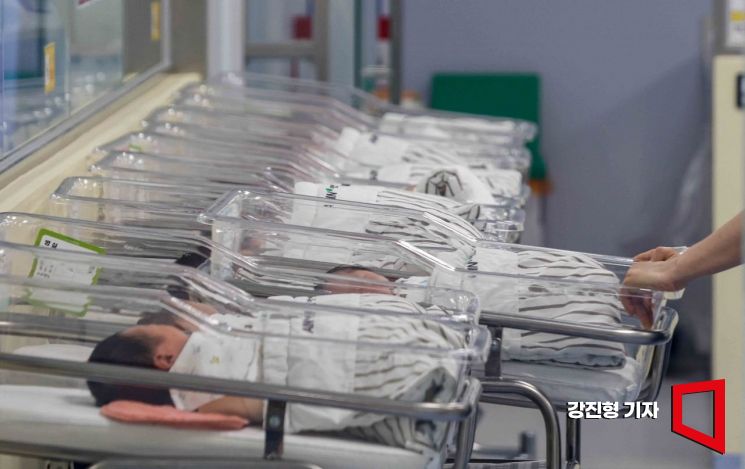
According to the report "Trends and Challenges in Multiple Births in Korea" released by the Korea Institute for Health and Social Affairs on August 25, 2025, South Korea's multiple birth rate in 2023-measured as the number of multiple deliveries (twins or more) per 1,000 births-stood at 26.9. This ranks second among 27 major countries included in the "World Multiple Birth Rate Data (HMBD)." The global average was 15.5, meaning South Korea's rate was 11.4 higher than the average.
Notably, the birth rate for "higher-order multiples" (triplets or more) was 0.59, placing South Korea first among all countries surveyed. Greece ranked second at 0.37, while the global average was 0.21-about one-third of Korea's rate.
Although South Korea's total fertility rate has plummeted, the number of multiple births continues to rise. According to Statistics Korea and other sources, the total fertility rate dropped from 1.48 in 2000 to 0.72 in 2023, nearly halving. However, the number of multiple births increased from 10,768 to 12,622 during the same period. The proportion of multiple births among all newborns rose from 1.7% to 5.5%, more than tripling.
The report attributes the rise in multiple births primarily to the increasing age of mothers and advancements in assisted reproductive technology (infertility treatments). It also notes that the number of infertility procedures and patients in Korea continues to grow, suggesting that multiple births may continue to increase. In fact, while the rate of multiple pregnancies is 1-2% in natural conception, it is known to reach 30-40% with infertility treatments.
High Risk for Both Mothers and Babies... Significant Postnatal Care Burden
The problem is that multiple pregnancies pose significant risks to both mothers and babies, and the burden of raising multiple children after birth is also substantial.
In reality, mothers with multiple pregnancies face much higher risks than those with single pregnancies. The risk of complications such as preeclampsia or gestational diabetes increases by two to three times, and the average gestational period is about three weeks shorter than for single pregnancies. In particular, the preterm birth rate (before 37 weeks) is ten times higher for multiple pregnancies, and about 73% of babies born from multiple pregnancies require treatment in a neonatal intensive care unit (NICU). Additionally, 70% of parents of multiples experience severe psychological and emotional difficulties within two years after childbirth, and 30% of mothers of multiples suffer from severe depression.
Bae Hyewon, a researcher, stated, "Multiple pregnancies pose significant risks to both mothers and babies, making this a major social issue. It is necessary to build a database for households with multiple births and to develop health and welfare services based on policy needs."
© The Asia Business Daily(www.asiae.co.kr). All rights reserved.

















