Crackdown on False Country-of-Origin Labeling in Jeju's Tourist Hotspots
17 Restaurants Under Investigation for Mislabeling Meat Products
329 Violations Detected Nationwide in Livestock Product Origin Inspections
In Jeju, a number of businesses have been caught selling livestock products with false origin labels, such as selling Portuguese pork belly as Jeju-style boiled pork.
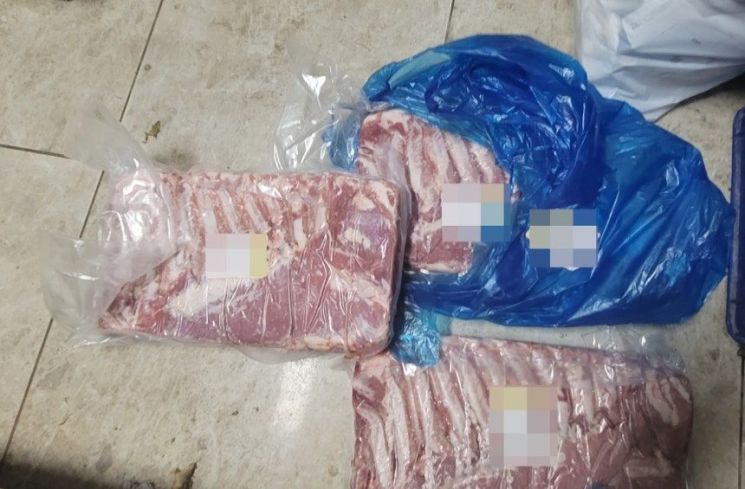 A restaurant in Jeju was caught falsely labeling imported pork shoulder as Jeju pork and selling it. National Agricultural Products Quality Management Service Jeju Branch
On August 25, the Jeju Branch of the National Agricultural Products Quality Management Service announced that it had conducted a comprehensive crackdown on fraudulent distribution of livestock products, uncovering a total of 17 restaurants that falsely labeled the origin of their meat and are currently under investigation. This inspection targeted tourist attractions and popular restaurants in Jeju from July 14 to August 14, a period when meat consumption increases due to the summer holiday season.
Among the major violations, Restaurant A was found to have falsely labeled Portuguese pork belly as Jeju pork and sold it as boiled pork and other dishes over the past two to three years. The amount of mislabeled meat sold by this establishment reached 2,251.56 kg, with the violation amounting to approximately 23.4 million won.
Restaurant B was discovered to have falsely labeled U.S. beef brisket as domestic beef while selling it in dishes such as potato stew. The quantity sold in this manner was 1,093.6 kg, with a violation amount of 21.8 million won. In addition, there were restaurants that falsely labeled the origin of both beef and pork.
The Jeju Branch of the National Agricultural Products Quality Management Service stated that all of these businesses will be referred to the prosecution. Furthermore, 13 businesses that either failed to indicate the origin, violated labeling methods, or breached livestock product traceability regulations were fined a total of 6.8 million won.
The Jeju Branch also announced that, in response to increased meat demand during the summer holiday season and the rise of online sales through restaurant delivery apps, they are intensifying monitoring of social networking services (SNS) and conducting focused crackdowns. Among the fraudulent distribution items detected in this operation, pork accounted for 12 cases (32.4%), the highest number, followed by beef with 8 cases (21.6%), duck with 2 cases (5.4%), and chicken and black goat with 1 case each (5.4%).
The number of livestock product distribution violations uncovered in Jeju has increased significantly this year. As of now, there have been a total of 52 cases detected, including 48 cases of false origin labeling and 4 cases of livestock product traceability violations, representing a 52.9% increase compared to 34 cases during the same period last year.
Meanwhile, the National Agricultural Products Quality Management Service conducted intensive inspections of restaurants, livestock product stores, and livestock product import and distribution companies around vacation spots for one month starting July 14. As a result, 329 businesses were found to have violated origin labeling regulations across 355 items. Of these, 103 businesses that sold imported products as domestic were referred for criminal prosecution, and 226 businesses that failed to indicate the origin were fined a total of 74 million won.
Among the violations, duck accounted for the largest number with 161 cases (45.4%), followed by pork with 88 cases (24.8%), goat with 42 cases (11.8%), beef with 37 cases (10.4%), chicken with 26 cases (7.3%), and honey with 1 case (0.3%). This crackdown focused on black goat and duck, whose imports have been increasing since the introduction of the “Dog Meat Consumption Ban Act” in February last year.
© The Asia Business Daily(www.asiae.co.kr). All rights reserved.

















