Planting 40 Apple Trees Without Owner's Consent
Court Rules: "No Grounds for Embezzlement or Property Damage Charges"
A court has ruled that planting and harvesting apple trees on someone else's land without permission does not constitute embezzlement or property damage. The judgment clarifies that unauthorized use or profit alone does not necessarily lead to criminal punishment.
On August 24, Yonhap News reported that the Supreme Court's Third Division (Presiding Justice Lee Heungku) overturned a lower court ruling that had fined defendant A 500,000 won on charges of theft, property damage, and embezzlement, and remanded the case to the Suwon District Court.
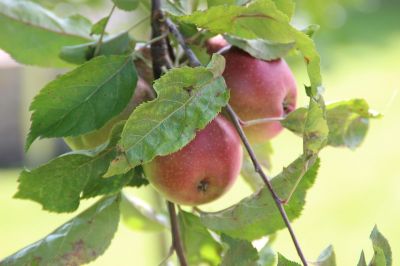
The case dates back to 1999. A began cultivating vegetables without the owner's consent on a plot of land in Siheung, Gyeonggi Province, and from 2014 started planting and tending apple trees there. In 2021 and 2022, A harvested a total of approximately 240 apples over two occasions.
The landowner, B, acquired the land through inheritance in 2009 but was unable to manage it due to living overseas. In 2022, after inspecting the site, B demanded that A cease occupying the land.
Prosecutors indicted A on theft charges, and the first trial recognized theft based on the victim's ownership, sentencing A to a fine of 700,000 won. However, the appellate court acquitted A of theft, noting that A had in fact been in possession of the apple trees. Instead, the court found A guilty of property damage and embezzlement as alternative charges, imposing a fine of 500,000 won.
The appellate court determined that the 2021 harvest constituted property damage by diminishing the utility of the apple trees, and that the 2022 harvest, which occurred after the landowner's protest, amounted to embezzlement following the establishment of a fiduciary relationship.
However, the Supreme Court overturned this decision. The court held that harvesting apples is simply an act consistent with the intended use of the trees and does not constitute an infringement of their utility, thus property damage charges do not apply. The court also stated, "For embezzlement to be established, there must be appropriation of an item entrusted on the basis of a fiduciary relationship. It is difficult to conclude that a mere request to cease possession or use creates such a relationship worthy of legal protection."
In particular, the Supreme Court pointed out that the landowner had not managed the land for 14 years before asserting their rights, that A had invested significant time and effort in cultivating the trees, and that after the protest, A even proposed to purchase the land while claiming ownership. Taking these factors into account, the court concluded that there was no fiduciary relationship between the parties that would constitute embezzlement under criminal law.
© The Asia Business Daily(www.asiae.co.kr). All rights reserved.

















