Residents Deprived of Administrative Services, Idle Land Increasing
Neglect and Damage of Culturally Significant Heritage Sites
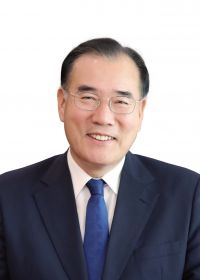
Lee Gaeho, a member of the Democratic Party of Korea representing Damyang, Hampyeong, Yeonggwang, and Jangseong in South Jeolla Province, issued a press release on the 24th, urging the Ministry of Health and Welfare to adopt a more proactive stance. He stated, "The directive given by President Lee Jaemyung during his visit to the National Sorokdo Hospital on June 25 to actively consider transferring administrative and management functions outside the hospital to Goheung County has seen little progress."
As of May this year, Sorokdo covers an area of 3.77 square kilometers (1.3 times the size of Yeouido), with 331 patients and 212 hospital staff residing on the island. All patients have tested negative, and there are no positive cases, resulting in the practical loss of the hospital's core medical function.
The main issue is the lack of clear legal regulations regarding the jurisdiction of Sorokdo Hospital, which has led to the entire island being controlled by internal rules. As a result, although Sorokdo residents are citizens of Goheung County, they are unable to access basic administrative services provided by the county, such as road maintenance, water and sewage systems, environmental management, housing, and welfare support. Additionally, the increasing number of restricted areas due to population decline has led to more idle land, and culturally significant properties from the Japanese colonial era, as well as important heritage sites, are being neglected or damaged.
Assemblyman Lee stated, "Sorokdo is a region of great historical and cultural value, where the pain and healing of Korea's modern history coexist." He added, "While the hospital area and the staff residence area should continue to fulfill their original medical functions, the remaining areas should be transferred to Goheung County. This would allow the local government to handle the maintenance and repair of public assets such as roads and parks, improve living conditions and services for residents, and ensure the preservation and management of cultural and natural environments through administrative and financial actions."
He further stated, "At the Health and Welfare Committee, I will continue to urge the National Sorokdo Hospital to maintain its core medical functions while establishing a development model that enables coexistence with the local community."
Meanwhile, the National Sorokdo Hospital was established in 1916 as a specialized treatment center for Hansen's disease. However, the number of patients has sharply declined from 6,254 in 1947 to 370 in 2023, with an average age of 79.2 years and 94% of patients aged 65 or older. Currently, most inpatients are elderly with age-related illnesses, resulting in a significant weakening of the hospital's original function.
© The Asia Business Daily(www.asiae.co.kr). All rights reserved.
















