False Claims on Patent and Design Rights Account for 97.3%
Cooking Utensils Make Up 67.8% of Detected Cases
The Korea Consumer Agency announced on August 24 that it had uncovered numerous cases of false intellectual property claims in online posts selling kitchenware.
The Korea Consumer Agency and the Korean Intellectual Property Office inspected 10,000 online posts for kitchenware products on major open markets and home shopping online malls over a five-week period starting June 2, to check for false or exaggerated advertisements related to intellectual property rights. As a result, a total of 444 cases of false claims were detected.
Among these, false claims regarding patents and design rights accounted for 97.3% of the total. Specifically, false claims related to "patent rights" made up the largest portion at 63.1% (280 cases). This was followed by "design rights" at 34.2% (152 cases), "utility model rights" at 2.5% (11 cases), and "trademark rights" at 0.2% (1 case).
By type of false claim, "representing expired rights as valid" accounted for 51.4% (228 cases). Other types included "incorrectly indicating the name of the intellectual property right" at 24.3% (108 cases), "indicating rights that were refused registration" at 12.2% (54 cases), "claiming pending application status for products that were not under application" at 8.3% (37 cases), and "indicating intellectual property rights not applied to the product" at 3.8% (17 cases).
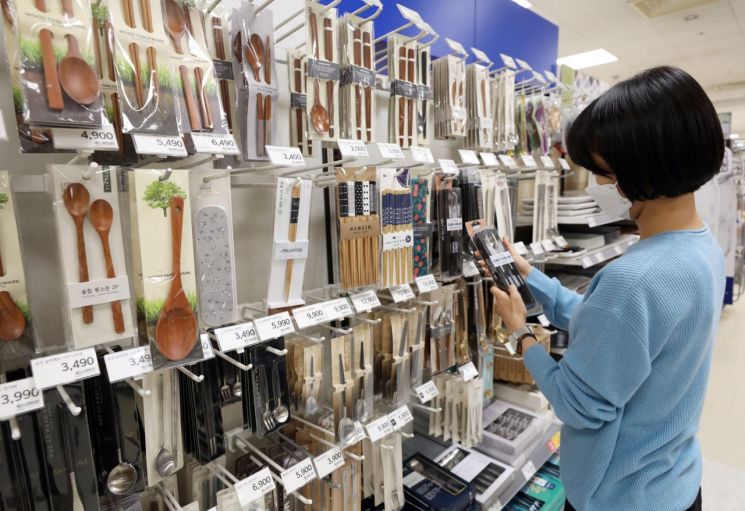
By product category, "cooking utensils" accounted for the largest share at 67.8% (301 cases), followed by "kitchen miscellaneous goods" at 28.6% (127 cases), "cooking containers" at 2.5% (11 cases), and "kitchen storage products" at 1.1% (5 cases).
The Korean Intellectual Property Office plans to recommend improvements in labeling for products found to have false claims through this inspection, and will provide guidance on administrative and legal actions that may be taken if these recommendations are not followed.
The Korea Consumer Agency stated, "For everyday items like kitchenware that are frequently used in daily life, trust in intellectual property labeling is even more important," and added, "We will continue to work with the Korean Intellectual Property Office to inspect false intellectual property claims across various product categories and strengthen consumer rights."
© The Asia Business Daily(www.asiae.co.kr). All rights reserved.

















