Enhancing Local, Essential, and Public Healthcare
by Strengthening Advanced Treatment Capacity at Regional Hub Medical Institutions
On August 24, the Ministry of Health and Welfare announced its decision to provide a total of 75.9 billion KRW in support for treatment facilities and equipment for critically ill and severe disease patients at regional hub medical institutions, including national university hospitals, in order to strengthen local, essential, and public healthcare.
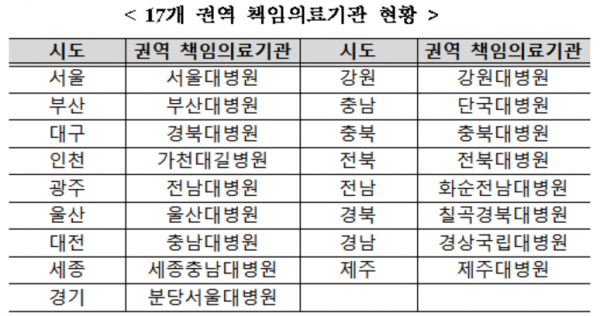
Regional hub medical institutions serve as key hospitals that provide advanced essential medical care and plan and coordinate cooperative systems among medical institutions within their regions. Since 2019, these institutions have been designated primarily among national university hospitals. Currently, all 17 provinces and metropolitan cities have designated regional hub medical institutions, which oversee the essential healthcare cooperation system within their respective regions.
The Ministry explained that it had previously conducted two rounds of public calls to receive project proposals from local governments based on the on-site needs of regional hub medical institutions. Based on expert evaluations, it selectively provided funding for facilities and equipment to strengthen the capacity for treating severe and complex cases.
The facilities and equipment selected for support are expected to provide essential, high-level medical care for local residents. For example, Kangwon National University Hospital introduced advanced robotic surgical equipment and invited specialists from major hospitals in Seoul, while Chonnam National University Hospital expanded negative-pressure isolation beds in its intensive care unit to enhance its ability to treat patients with high-risk infectious diseases. In addition, many hospitals plan to expand operating rooms and intensive care infrastructure to provide final treatment for severe and emergency patients within their regions, thereby contributing to reducing disparities in treatable mortality rates among local residents.
Starting next month, the Ministry will conduct a third round of public calls, focusing on certain provinces and metropolitan cities such as Gwangju and Jeonnam that have not yet filled their institutional budgets, to receive and evaluate project proposals before providing support.
This project is a core initiative aimed at dramatically improving the final treatment capacity for severe diseases at regional hub medical institutions, and is a key task in strengthening local, essential, and public healthcare. In particular, as a large-scale fiscal investment project jointly promoted by local governments and regional hub medical institutions, it is significant in that it secures the responsibility of local governments in addressing local and essential healthcare issues.
Along with this project, the Ministry is also working in consultation with relevant ministries to promote the clinical, research, and educational development of regional hub medical institutions centered on national university hospitals. This includes support for specialized research and development (R&D) at local national university hospitals, increasing the number of full-time faculty at key national medical schools, and improving regulations with low medical relevance such as total labor cost restrictions.
Jung Tongryeong, Director of Public Health Policy at the Ministry of Health and Welfare, emphasized, "In order to strengthen weakened local, essential, and public healthcare, it is essential to dramatically enhance the final treatment capacity of regional hub medical institutions such as national university hospitals. Based on strengthened clinical capabilities, we plan to establish a cooperative system for essential local healthcare and swiftly alleviate the deepening disparities in regional healthcare."
© The Asia Business Daily(www.asiae.co.kr). All rights reserved.


















