"Similar Brand Logos and Colors" at the Center of Legal Disputes
Retaliatory Lawsuits Intensify Between 99 Food and Keeta
iFood Responds with Record Investment Amid Chinese Platforms' Expansion
As Chinese authorities have issued a stern warning against cutthroat competition among domestic delivery platforms, Chinese food delivery platforms operating in Brazil have engaged in three lawsuits within a month, signaling intensifying competition.
According to Chinese media outlets such as Hongseong Newspaper on August 23, 99 Food, a subsidiary of Didi, filed a lawsuit against Keeta, a subsidiary of Meituan, at the S?o Paulo court in Brazil on August 18, alleging trademark infringement and unfair competition.
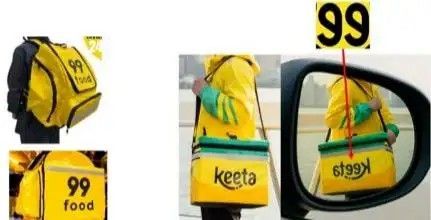
Didi is China’s largest mobility (ride-hailing) company. After acquiring and operating a local mobility platform in Brazil and subsequently withdrawing, the company re-entered the Brazilian market this year by launching its delivery platform business under 99 Food. Meituan, the leading food delivery platform in China, also officially entered the Brazilian market this year.
Claims of "Similar Brand Logos and Colors"
99 Food expressed dissatisfaction, claiming that the brand logo, color scheme, and design of Keeta-which launched later than 99 Food-are very similar to those of 99 Food. Both companies’ delivery riders use yellow bags, and the "ee" in the Keeta logo, when reflected in a mirror, resembles "99." However, Keeta has countered that yellow has long been Meituan’s signature color, rejecting 99 Food’s claims.
Some observers suggest that 99 Food’s latest lawsuit is a retaliatory move against two previous lawsuits that Keeta had filed against 99 Food in Brazilian courts.
Keeta filed a lawsuit on August 8, arguing that when consumers search for Keeta on the Google portal, advertisements for 99 Food appear, causing confusion. The court sided with Keeta on August 11, prohibiting 99 Food from purchasing keywords at high prices for advertising purposes. Emboldened by this decision, Keeta filed another lawsuit on August 14, claiming that 99 Food was paying a kind of upfront fee to Brazilian restaurants to prevent them from partnering with Keeta and monopolizing the market. The outcome of this lawsuit has not yet been determined.
The fierce competition between 99 Food and Keeta has heightened tensions among local Brazilian companies. iFood, a homegrown company that holds 80% of Brazil’s delivery platform market, has announced a record investment plan exceeding 4 trillion won to counter the aggressive expansion of Chinese firms.
© The Asia Business Daily(www.asiae.co.kr). All rights reserved.

















