Supreme Court Ruling After 8-Year Legal Battle
Compensation Reduced from Initial 51.6 Billion Won
The National Pension Service has won a final victory in a lawsuit against Hanwha Ocean (formerly Daewoo Shipbuilding & Marine Engineering), seeking compensation for losses incurred from investing in corporate bonds due to Daewoo Shipbuilding & Marine Engineering's accounting fraud.
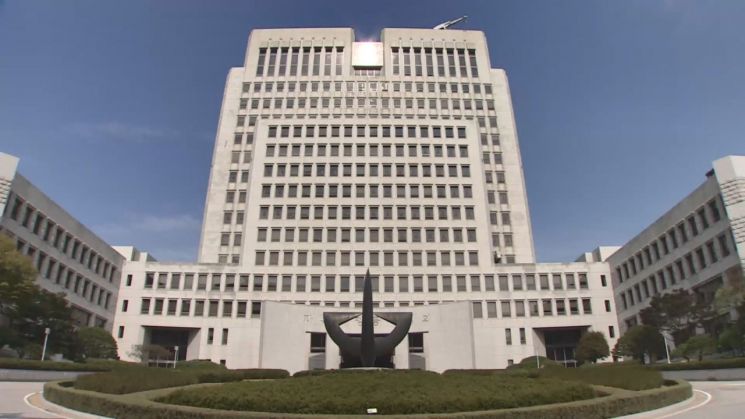
According to the legal community on August 22, the Supreme Court's Second Division (Presiding Justice Park Youngjae) recently upheld the lower court’s partial ruling in favor of the plaintiff in the damages lawsuit filed by the National Pension Service against Hanwha Ocean and Deloitte Anjin. As a result of the Supreme Court ruling, Hanwha Ocean must pay a total of 44.2 billion won to the National Pension Service. Of this amount, 14.7 billion won will be jointly borne by Hanwha Ocean and Deloitte Anjin, which served as the auditor.
The National Pension Service purchased 360 billion won worth of Daewoo Shipbuilding & Marine Engineering corporate bonds between April 2014 and March 2015.
Subsequently, large-scale accounting fraud committed by Daewoo Shipbuilding & Marine Engineering during that period was uncovered, and in 2017, the National Pension Service filed a lawsuit seeking compensation for losses incurred by investing in corporate bonds issued based on inaccurate financial statements. The claim was that the value of the bonds had been inflated, causing them to be purchased at a price higher than their true value.
The first trial recognized the losses from the accounting fraud and ordered Daewoo Shipbuilding & Marine Engineering to pay a total of 51.6 billion won in damages. The court stated, "The financial statements included in the securities registration statement and business report of a bond-issuing company are the most objective data reflecting the company’s financial status, and it is fully foreseeable that these statements would be used when acquiring corporate bonds." The court also found that "it can be effectively presumed that there is a causal relationship in transactions where bonds were acquired in reliance on the truthfulness of the securities registration statement."
The second trial focused on a bondholders’ meeting held in 2017. At that time, bondholders including the National Pension Service agreed to resolutions regarding debt-to-equity conversion, maturity extension, and interest rate reduction for Daewoo Shipbuilding & Marine Engineering bonds. Following these resolutions, large-scale public funds were injected into the company under these conditions. Daewoo Shipbuilding & Marine Engineering argued that, as a result, claims for damages due to accounting fraud should be considered waived or forgiven.
However, the appellate court rejected this argument, stating that the resolutions did not include any provision making damages claims subject to debt adjustment. The court further noted, "With the large-scale public fund support contingent on the adoption and confirmation of the resolutions, Daewoo Shipbuilding & Marine Engineering was able to resolve its liquidity crisis, and all bonds held in this case were repaid under the modified terms, allowing the National Pension Service to recover more than initially expected."
Accordingly, the compensation amount to the National Pension Service was reduced to 44.2 billion won.
Both parties appealed, but the Supreme Court found no error in the lower court's judgment and dismissed the appeals.
© The Asia Business Daily(www.asiae.co.kr). All rights reserved.

















