Differences Identified Through Skull Size and DNA Analysis
Four Species: Northern, Reticulated, Masai, and Southern Giraffes
A study by an international organization has found that giraffes are not a single species, but are divided into four distinct species.
According to reports from the BBC and AP News on August 21 (local time), a task force (TF) under the International Union for Conservation of Nature (IUCN) has changed the traditional view of giraffes as a single species, and, based on a taxonomic review, recognized giraffes as four separate species.
Differences revealed through skull size and DNA analysis
For the past 250 years, giraffes have been classified as a single species with nine subspecies. In the past, researchers tried to distinguish giraffe species by their spot patterns, but the TF analyzed differences in skull size, head shape, and DNA among various giraffes and found significant genetic distinctions between each group.
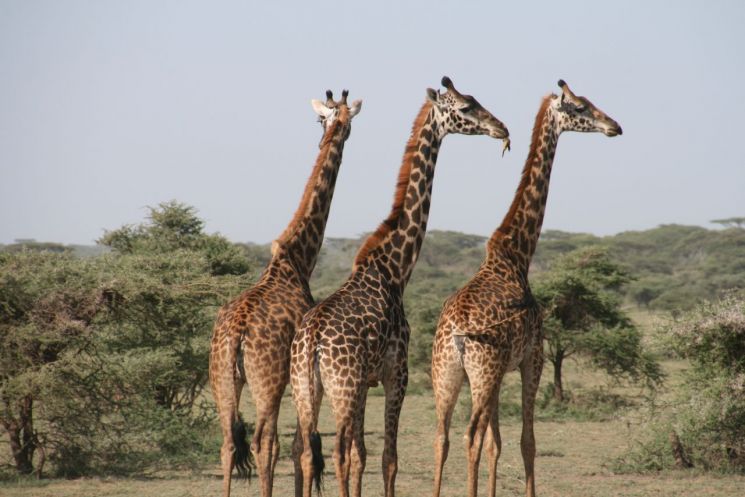
Based on this, the TF newly classified giraffes into four species: Northern giraffe (Giraffa camelopardalis), Reticulated giraffe (Giraffa reticulata), Masai giraffe (Giraffa tippelskirchi), and Southern giraffe (Giraffa giraffa).
Four species: Northern, Reticulated, Masai, and Southern giraffes
The Northern giraffe includes several subspecies such as the Nubian, Kordofan, and West African giraffes, and inhabits areas such as western Ethiopia, central and western Kenya, and eastern South Sudan. The Reticulated giraffe is found in the grasslands of Kenya, Somalia, and Ethiopia, while the Masai giraffe lives in Kenya, Tanzania, and Uganda. The Southern giraffe inhabits regions including Angola, Namibia, South Africa, and southern Botswana. Among these, the Southern giraffe has the largest wild population, estimated at about 69,000 individuals. The Northern giraffe has the smallest wild population, with only about 7,000 individuals, and is especially in urgent need of protection as it mainly inhabits regions facing severe political instability and poaching.
Previously, the BBC explained, "DNA analysis shows that giraffes are clearly divided into four distinct species, with differences as significant as those between polar bears and brown bears." Researchers believe that major rivers and valleys such as the Nile, as well as arid zones, have acted as "barriers," leading each giraffe species to evolve with its own unique characteristics.
The IUCN emphasized the significance of this research, stating that understanding genetic differences is essential for the conservation and management of giraffe populations.
Michael Brown, a researcher at Windhoek, Namibia, who led the IUCN study, told AP News, "Over the past decade, research has produced clear evidence of distinct differences among the four species. If we lump all giraffes into a single species, the issues become blurred, as each species has different population sizes, threats, and conservation needs." He added, "The more accurately we understand giraffe taxonomy, the better we can assess their status and implement effective conservation strategies."
© The Asia Business Daily(www.asiae.co.kr). All rights reserved.

















