Replaced with Each Administration Change
Blame for Safety Accidents
'11th' President Han Moonhee Also Steps Down in Disgrace
Resignation Over Cheongdo Train Accident
All eleven presidents of Korea Railroad Corporation (Korail) have stepped down before completing their terms, marking an unprecedented record in the company’s history. Since the corporation’s establishment in 2005, not a single Korail president has served a full term. The reasons for their resignations have varied widely, ranging from controversies over political appointments to accountability for railway accidents. The position of Korail president is often described as a "poisoned chalice," and this reputation seems well deserved.
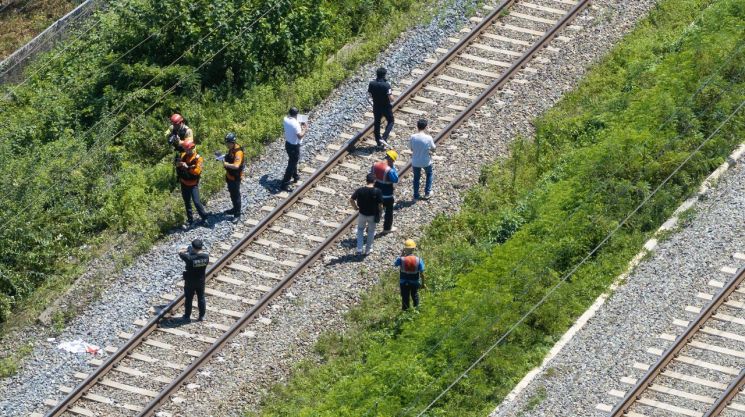 The Gyeongbu Line railroad in Cheongdo County, Gyeongbuk, where a Mugunghwa train struck seven workers who were working near the tracks. Photo by Yonhap News.
Replaced with Each Administration Change... Blame for Safety Accidents
The first president, Shin Gwangsoon, resigned just four months after taking office due to his involvement in a "power-related corruption scandal over Russian oil field development." The second president, Lee Chul, a former activist who was sentenced to death in the "National Federation of Democratic Youth and Students" case but later pardoned, managed to turn the company’s performance into the black. However, he tendered his resignation just before the change of administration in 2008.
The third president, Kang Kyungho, was arrested for accepting bribes in connection with personnel appointments at Kangwon Land and was forced out after only five months in office. The fourth president, Heo Junyoung, a former Commissioner General of the National Police Agency, voluntarily resigned three months before the end of his term to run in the 2012 general election. The fifth president, Jung Changyoung, a former Board of Audit and Inspection official, clashed with the administration over issues such as opposition to railway privatization and stepped down after just one year.
The sixth president, Choi Yeonhye, recognized as a true railway expert, resigned to run in the 20th general election. The seventh president, Hong Soonman, resigned one year and three months after the change of administration. The eighth president, Oh Youngsik, stepped down in disgrace following the KTX derailment accident on the Gangneung Line.
The ninth president, Sohn Byungseok, resigned with nine months left in his term amid controversy over manipulated customer satisfaction scores and an "E" grade in management evaluation. The tenth president, Na Heeseung, who was appointed at the end of the Moon Jae-in administration, failed to complete his term after Minister of Land, Infrastructure and Transport Won Heeryong’s recommendation for dismissal was accepted, citing consecutive accidents and a 1.8 billion won penalty.
'11th' President Han Moonhee Also Steps Down in Disgrace... Resignation Over Cheongdo Train Accident
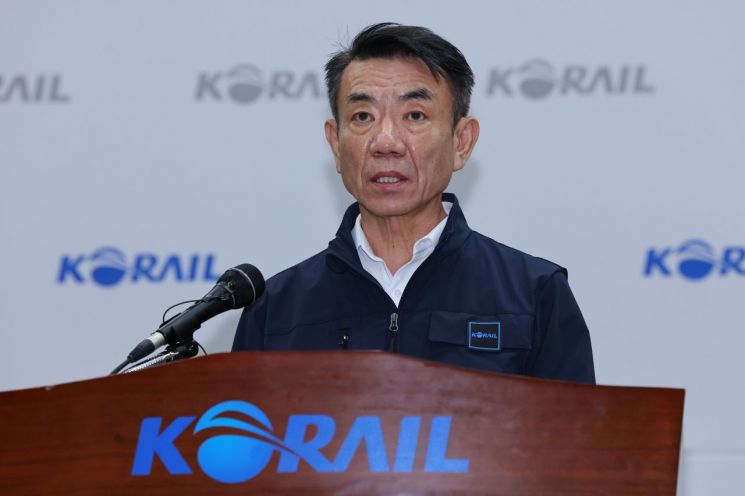 Han Moonhee, CEO of Korail, who tendered his resignation following the Cheongdo railway accident. Photo by Yonhap News.
Han Moonhee, the 11th president who took office in July 2023, is now set to resign after just over two years. Following the accident on August 19, 2025, in which a Mugunghwa train struck seven workers on the Gyeongbu Line in Cheongdo County, North Gyeongsang Province-resulting in two deaths and five others seriously or critically injured-he expressed his deep sense of responsibility and tendered his resignation. Han apologized to the bereaved families and the public and submitted his resignation to the Ministry of Land, Infrastructure and Transport.
As a result, all eleven Korail presidents in history have now resigned before completing their terms, without exception and in disgrace. This situation, in which presidents from political, academic, police, and railway expert backgrounds have all left prematurely, highlights both "institutional limitations" and "structural risks." Korail is a high-risk public corporation, responsible for operating a vast organization and managing railway lines nationwide. However, the appointment of its presidents has often been influenced by political considerations and alignment with the current administration.
Within the industry, there is a growing consensus that, given the recent confrontational stance of the railway union, it would be preferable to select an internal candidate who understands the railway system and can ensure organizational stability, rather than an outsider. Meanwhile, as Korail is also in discussions to integrate with SR, the operator of Suseo High-Speed Railway (SRT), it is expected that considerable time will be required before a new president is appointed.
© The Asia Business Daily(www.asiae.co.kr). All rights reserved.