Led by Lutnick... Equity Stakes in Exchange for CHIPS Act Support
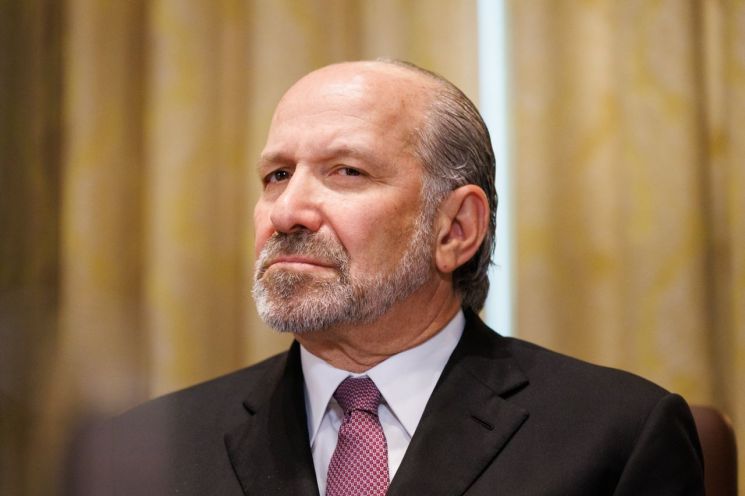
Reuters reported on the 19th (local time), citing anonymous sources, that Howard Lutnick, U.S. Secretary of Commerce, is considering a plan for the U.S. government to receive equity stakes in semiconductor companies building factories in the United States with support from the CHIPS Act.
Companies such as Taiwan's TSMC, U.S.-based Micron, and South Korea's Samsung Electronics fall under this category. According to the amounts finalized by the U.S. Department of Commerce at the end of last year under the Biden administration, TSMC was allocated $6.6 billion (9.2 trillion won), Micron $6.2 billion (8.6 trillion won), and Samsung Electronics $4.75 billion (6.6 trillion won) in CHIPS Act subsidies. Secretary Lutnick stated in June that these subsidies were "excessively generous" and that the Department of Commerce was renegotiating the terms. He also mentioned that Micron had proposed to increase its investment in U.S. semiconductor plants.
The source said that U.S. Treasury Secretary Scott Besant is also involved in the discussions on this plan, but Secretary Lutnick, as the relevant cabinet minister, is leading the initiative. The source also reported that President Donald Trump is supportive of the plan.
Analysts view this proposal as an expansion of the U.S. government's plan to receive a 10% equity stake in Intel in exchange for providing subsidies. In an interview with CNBC on the same day, Secretary Lutnick said, "The CHIPS Act was simply about giving money to wealthy corporations," and added, "President Trump says, 'Let's turn the money former President Biden was just going to give away into equity for Americans. If we give money to companies, we should get a share in return.' If this money is in President Trump's hands, we can get a better deal for American taxpayers."
It is unusual for the U.S. government to invest in large corporations in this manner. Previously, in June, President Trump approved Nippon Steel's acquisition of US Steel on the condition that the U.S. government would hold a 'golden share' granting veto power over key management decisions.
According to Reuters, TSMC declined to comment on the report, while Micron, Samsung Electronics, and the White House did not respond to requests for comment.
The semiconductor industry has expressed strong concerns. Samsung Electronics and SK Hynix had already finalized the amount of subsidies under the Biden administration and determined their final investment scale in the U.S. based on those figures. Since the subsidies were agreed upon as compensation for their investments, the prevailing view in the industry is that it would be practically unacceptable for the U.S. government to unilaterally demand additional concessions, such as equity stakes. South Korean semiconductor companies are reportedly on edge over the potential for this issue to escalate.
An industry official stated, "Finalizing the investment amount based on the subsidy agreement is essentially the same as signing a binding contract between companies. While it would be reasonable to renegotiate the terms by mutual agreement, there are significant concerns that, simply because the counterpart is the U.S. government, companies may find themselves at a disadvantage during negotiations."
© The Asia Business Daily(www.asiae.co.kr). All rights reserved.

















