Reviving Tradition with Cutting-Edge Technology
'Heritage: The Future Fantasy' Opens on August 23
A 1,322-Square-Meter Immersive Space with 47 Projectors, Free Admission
Rituals of the Joseon Dynasty are brought back to life through cutting-edge technology, and animals from mother-of-pearl patterned landscape paintings seem to run around the visitors. This is the immersive experience offered by 'Heritage: The Future Fantasy,' an exhibition space created by the National Heritage Administration and the National Heritage Promotion Agency at Exhibition Hall 2 of the Dongdaemun Design Plaza (DDP) Museum in Seoul. Korea's cultural heritage has been reborn through various visual technologies.
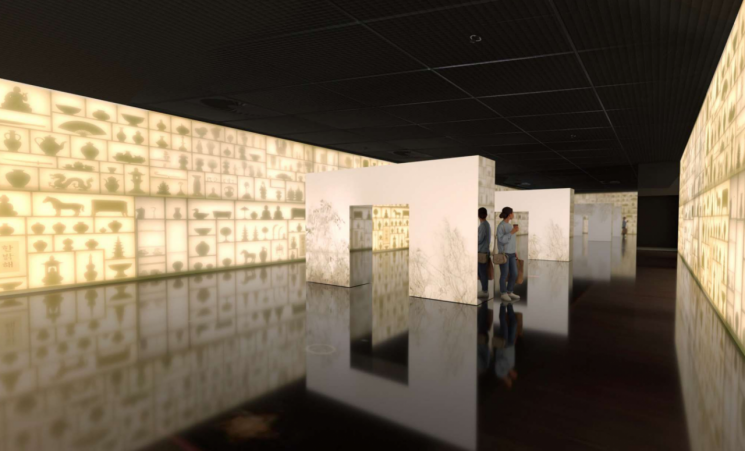
This exhibition, held from August 23 to September 17, aims to provide a new cultural experience for modern audiences by transforming traditional heritage into digital formats. Forty-seven high-resolution projectors have been installed in a 1,322-square-meter (400-pyeong) space, enveloping the walls, ceiling, and floor entirely in visuals. It is the largest immersive exhibition in Korea to feature cultural heritage as its main theme.
Lee Guyoung, President of the National Heritage Promotion Agency, stated at an on-site briefing on the 19th, "We are presenting a collection of digital cultural heritage materials accumulated over the years," adding, "Each piece creates a new sense of wonder by merging tradition with advanced technology." Director Kang Shinjae, who planned the exhibition, said, "We explored the future potential of cultural heritage using the latest technologies such as artificial intelligence (AI) and virtual reality (VR)."
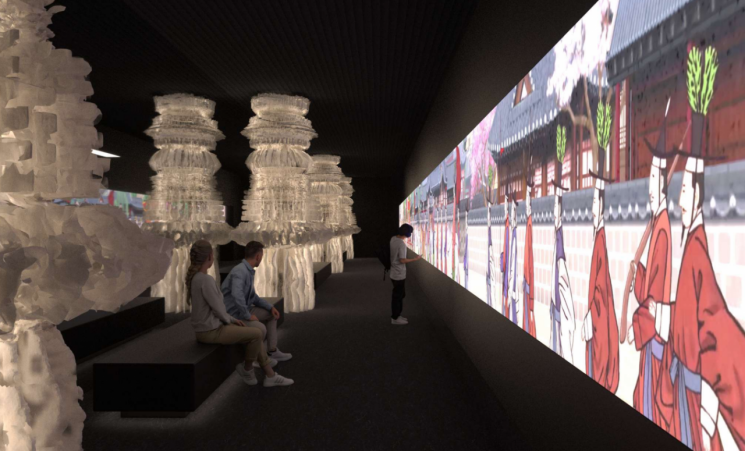
Upon entering the exhibition hall, visitors are greeted by a sculpture inspired by stone pagodas, suspended from the ceiling. This work is a modern reinterpretation of Korea's representative stone cultural heritages, such as the Seokgatap and Dabotap pagodas, and features constantly changing appearances through the use of LED lighting and motors.
In the first section, the Uigwe, royal protocols of the Joseon Dynasty, are presented as three-dimensional visuals. Scenes of auspicious and inauspicious rituals (Gillye and Hyungnye) are restored using computer graphics and projected onto all four walls, creating the illusion of being present at a royal ceremony 500 years ago. Ancient books placed in the center of the exhibition hall enhance the sense of realism.
The next space features auspicious animals and plants depicted in traditional paintings. The ten symbols of longevity, including deer, cranes, pine trees, and bullocho (immortality herbs), are rendered as digital animations covering the walls. The subtle sheen of mother-of-pearl adds to the visual beauty. Visitors can relax on cushions in the center and enjoy the visuals extending up to the ceiling.
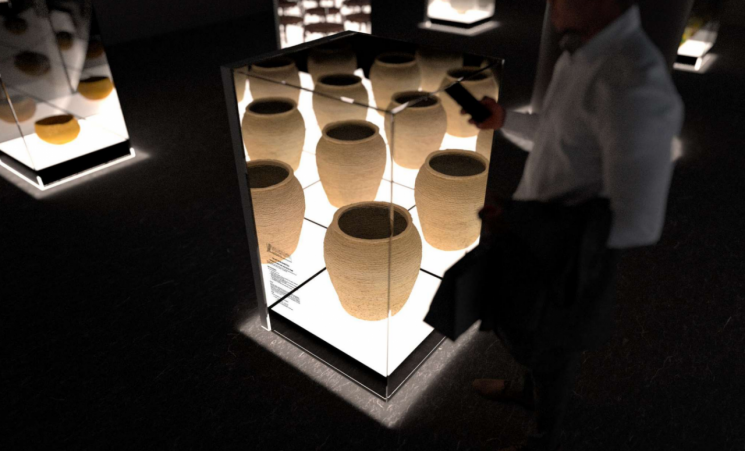
The third section resembles the workshops of intangible cultural heritage masters. The black-and-white film footage on a large screen shows various master craftsmen at work, from traditional hat makers to swordsmiths. The process of transforming natural materials such as wood, clay, and water into works of art is visualized using AI, and actual traditional crafts are displayed to deepen understanding of intangible heritage.
The corridor leading to the fourth exhibition room is designed to depict a royal procession from the late Joseon period. The entire 22-meter-long wall displays the 'Hwaseong Haenghaengdo' (1795), a painting of King Jeongjo's procession to pay respects at the tomb of his father, Prince Sado. The large-scale procession involving hundreds of participants is rendered with vivid realism, as if passing right before your eyes.
The final exhibition space showcases the globalization of Korean cultural heritage. A reinterpretation of 'Sharing for Connection,' which received acclaim at the Gangneung Arte Museum, has been installed as a 360-degree screening facility utilizing the floor and columns. The silhouettes of over 200 real artifacts are projected onto the walls, creating a unique atmosphere where past and present, reality and virtuality intersect.
On the way out after the exhibition, visitors encounter an installation art piece inspired by the traditional Korean temple bell. The gentle changes in lighting and the sound of the bell provide a serene farewell to the audience.
At the souvenir shop, visitors can purchase a variety of goods, including accessories featuring the magpie and tiger characters from the recent hit Netflix animated film 'K-Pop Demon Hunters.' The shop is open from 10 a.m. to 8 p.m., and admission to the exhibition is free.
© The Asia Business Daily(www.asiae.co.kr). All rights reserved.



















