Nearly 71,000 Cervical Cancer Cases Annually
70-80% of Head and Neck, Oropharyngeal Cancer Patients Are Male
Taiwan to Expand 9-Valent HPV Vaccination to Male Adolescents Starting in September
Amid a series of bills proposed to support human papillomavirus (HPV) vaccination for both males and females aged 12 to 26, attention is focused on whether this bill will pass the National Assembly this year, enabling free vaccination for men. Nearly 100,000 people in Korea are diagnosed with cervical cancer, head and neck cancer, and oropharyngeal cancer caused by HPV infection each year. However, Korea remains one of the few countries worldwide that does not provide government support for male HPV vaccination.
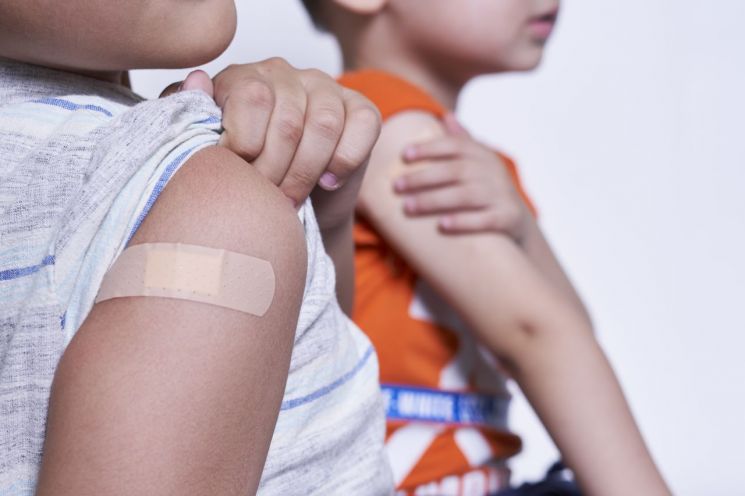 Amid a series of bills proposed to support human papillomavirus (HPV) vaccination for both males and females aged 12 to 26, attention is focused on whether this bill will pass the National Assembly this year, enabling free vaccination for men. Getty Images
According to the National Assembly and the medical community on August 20, a recently proposed amendment to the "Infectious Disease Prevention and Control Act" by Kim Mi-ae, a member of the Health and Welfare Committee from the People Power Party, includes a provision to expand the eligible recipients of HPV vaccination from "females aged 12 to 26" to "all individuals aged 26 or younger." Previously, a related bill sponsored by Lee Sujin of the Democratic Party also called for government support of HPV vaccination costs for all citizens aged 12 to 26, regardless of gender or income. Expanding the national HPV vaccination program was also one of President Lee Jaemyung’s campaign pledges during the last presidential election. The Korea Disease Control and Prevention Agency (KDCA) recently unveiled a national immunization roadmap in a report to the National Assembly, which includes expanding the HPV vaccination target from female adolescents to both male and female adolescents.
Currently, the government only provides the HPV vaccine as part of the national immunization program for female adolescents aged 12 to 17 and low-income women aged 18 to 26. There are three types of HPV vaccines approved in Korea, and among them, the bivalent vaccine "Cervarix" and the quadrivalent vaccine "Gardasil" are available free of charge. However, the 9-valent HPV vaccine, which offers the broadest protection, is still only available at personal expense.
Although men are equally at risk of HPV infection and vaccination is recommended, government budget constraints mean they are not yet included in the support program. Depending on age, two to three doses are required, and each dose typically costs between 150,000 and 300,000 won, which must be paid out-of-pocket. For this reason, the Yoon Suk-yeol administration previously attempted to increase the KDCA’s budget by 27.8 billion won to support male adolescents and transition to the 9-valent vaccine, but the plan was scrapped due to budget shortages.
According to a vaccination status survey for elementary and middle school entrants released by the KDCA last September, the first-dose HPV vaccination completion rate among female adolescents born in 2011 was 79.2% in 2024, while the rate for male adolescents born the same year was only 0.2%.
HPV, which is transmitted primarily through direct sexual contact, usually causes no symptoms and often clears on its own. However, persistent exposure to the virus can lead to cervical cancer, vaginal cancer, vulvar cancer, and anal cancer, and in severe cases, can be life-threatening.
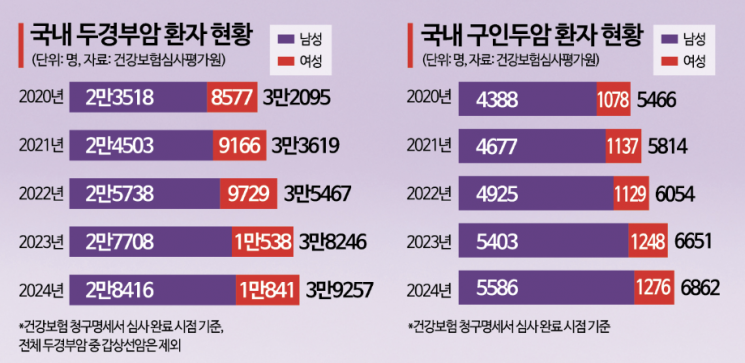
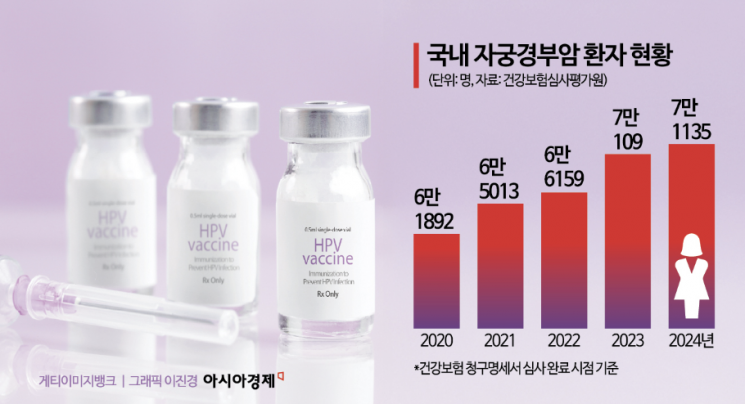
In Korea, there has been a recent surge in cancers primarily caused by HPV, such as cervical cancer and head and neck cancer. According to the Health Insurance Review and Assessment Service, the number of cervical cancer patients (female) increased steadily from about 62,000 in 2020 to over 71,000 last year. Excluding thyroid cancer, the number of head and neck cancer patients rose from 32,000 to 39,000 during the same period, with more than 70% being male. Among the approximately 6,800 cases of oropharyngeal cancer last year, over 5,500 were men (81.4%), indicating a faster increase among men than women.
To date, HPV vaccination is considered the only method that can prevent up to 96% or more of related cancers. For this reason, governments in 33 countries, including Finland and the Netherlands, provide HPV vaccines for both males and females, and among them, 29 countries-including the United States, the United Kingdom, Australia, Canada, France, and Germany-also support the 9-valent vaccine. In Asia, Taiwan will expand 9-valent HPV vaccination to male adolescents starting next month.
© The Asia Business Daily(www.asiae.co.kr). All rights reserved.
![Clutching a Stolen Dior Bag, Saying "I Hate Being Poor but Real"... The Grotesque Con of a "Human Knockoff" [Slate]](https://cwcontent.asiae.co.kr/asiaresize/183/2026021902243444107_1771435474.jpg)


















