8.83 Million Foreign Visitors in First Half, Up 15% Year-on-Year
Foreign Arrivals Rise, Outbound Demand Among Koreans Remains Strong
Tourism Deficit Persists as Government Hesitates on October Holiday
“Concerns Over Boosting Only Outbound T
With the implementation of a visa-free policy for Chinese group tourists starting next month, attention is focused on whether South Korea's annual multitrillion-won tourism deficit will improve.
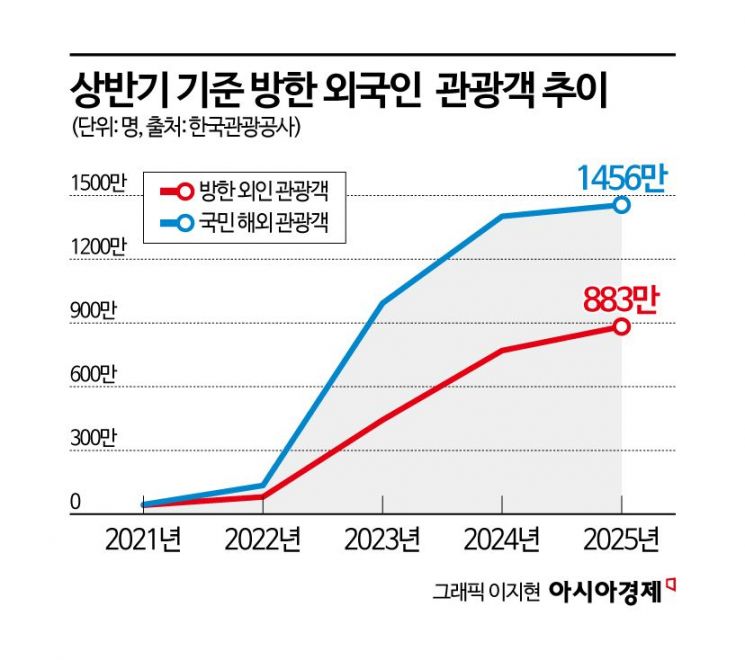
According to the Korea Tourism Organization on August 21, the number of foreign visitors to Korea in the first half of this year reached 8,825,967, marking a 14.6% increase compared to the same period last year (7,701,407). By nationality, Chinese visitors accounted for approximately 2.53 million, representing 28.6% of the total and ranking first by a wide margin. Japan ranked second with 1.62 million visitors (18.3%), followed by Taiwan with 860,000 (9.8%), meaning the top three countries accounted for 56.7% of all foreign visitors, surpassing half of the total.
 Fans that block intense sunlight or create a cool breeze can be considered essential items for the summer season. Near Gyeongbokgung Palace, a vendor is selling fans to foreign tourists dressed in hanbok who visit the palace despite the hot weather. Photo by Jo Yongjun
As Chinese tourists have become the largest customer group for Korea's tourism industry, the government is making greater efforts to attract them. On August 6, the government held a "Tourism Revitalization Mini Policy Task Force" meeting at the Government Complex Seoul, presided over by Prime Minister Kim Minseok, and decided to allow visa-free entry for Chinese group tourists from September 29 this year to June 30 next year.
The government stated, "Given the rapid recovery of the inbound tourism market, the implementation of this visa-free policy is expected to generate additional demand for travel to Korea, leading to tangible domestic economic stimulation such as revitalizing local economies." Previously, China has allowed visa-free entry for Korean citizens since November last year, and this policy was prepared by the Korean government in response after consultations among relevant ministries.
Previously, the number of Chinese tourists visiting Korea peaked at 8.07 million in 2016. However, in 2017, after China imposed a ban on travel to Korea in response to the deployment of THAAD (Terminal High Altitude Area Defense), the number of visitors was halved to 4.17 million. The COVID-19 pandemic further reduced the figure to just 170,000 in 2021. After the endemic phase, China fully lifted its ban on group tours to Korea in November 2023, after six years and five months, resulting in a clear recovery with 2.02 million visitors in 2023 and 4.6 million last year.
The implementation of the visa-free policy for Chinese group tourists is expected to further accelerate the recovery of Chinese tourism to Korea. In the first half of this year alone, 2.53 million Chinese tourists visited Korea, a 13.9% increase over last year, continuing the recovery trend. However, this is still only 90.2% of the 2019 pre-pandemic level and 66.2% of the 2016 peak, indicating there is still room for further growth.
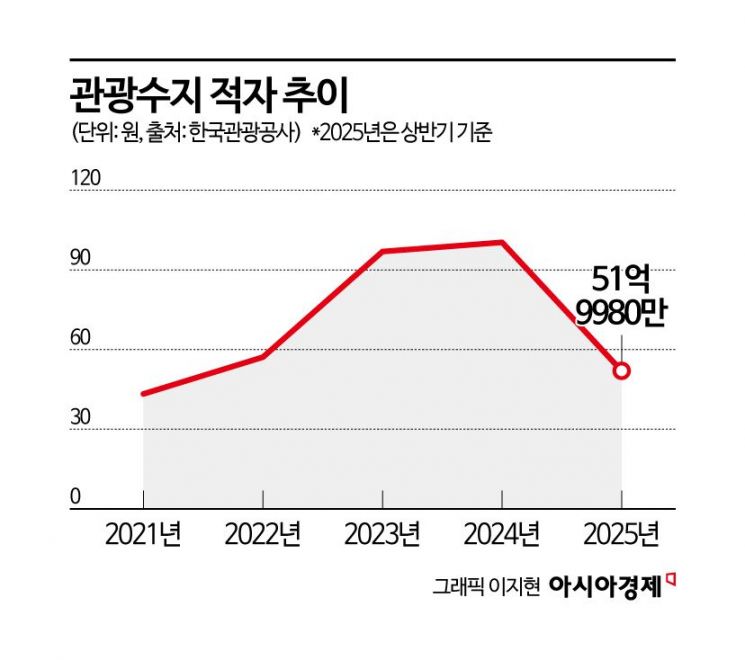
The new visa-free entry policy for Chinese group tourists is also expected to help resolve Korea's chronic tourism account deficit. In the first half of this year, Korea's tourism account deficit was recorded at $5.1998 billion (about 7.22 trillion won). Although the number of foreign tourists and their spending increased, the deficit persists because the number of Korean citizens traveling abroad far exceeds the number of incoming foreign tourists. In the first half of this year, 14,563,624 Koreans traveled overseas, a 3.9% increase from the same period last year (14,023,382). Although the growth rate has slowed somewhat, the upward trend continues, and the number is expected to surpass the all-time high of 28.71 million recorded in 2019.
With outbound travel demand expected to reach a record high, the government has made it clear that it is not considering designating a temporary public holiday in October. According to the Ministry of Economy and Finance and other sources, the government is not reviewing the designation of October 10 as a temporary public holiday. The government believes that extending holidays through temporary public holidays may encourage more people to travel abroad rather than domestically, thereby diminishing the actual effect of boosting domestic consumption.
In fact, when a temporary public holiday was designated on January 27 this year, creating up to a six-day break when combined with the Lunar New Year holiday, the effect on domestic consumption fell short of expectations. The number of outbound travelers reached a record high of 2.97 million, but domestic tourism spending decreased by 7.4% compared to the previous month and by 1.8% compared to the same period last year.
© The Asia Business Daily(www.asiae.co.kr). All rights reserved.



















