Even during the hot summer, when the discomfort index rises, Yeongcheon is filled with a sweet aroma.
Summer seasonal fruits such as peaches, apricots, plums, and grapes, which are grown in the region's ideal climate of abundant sunlight, low rainfall, and fertile soil, are ripening at their peak, captivating consumers nationwide with their taste and appeal.
As the nation's largest fruit-producing region, Yeongcheon is accelerating efforts to create a "prosperous rural community that attracts visitors," encompassing not only production but also processing, tourism, and future-oriented agriculture.
Driven by the belief that "agriculture is the future of the nation," the city has increased its agricultural budget every year, allocating a record 158.5 billion won this year to strengthen agricultural competitiveness.
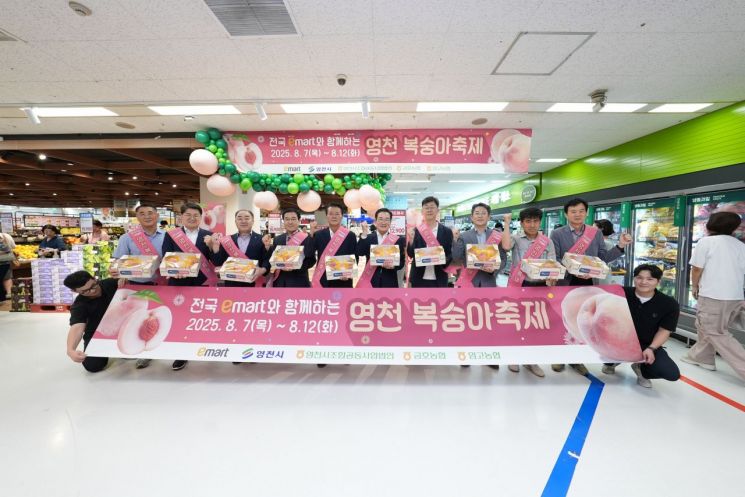
◆ 'Star Yeongcheon, Star Fruits'...Captivating Consumers Nationwide
Yeongcheon's signature fruits-peaches, apricots, plums, and grapes-are renowned for their high sugar content and excellent shelf life, earning consistent popularity among consumers.
The city has revamped the packaging for "Star Yeongcheon, Star Fruits" with a sophisticated design to coincide with the main summer shipping season, investing 1.1 billion won to support packaging production and ease farmers' burdens.
Additionally, regular safety inspections for residual pesticides and radioactive substances are conducted to ensure a safe environment for consumers.
To expand sales channels, Yeongcheon operates the online mall "Byeolbitchon Market" and actively promotes sales events in partnership with major retailers.
The local fruit festival, once limited to the region, has been expanded to nationwide promotional events at large supermarkets during the shipping season, providing more opportunities to reach consumers.
Last year, 210 tons of Yeongcheon grapes (worth 1.4 billion won) were sold at Emart, Lotte Mart, and Lotte Super, and this summer, peaches have continued to sell out at Top Mart and Emart locations nationwide.
The city also plans to hold Yeongcheon grape sales events at Emart and Lotte Mart stores nationwide from October to November, aiming to further increase farmers' incomes.
◆ Yeongcheon Wine: A Blend of Tradition and Innovation
As one of the country's leading grape-producing regions, Yeongcheon has established a solid presence in the domestic wine market since declaring its wine industry in 2007, continually advancing technology and improving quality.
Currently, 14 wineries are in operation, expanding their product lines by using not only grapes but also local fruits such as peaches, plums, apples, and mulberries.
Yeongcheon wines have been recognized for their excellence both domestically and internationally, winning awards at events such as the Berlin Wine Trophy and Asia Wine Trophy.
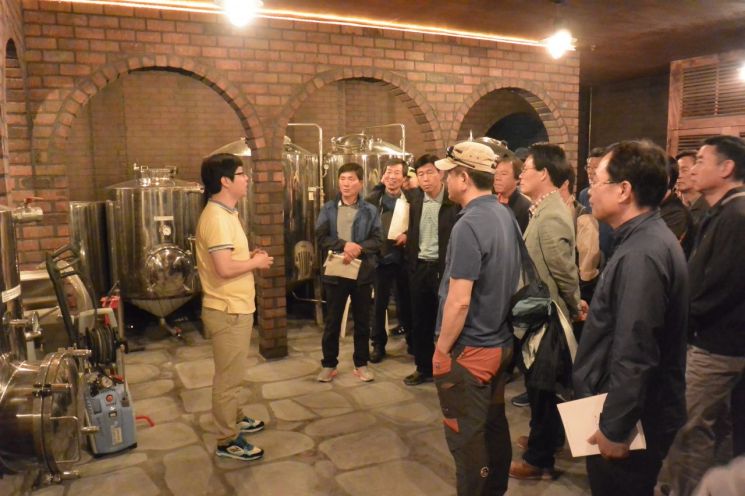
The city is building a convergent industry base by combining experience and tourism content-such as wine tours, wine schools, and the Wine Festa-on top of an integrated industry from grape cultivation to winemaking.
More than 30,000 people visit the wine tours annually, and the wine school offers courses in winemaking and sommelier training, steadily producing skilled professionals.
The Yeongcheon Wine Festa, now in its 13th year, attracted about 40,000 visitors last year and will be held this year from October 17 to 19 at Yeongcheon Riverside Park.
The event will feature a variety of attractions, including wine tastings, hands-on programs, and performances.
During the same period, the Korean Beef Barbecue Festival, Yeongcheon Herbal Medicine Festival, Arts and Culture Festival, Wangpyeong Song Festival, and Bohyeonsan Starlight Festival will also take place, filling Yeongcheon with festival excitement.
◆ Expanding the Smart Agriculture Base...Building a Future-Oriented Agricultural Model
To address climate change and the aging rural population, Yeongcheon is expanding its smart agriculture infrastructure.
At the Kumho-eup rental smart farm, young farmers who began moving in this June are cultivating cucumbers, tomatoes, and strawberries, demonstrating entrepreneurial skills and advanced cultivation techniques. Cucumbers and tomatoes have already been harvested, and strawberries are scheduled for harvest in November.
At the Buk-an-myeon subtropical smart farm, 18 new income crops, including apple mangoes and bananas, are being trial-cultivated in response to climate change. After the completion of the rental greenhouse in the first half of next year, it will be operated for returning farmers and young farmers.
Furthermore, Yeongcheon was selected for the "2025 Open-Field Smart Technology Convergence Demonstration Model Expansion Pilot Project," and plans to invest a total of 4 billion won to establish the nation's first integrated open-field smart technology model for peach cultivation, featuring autonomous weeding robots, GPS-based unmanned pest control machines, and unmanned pest monitoring traps.
◆ Enhancing Rural Vitality Through Comprehensive Support Policies
With a variety of support policies, Yeongcheon ranked first nationwide in the 2024 Statistics Korea survey for attracting returning farmers.
Every year, the city creates optimal cultivation environments through high-quality orchard facility modernization projects, and to address rural labor shortages, it has signed a business agreement with the Lao government to introduce foreign seasonal workers.
By 2027, dormitories for agricultural workers will be built in Kumho-eup and Gogeong-myeon to provide a stable labor supply base.
In addition, five regional agricultural machinery rental centers have been established to improve convenience and accessibility for farmers, while the opening of local food direct sales stores and the construction of a centralized strawberry seedling nursery are strengthening agricultural competitiveness.
Choi Kimoon, Mayor of Yeongcheon, stated, "Yeongcheon agriculture is evolving beyond simple production into a sixth industry that combines processing, tourism, and culture. We will do our best to create a prosperous rural community where farmers and the region grow together and consumers can trust."
© The Asia Business Daily(www.asiae.co.kr). All rights reserved.


















