Malaria Alert Issued Nationwide After Infected Mosquitoes Detected
KDCA Urges Prompt Testing for Fever and Chills Following Mosquito Bites
Mosquito Populations Rising in High-Risk Areas; Residents Advised to Take Precautions
A nationwide malaria alert has been issued in South Korea after mosquitoes infected with the Plasmodium vivax parasite were detected for the first time this year.
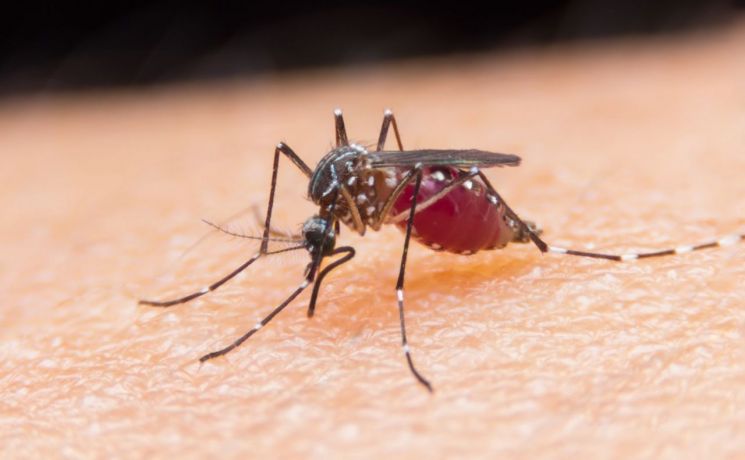
The Korea Disease Control and Prevention Agency (KDCA) announced on August 19 that, as a result of its investigation into malaria vector mosquitoes in high-risk areas, it had detected the Plasmodium vivax parasite in mosquitoes collected in Yanggu County, Gyeonggi Province, between July 27 and August 2 (week 31), prompting the issuance of a malaria alert.
Malaria is an infectious disease transmitted by bites from Anopheles mosquitoes carrying the malaria parasite. Symptoms include fever, chills, anemia, vomiting, and diarrhea. While the disease is most common in tropical regions such as Africa and Southeast Asia, cases also occur in northern Gyeonggi Province and northern Gangwon Province in Korea. The detection of the malaria parasite in mosquitoes indicates an increased risk of malaria infection from mosquito bites.
When bitten by a mosquito infected with Plasmodium vivax, there is an incubation period of about two weeks, after which symptoms such as chronic fatigue and high fever may appear. The disease can be treated with chloroquine, a conventional malaria medication, and the fatality rate is less than 0.1%.
The KDCA, in cooperation with the Ministry of National Defense and local governments, conducts annual surveillance of malaria vector mosquitoes from April to October, focusing on high-risk areas such as Ganghwa in Incheon; Paju, Yeoncheon, Goyang, Yangju, and Gimpo in Gyeonggi Province; and Yanggu and Hwacheon in Gangwon Province. This surveillance monitors changes in mosquito populations and infection rates. The average daily number of vector mosquitoes collected this year has decreased by 54.4% compared to last year (mosquito index: 82.4 to 37.6). However, after heavy rainfall during week 29, mosquito density began to rise, resulting in a 46.9% increase compared to the same period in previous years (4.9 to 7.2), and a 24.1% increase compared to the same period last year (5.8 to 7.2) by week 31.
This year, after a nationwide advisory was issued on June 20 due to an increase in vector mosquitoes, a total of eight regions were placed under alert as of July 13 due to the occurrence of malaria cluster cases and a rise in mosquito populations. As of now, with the confirmation of malaria-positive mosquitoes, a nationwide alert has been issued. As of July 13, there have been a total of 373 malaria cases in Korea this year, an 18.8% decrease compared to the same period last year (443 cases).
A malaria cluster case is defined as two or more patients in a high-risk area developing symptoms within 14 days (two weeks) of each other and living within 1 km of each other. This year, there have been 16 such cases, down from 22 during the same period last year. The main routes of infection are presumed to be being bitten by mosquitoes while resting outdoors in the evening (when mosquitoes are most active) after sweating, or while living or walking near lakes, parks, or puddles where vector mosquitoes can easily breed and thrive.
The KDCA emphasized that anyone who develops symptoms such as fever or chills after being bitten by a mosquito should promptly visit a public health center or medical facility for testing.
Im Seungkwan, Commissioner of the KDCA, stated, "With the malaria parasite now confirmed in vector mosquitoes and mosquito populations on the rise, the risk of patient occurrence has increased." He urged, "Local governments in high-risk areas should strengthen mosquito control measures, and residents and visitors in these areas should follow preventive guidelines such as minimizing outdoor activities at night, wearing long clothing and using repellents, and actively using mosquito nets while sleeping to avoid mosquito bites."
© The Asia Business Daily(www.asiae.co.kr). All rights reserved.

















