Meta Focuses on Displays, Google and Samsung on XR, Alibaba on Price
Differentiation Strategies Accelerate
Chinese Big Tech Joins the Race
Aiming to Lead the Market with AI, Payment, and Content Integration

Global IT companies are eyeing smart glasses as the next-generation device to succeed smartphones. With Meta Platforms (Meta), the Samsung-Google alliance, and Chinese tech giants such as Alibaba joining the race, there is a growing possibility that smart glasses will enter a full-fledged phase of mainstream adoption.
According to the IT industry on August 19, Meta, the parent company of Facebook, will unveil its next-generation smart glasses, "Hypernova," at the annual product launch event "Meta Connect" next month. Unlike previous camera-focused products developed in collaboration with Ray-Ban, Hypernova distinguishes itself by featuring an integrated display. Users can check a variety of information such as notifications and maps in real time on a small screen via the right lens display, and can also operate the device using a voice assistant or a wristband. According to Bloomberg, the starting price is $800 (approximately 1.11 million KRW). This is significantly lower than the initial market expectation of over $1,000 (about 1.39 million KRW), suggesting a strategy to lower the entry barrier. Meta appears to be prioritizing market expansion over immediate profitability.
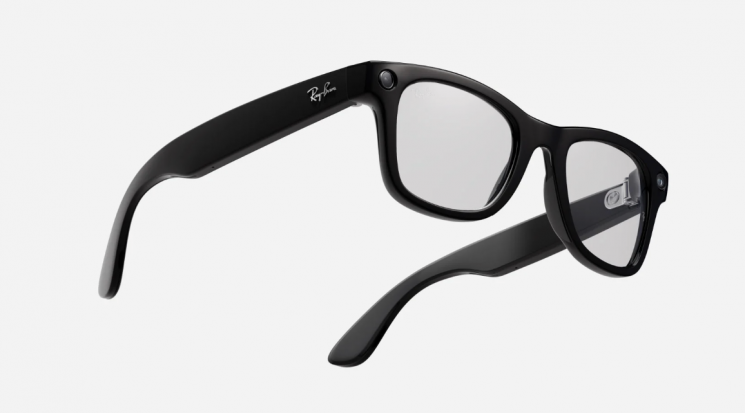 Smart glasses product released through collaboration between Meta and eyewear company Ray-Ban. Photo by Meta
Samsung is also collaborating with Google to develop XR-based smart glasses through the "Moohan" project. In May of this year, a prototype was unveiled at the Google Developer Conference, and global fashion brand Gentle Monster and other eyewear companies are participating as partners. A Samsung Electronics official explained, "The prototype that was revealed is an early-stage prototype, not yet at the commercialization phase," adding, "The launch timeline has not been set, and the project is just getting started."
China is also moving quickly to enter the market. Alibaba plans to launch "QUARK VISION" within this year. The starting price is set at 1,999 yuan (approximately 380,000 KRW), offering strong price competitiveness while maintaining robust functionality. The device is equipped with practical features for daily life, such as navigation and mobile payment. In China, companies like Xiaomi, Baidu, and ByteDance are also rapidly entering smart glasses development, heating up the market. As Alibaba seeks to differentiate itself with price, service, and AI connectivity, the product is expected to have an impact not only on the domestic Chinese market but also globally.
The competition in smart glasses is regarded as a battleground that will determine computing dominance after smartphones, extending beyond the wearable device market. Mark Zuckerberg, CEO of Meta, unveiled a new immersive AR smart glasses called "Orion" last year, emphasizing that "this will be the next computing device after smartphones." At the end of last year, Google also announced a new Android-based XR operating system, "Android XR," signaling its intent to expand its platform, while Samsung is leveraging its strength in combining hardware, displays, and the mobile ecosystem. Chinese tech giants are expanding the market base with low-cost strategies while strengthening integration with AI, payment, and content platforms.
An IT industry official commented, "Smart glasses will secure design competitiveness through collaborations with fashion brands and will divide the market with a dual strategy by price, ranging from entry-level to high-performance models. The key to success will be how naturally the augmented reality experience, combined with AI services, can be realized."
© The Asia Business Daily(www.asiae.co.kr). All rights reserved.


















