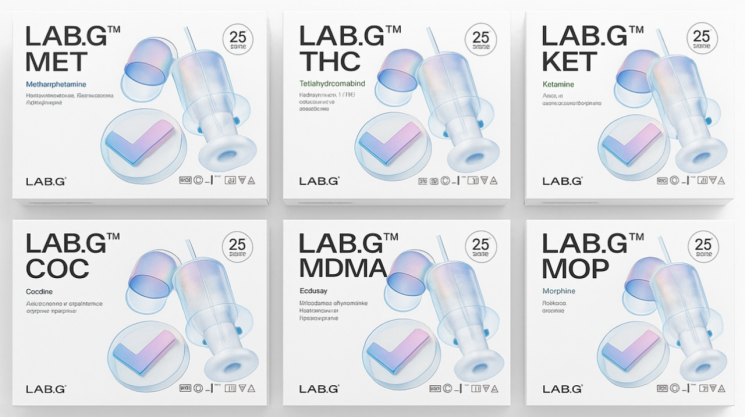
On August 18, LabGenomics, a global leader in molecular and immunodiagnostics, announced that it has independently developed a drug detection kit based on its core immunodiagnostic technology, enabling quick and easy screening for narcotics. The kit has received certification from the Ministry of Food and Drug Safety (MFDS) in Korea.
The newly launched lineup consists of six types of drug detection kits, which can identify the presence of the following narcotic substances in urine within 10 to 15 minutes: Methamphetamine (MET), Cocaine (COC), Opiate/Morphine (OPI), Marijuana (THC), Ecstasy (MDMA), and Ketamine (KET). The kits are designed for user convenience with a simple testing procedure.
To participate in government tenders for drug detection kits, it is mandatory to offer products capable of testing for all six substances: methamphetamine, cocaine, opiate, marijuana, ecstasy, and ketamine. In addition, as drug-related crimes and misuse have rapidly emerged as major social issues in Korea, diagnostic measures are being strengthened. Agencies such as the Military Manpower Administration, National Police Agency, and Offices of Education are expanding the range of drug screening items. There are also ongoing discussions about making drug testing mandatory in health checkups for public officials and employees, which is expected to drive a steady increase in demand for drug screening tests.
With this latest development, LabGenomics has secured a product lineup that enables participation in government tenders, and is expected to benefit from the growing demand for drug screening tests.
A LabGenomics representative stated, "Based on the positive results from the rapid antigen tests of the six new drug detection kits, we are planning a revenue model that leads to confirmatory testing (GC/MS, LC/MS) provided by LabGenomics Diagnostic Laboratory, which is expected to generate additional sales. Furthermore, by the end of this month, we plan to launch two combo kits capable of detecting four or six types of drugs in a single test, which is expected to help us rapidly increase our market share."
Meanwhile, in the second quarter of this year, LabGenomics recorded cumulative sales of KRW 17.4 billion, a 4% increase year-on-year, maintaining a gradual growth trend. However, the company posted an operating loss of KRW 20.5 billion and a net loss of KRW 15.3 billion. The sharp increase in operating loss was due to a one-time accounting change that reflected KRW 16.2 billion in bad debt expenses in the first half, resulting from a temporary increase in accounts receivable collection periods. Excluding bad debt expenses, the operating loss would have been around KRW 4.3 billion, down from KRW 6.7 billion in the previous year, indicating a continued reduction in losses. The company emphasized that it will not be swayed by one-off accounting factors and will accelerate profitability improvements by strengthening its sales network and expanding its lineup of high-value diagnostic products as part of a sustainable growth strategy.
© The Asia Business Daily(www.asiae.co.kr). All rights reserved.

















