KCCI Analyzes "Intellectual Property Industrialization Strategies"
No Korean Companies on the List of Global Top IP Holders
"Lack of Strategies for Diversified IP Utilization and Investment Capacity"
While the value of intellectual property (IP) in K-content is growing rapidly, a recent assessment has found that the competitiveness of Korean IP in the global market remains weak. The Korea Chamber of Commerce and Industry (KCCI) pointed out that not a single Korean company was included among the top 50 in global industrialization indicators, and called for a comprehensive IP industrialization strategy.
According to the "Report on Intellectual Property Industrialization Strategies" released by KCCI on August 17, the list of global top licensors-an indicator of IP industrialization capability-included 32 American companies such as Walt Disney (Mickey Mouse) and Authentic Brands (Hunter Boots), making the United States the leader. Japan followed with seven companies, including The Pokemon Company (Pokemon) and Sanrio (Hello Kitty). China also had two companies on the list, such as Alpha Group (Pleasant Goat and Big Big Wolf).
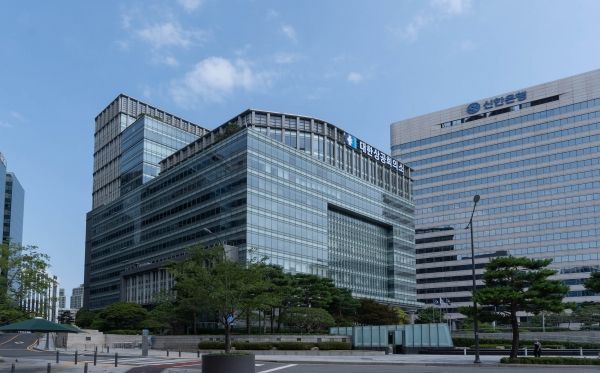 Exterior view of the Korea Chamber of Commerce and Industry. Korea Chamber of Commerce and Industry.
In contrast, despite successful cases like K-pop Demon Hunters, the report highlighted that Korea lacks a system to diversify IP and generate revenue from it. The report stated, "This is due to a shortage of original IP in Korea, insufficient strategies for the multifaceted utilization of IP, and a lack of investment capacity to support these efforts." It further emphasized, "As global export tariff barriers continue to rise, it is increasingly important to generate 'soft' money rather than relying solely on 'hard' money from manufacturing-focused industries."
Kang Kyungnam, a research fellow at the Korea Institute of Intellectual Property, analyzed that a 10% increase (about $900 million, based on last year's Korean figures) in IP royalty exports would lead to a 0.4% rise in GDP (Gross Domestic Product).
In practice, the American company Walt Disney has leveraged super IPs such as Mickey Mouse to collaborate with apparel brands and major retailers, resulting in approximately $62 billion in merchandise sales last year. The revenue generated from the IPs of the top 32 U.S. licensors reached about $242.45 billion (338 trillion won), equivalent to 13% of Korea's GDP in the same year. This demonstrates the immense profits being made from ideas and soft power.
Other companies on the list include Sanrio of Japan, which owns the long-running popular character Hello Kitty ($8.4 billion); Moomin Characters of Finland, which owns the diversity-symbolizing character Moomin ($770 million); and Alpha Group of China, which owns the national character Pleasant Goat and Big Big Wolf ($720 million).
The report recommended that Korea adopt a story-driven super IP strategy. It noted that while the popularity of K-pop Demon Hunters has led to increased global interest not only in K-pop but also in items such as gimbap, ramen, hoodies, knots, Hanok villages, Namsan Tower, fandom culture, and even shamanism, the actual profits are being captured by U.S. platforms and Japanese production companies. The report stated, "The trend is to expand into story-centered IP businesses," and advised, "Revenue models should be expanded to include webtoons, games, dramas, merchandise, and performances."
Some experts even suggest that it is time to enact a "K-pop Demon Hunters Act" to provide multidimensional support for a story-driven super IP strategy. KCCI Chairman Chey Tae-won recently emphasized, "We must strategically industrialize and export K-food to maximize our income," highlighting the need to industrialize and export the entire K-food supply chain.
The report also called for the creation of an "IP Sovereignty Fund." It noted, "Due to recent production cost issues, platforms such as Netflix and Disney+ are fully pre-investing in production costs for content like Squid Game and Moving. As a result, all copyrights and derivative value are being retained by the platforms." The report suggested, "By establishing an IP Sovereignty Fund to support projects in which production companies hold a significant equity stake, we can create a structure where production companies and platforms jointly share production costs and IP rights."
Furthermore, the report stressed the need for government financial support to help Korean industries secure overseas IP rights. It pointed out that in order to profit from IP exports, an average application fee of over 10 million won is required to secure overseas rights.
Lee Jongmyung, head of the Industrial Innovation Division at KCCI, stated, "In an era when the global market was unified, growth was possible simply by making good products and selling them well. However, that approach alone is no longer sufficient for growth." He added, "We must actively pursue a 'lock-in' strategy to create sustained global demand by industrializing IP in sectors such as K-food and content."
© The Asia Business Daily(www.asiae.co.kr). All rights reserved.

















