950 Centenarians Per 100,000 in Monaco
Wealth Concentration, Advanced Healthcare,
and Mild Climate Drive Longevity
Monaco, a small European country, has been identified as having the highest number of centenarians per capita in the world.
The UK’s Daily Mail reported on August 16 (local time) that, according to a recent analysis of United Nations (UN) population statistics, Monaco has 950 people aged 100 or older per 100,000 residents. This figure represents the highest rate in the world when adjusted for population.
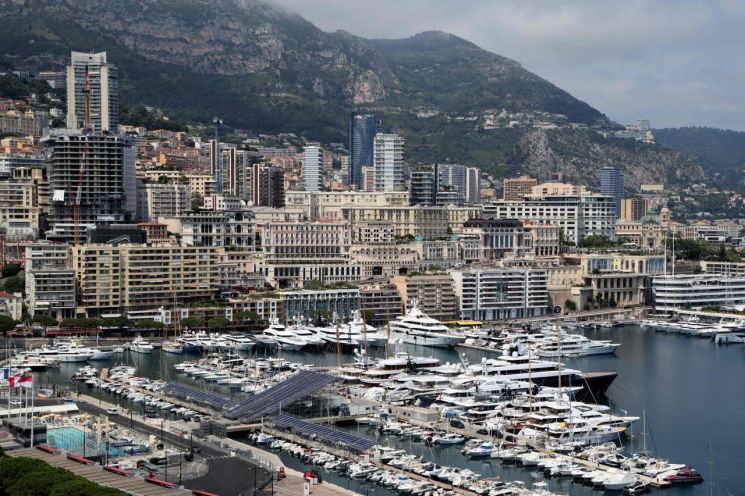 Monaco ranked first as the country with the highest number of centenarians per capita. Photo by AFP Yonhap News
Monaco, located on the Mediterranean coast in southern France, is the second smallest country in the world. Of its approximately 38,000 residents, about one-third are millionaires, making it a hub for the wealthy. Factors contributing to longevity in Monaco include an affluent lifestyle, a high-quality healthcare infrastructure, and a mild Mediterranean climate.
Following Monaco in the rankings are: Hong Kong (124 centenarians per 100,000), Guadeloupe (100), Japan (98), and Uruguay (85). Among major Western countries, the United Kingdom ranks 32nd with 26 centenarians per 100,000, while the United States is 46th with 20. In 27 countries, including some in Africa and Oceania, there are no centenarians at all.
Experts point to several reasons for the increase in the centenarian population: a decrease in smoking rates, advances in medical technology, improved working conditions, and healthier lifestyles in old age.
Professor Karin Modig of Sweden’s Karolinska Institute stated, "People who live past 100 have an ability to avoid major diseases. They age more slowly than others, and some do not experience any illnesses at all."
In fact, a study analyzing survivors born between 1912 and 1922 found that only 4% of those who reached 100 had suffered a stroke before the age of 85. In contrast, among those who died in their mid-90s, 10% had experienced a stroke at a similar age.
Further long-term follow-up studies also showed that centenarians tend to develop diseases later than average and that the progression of illnesses is typically slower. The rate of cardiovascular disease around age 80 among centenarians was less than half that of the general population.
According to UN statistics, there are an estimated 600,000 people aged 100 or older worldwide, with Japan accounting for about 120,000 of them. In the United Kingdom, the Office for National Statistics (ONS) reports that the number of centenarians has surpassed 16,000.
Other regions ranking high include Puerto Rico (82), Martinique (67), the Isle of Man (62), Guernsey (49), and mainland France (47).
The world’s oldest living person is currently Ethel Caterham, a British woman born in 1909, who is 115 years old. The oldest person ever recorded was Jeanne Louise Calment of France, who lived to be 122 years and 164 days old.
© The Asia Business Daily(www.asiae.co.kr). All rights reserved.

















