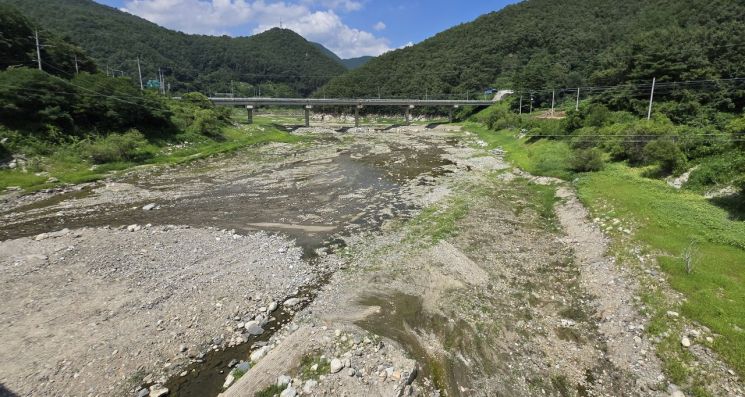
 On the 12th, the water storage rate of Obong Reservoir, the main water source in Gangneung City, Gangwon Province, dropped to a record low of 25.4%, with the mid-to-upper areas of the reservoir overgrown with weeds or exposing bare ground. As of the 15th, the water storage rate further decreased to 24.2%, leading to the implementation of water rationing. Yonhap News
On August 15, Gangneung City in Gangwon Province, which has been suffering from a severe drought, announced that it would implement Emergency Level 1 of the Disaster and Safety Countermeasures Headquarters and introduce water supply restrictions, as the water storage rate of Obong Reservoir, the city’s main source of drinking water, had plummeted to 24.2%. This storage rate is even lower than the previous record low of 26% set in 2000.
Water Supply Restrictions Implemented as Storage Rate Drops Below 25%
This measure is an urgent response aimed at ensuring a stable supply of water for daily use and establishing effective water management strategies. The water supply restrictions will apply to the entire Gangneung area (Hongje Water Purification Plant supply zone), and the end date will be announced separately depending on future developments. Major actions include adjusting the opening rates of valves at key reservoirs and purification plants (to control water quantity and supply in stages), supplying water by tanker trucks in areas experiencing poor water output, and temporarily suspending new water supply construction projects. The city has also urged citizens to reduce their daily water usage by more than 20% compared to normal times, and to actively participate in water-saving efforts at homes, businesses, and all public facilities.
Kim Cheolgi, head of the Waterworks and Sewerage Office, stated, "These water supply restrictions are an unavoidable measure to minimize drought damage and maintain a stable supply of daily-use water," emphasizing, "The active cooperation and understanding of all citizens is absolutely essential."
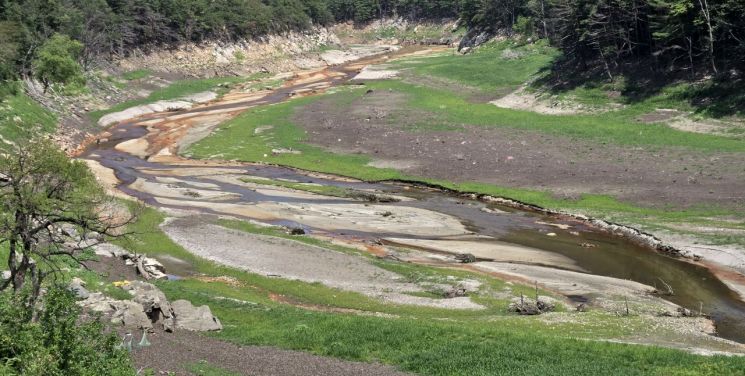 On the 12th, the water storage rate of Obong Reservoir, the main water source in Gangneung City, Gangwon Province, dropped to a record low of 25.4%, with the mid-upper stream areas of the reservoir either overgrown with weeds or exposing bare ground. As of the 15th, the water storage rate further decreased to 24.2%, prompting the implementation of water rationing. Yonhap News
Emergency Level 1 in Effect Since the 12th... All-Out Efforts to Secure Water
Since August 12, Gangneung City has been operating Emergency Level 1 of the Disaster and Safety Countermeasures Headquarters (DSCH). Due to the effects of a dry monsoon season, Gangneung’s rainfall this year is only about half the annual average, and with no heavy rain forecast through mid-August, saving water has become critical for drought response. The city has continuously monitored the water supply situation for both daily use and agricultural purposes, and has encouraged citizens to save water by conducting promotional campaigns during commuting hours through all city departments, as well as through social media and TV subtitles. On June 13, the city secured an additional water source by operating the Homeplus groundwater outflow facility (1,000 tons/day), and on July 25, it began operating the Lotte Cinema groundwater outflow facility (4,000 tons/day) to secure water for daily use.
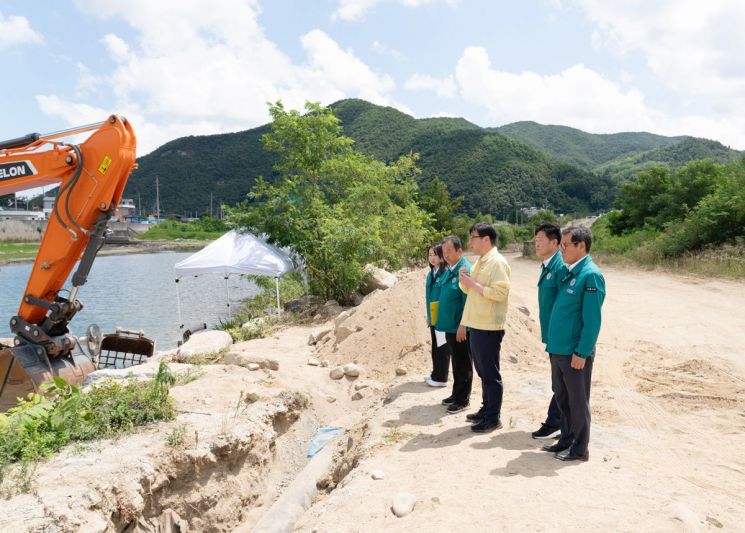 Gangneung Mayor Hongkyu Kim is conducting an inspection to overcome drought with Hyunsoo Jo, Director of Wonju Regional Environmental Office, who visited Gangneung on the morning of the 11th. Gangneung City
To help farmers cope with difficulties caused by a shortage of agricultural water during the farming season, the city has been working with the Korea Rural Community Corporation to operate the Obong Reservoir storage intake facility (3,000 tons/day) and the Namsancheon Gusan agricultural weir intake facility (10,000 tons/day). In addition, the city has made various efforts to secure water, including: adjusting the opening rates of outflow valves at 13 reservoirs (from 100% to 85%); regulating water pressure at 234 major municipal facilities; suspending the use of 14 municipal facilities (such as fountains); encouraging 197 large consumers that use more than 300 tons of water per day to reduce their usage; and suspending operations at three public swimming pools.
© The Asia Business Daily(www.asiae.co.kr). All rights reserved.



















