Weakening Impact of Government Support
Calls Grow for Additional Stimulus Measures
China's retail sales last month rose by 3.7% year-on-year, falling short of market expectations. Industrial production increased by 5.7%.
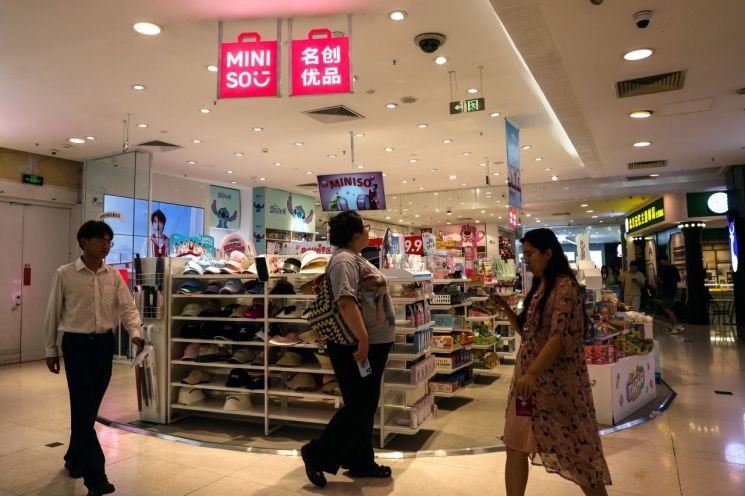
According to the National Bureau of Statistics of China on August 15, retail sales in July increased by 3.7% compared to the same month last year, below the market forecast of 4.6%. This marked the lowest figure since November last year, as the gap in policy support for the "Yi Gu Huan Xin" program continued amid seasonal factors such as heatwaves and floods. Retail sales, which include sales at department stores and convenience stores, are considered a key indicator of domestic demand.
Industrial production in July also rose by 5.7% year-on-year, missing the expected 5.9%. Fixed asset investment, which measures changes in capital investment in factories, roads, power grids, and real estate excluding rural areas, increased by 1.6% from January to July compared to the same period last year, also below the market expectation of 2.7%.
The average nationwide urban unemployment rate in July was 5.2%, up 0.2 percentage points from the previous month. The rate for January to July was also 5.2%. This appears to reflect seasonal factors such as the university graduation season in China.
The National Bureau of Statistics emphasized, "High temperatures and floods in some regions delivered a short-term blow to economic growth in July," adding, "Efforts are needed to strengthen the foundation for economic recovery."
In the market, concerns have been raised that, following the sharp slowdown in retail sales, industrial production has also hit an eight-month low, leading to calls for more economic stimulus measures going forward. Xu Tianchen, an economist at the Economist Intelligence Unit (EIU), analyzed, "China's economy is currently highly dependent on government support, but the problem is that much of this support was concentrated in the early part of the year. Now, its effects have somewhat faded."
While the Chinese government's policy support helped factories avoid a sharp slowdown by rushing out shipments during the lull in the US-China trade war, analysts believe that weak domestic demand and global risks will weigh on growth in the third quarter. Bloomberg News reported that, under these circumstances, the Chinese government has recently drawn attention by moving to curb fierce competition among companies instead of announcing large-scale measures to boost economic growth.
© The Asia Business Daily(www.asiae.co.kr). All rights reserved.

















