Wide Disparities in Heatwave Mitigation Facilities Across Seoul Districts
Potential Impact on Citizens' Right to Health
As extreme heatwaves become a part of daily life, there are significant differences in the scale of heatwave mitigation facilities installed across Seoul's districts. Concerns are being raised that these disparities in climate disaster response capacity could lead to inequalities in citizens' rights to health.
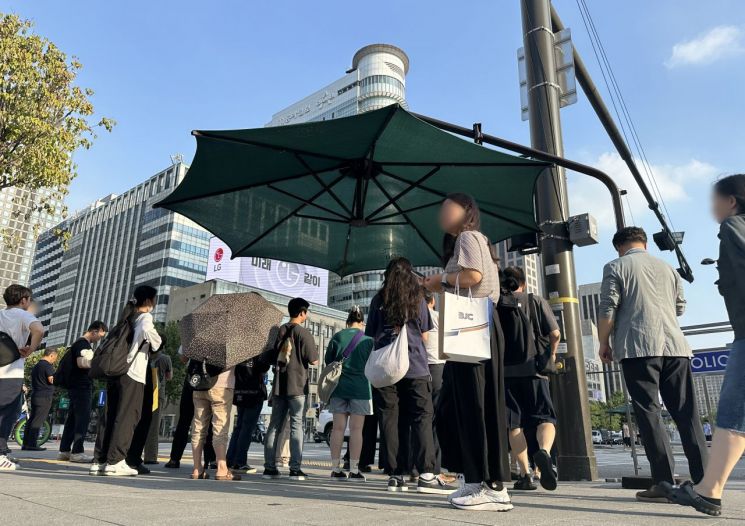
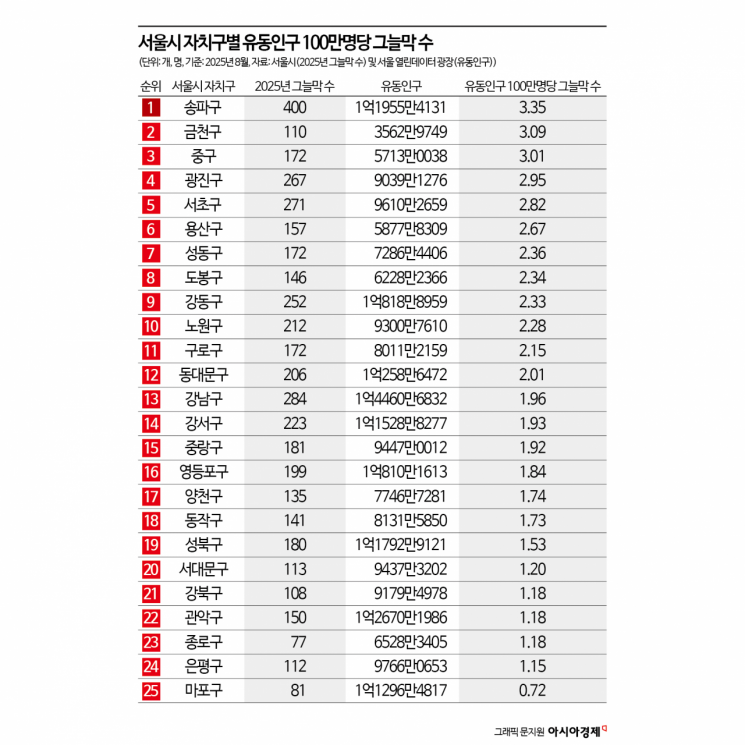
On August 19, Asia Economy analyzed the number of shade shelters installed in Seoul's 25 districts (as of August this year) and the floating population by district (as of the first quarter of this year). The analysis showed that Songpa District had the highest number of shade shelters per one million people, with 3.35 shelters. It was followed by Geumcheon District (3.09), Jung District (3.01), Gwangjin District (2.95), Seocho District (2.82), and Yongsan District (2.67).
Mapo District was the only district with fewer than one shade shelter per one million people, at 0.72. The gap between the district with the most and the least was as much as 4.65 times. In response, an official from the Mapo District Office stated, "We will actively consider additional installations, focusing on areas vulnerable to heatwaves."
Shade shelters serve as "shadows on the street" for pedestrians exposed to extreme heat. They are mainly installed in pedestrian-dense areas where there is a lack of shade, such as near crosswalks at large intersections. The first installation was in Seocho District in 2015 under the name "Seoripul Shelter," and since then, they have spread nationwide. Some districts, such as Yangcheon, have introduced smart shade shelters equipped with temperature and wind speed sensors, allowing for automatic opening and closing. Kim, a 76-year-old resident of Nowon District, said, "There is a big difference between having a shade shelter at a crosswalk and not having one. The longer you stand, the harder it is to breathe, but just having one shade makes it much less exhausting."
There were also significant disparities among districts in the installation of cooling fog systems. Cooling fog is an outdoor cooling facility that effectively lowers street temperatures by spraying fine water mist through high-pressure pumps during the summer. As of August this year, Seocho District had the most with 19 units, followed by Yeongdeungpo with 16 and Jung District with 15.
In contrast, Gangbuk District, where seniors aged 65 or older make up 25% of the population and are particularly vulnerable to heatwaves, had only two cooling fog installations. Furthermore, Songpa District, which has the largest resident population in Seoul at 650,000, had zero cooling fog systems. An official from the Songpa District Office explained, "We removed previously installed cooling fog facilities due to numerous complaints from residents who disliked being sprayed with water of unverified quality on their faces. There are currently no plans to reinstall them."
According to a 2021 study published in the Journal of Climate Change Research of Korea, titled "A Study on the Temperature Reduction Effect of Urban Heatwave Response Projects" (Yang Hojin, Lee Gwangjin, Bae Mingi, Lee Chaeyeon), cooling fog was found to lower the Universal Thermal Climate Index (UTCI) by one level. The evaporation of fine water particles in the air absorbs surrounding heat, creating an evaporative cooling effect that makes people feel less hot.
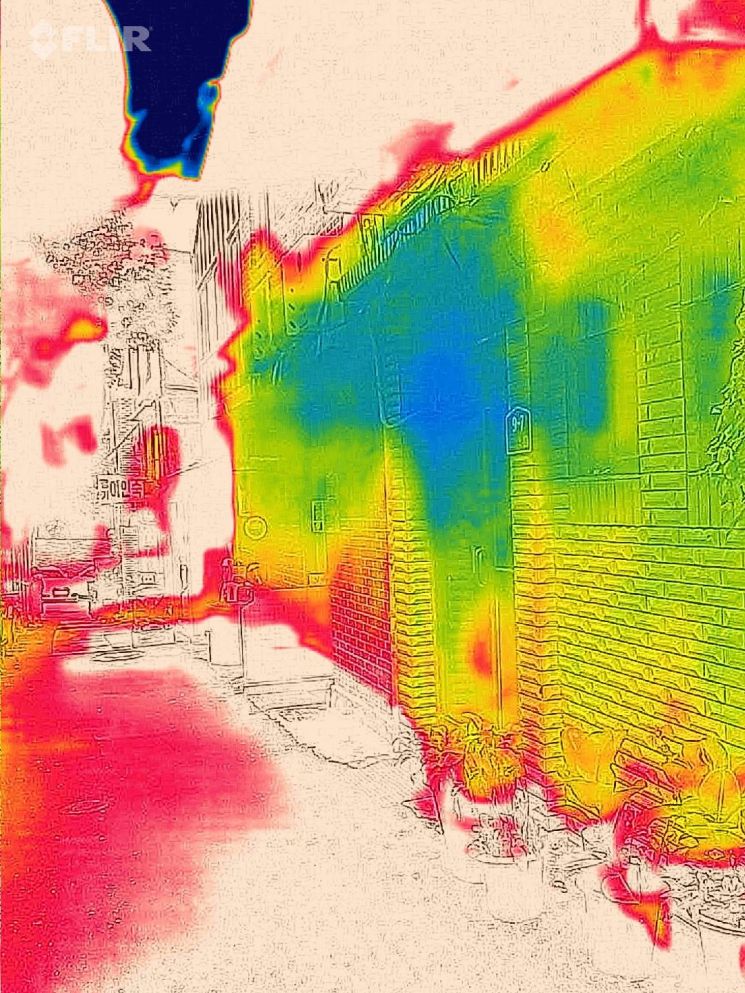 The appearance of the Seoul Station shantytown captured by a thermal imaging camera after the cooling fog was released. Photo by Yonhap News
Such disparities in heatwave mitigation facilities among districts stem from differences in budget conditions and prioritization. As heatwaves have become recognized as disasters, there are calls for cities to redesign their infrastructure to better respond. Lee Junyi, a professor at Pusan National University’s Climate Science Research Institute, advised, "Each local government should reprioritize its climate response budget, while the central government should prioritize support for vulnerable districts." Yoon Soonjin, a professor at Seoul National University Graduate School of Environmental Studies, also emphasized, "Now that heatwaves have become disasters, the infrastructure and systems to respond to them must be strengthened. The locations of heatwave mitigation facilities should be determined based on efficiency and equity."
© The Asia Business Daily(www.asiae.co.kr). All rights reserved.



















