Collaboration with Lithium Argentina
Aiming for Annual Production of 150,000 Tons
Ganfeng Lithium, China's largest lithium producer, is launching a project in South America to produce 150,000 tons of lithium annually.
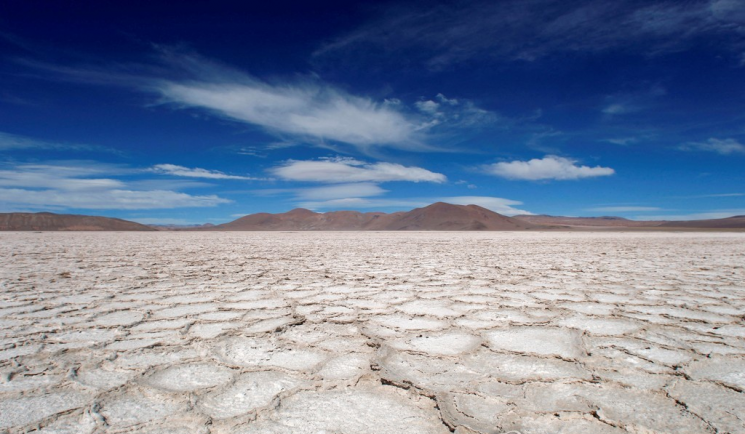
On August 14, the Hong Kong-based South China Morning Post (SCMP) reported that Ganfeng Lithium has signed a project with Lithium Argentina, a Swiss-headquartered company, to integrate three salt lake operations in the Salta region of Argentina.
Ganfeng Lithium will hold a 67% stake in the joint venture, while Lithium Argentina will own 33%. Sam Pigott, CEO of Lithium Argentina, explained, "This partnership will provide access to advanced technology, greater financial flexibility, and operational synergies," adding, "The global lithium supply chain will be strengthened."
The relevant project sites are the salt lakes of Pozuelos, Pastos Grandes, and Sal de la Puna, all located in Salta, Argentina. The two companies aim to extract and produce 150,000 tons of lithium carbonate per year from brine at these locations. They plan to gradually increase production using a hybrid method that combines solar evaporation and direct extraction, while also reducing water usage.
The two companies are already operating the Cauchari-Olaroz mine in Jujuy Province, northwestern Argentina, together with a local mining company. This deposit is located within the so-called "Lithium Triangle," which includes parts of Argentina, Chile, and Bolivia. Mining began last year, and the site now produces 40,000 tons of lithium carbonate annually. Utilizing both solar evaporation and direct extraction methods, it is known as Argentina's largest and most environmentally friendly brine project.
In addition, Ganfeng Lithium is pursuing lithium development projects in Australia, Canada, Mali, Mexico, and Ireland as part of its efforts to diversify its global supply chain.
The United States, which is competing with China over supply chains, is also working to develop lithium mines in Nevada and other locations. However, progress has been slow due to environmental regulations and opposition from local residents. At the same time, the U.S. is excluding Chinese lithium through subsidies under the Inflation Reduction Act (IRA), while expanding strategic cooperation with countries such as Canada, Australia, and Chile.
© The Asia Business Daily(www.asiae.co.kr). All rights reserved.

















