Summit on the 23rd, Two-Day Visit to Japan
"New Government's Pragmatic Approach"
With U.S.-China Rivalry in Mind
Seeking Leadership in Korea-Japan Shuttle Diplomacy
Highlighting Efforts to Improve Korea-Japan Relations to the U.S.
President Lee Jaemyung will visit Japan on August 23-24 for a summit and dinner with Japanese Prime Minister Shigeru Ishiba, ahead of his summit with U.S. President Donald Trump on August 25. This meeting comes 67 days after their approximately 30-minute conversation at the G7 Summit in June. It will be the first time the two leaders meet for a bilateral summit, rather than a multilateral one. The decision to visit Japan before meeting President Trump appears intended to highlight President Lee's efforts to improve Korea-Japan relations and to strengthen trilateral cooperation among Korea, the U.S., and Japan.
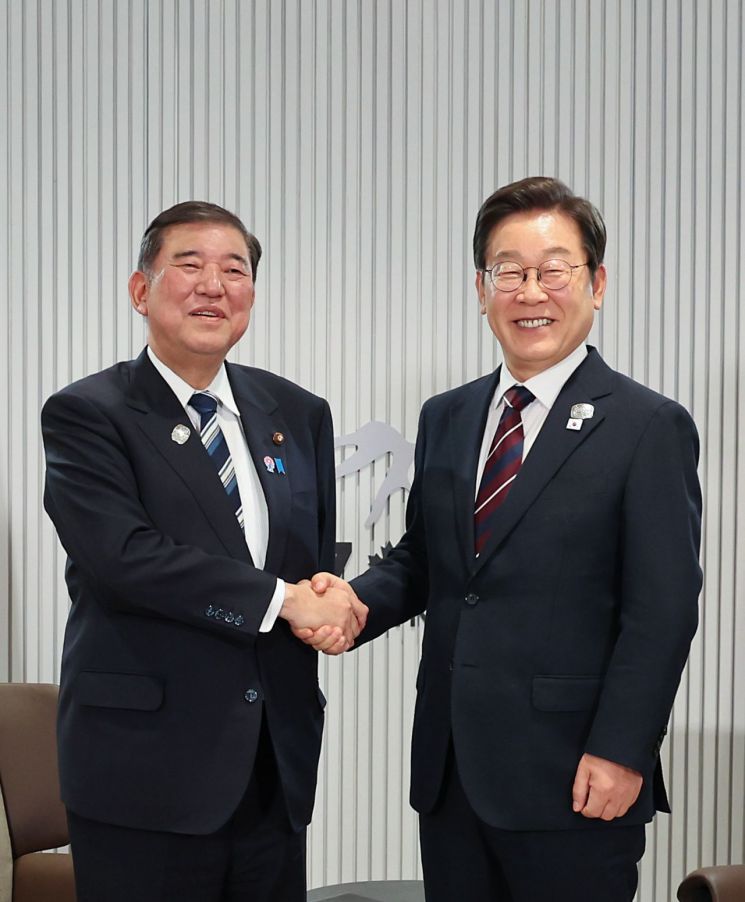
At a press briefing on August 14, Foreign Minister Cho Hyun stated, "President Lee will visit Japan on August 23-24 for a Korea-Japan summit on the 23rd," adding, "We will also discuss ways to strengthen Korea-Japan and Korea-U.S.-Japan trilateral cooperation." Minister Cho further explained, "At the first Korea-U.S. summit on the 25th, we plan to discuss ways to develop the Korea-U.S. alliance into a future-oriented comprehensive strategic alliance in response to the changing international security and economic environment, as well as ways to further strengthen the economic security partnership."
Previously, Foreign Minister Cho Hyun also visited Japan first on July 29 and then traveled to the United States. The fact that both the President and the Foreign Minister have scheduled their diplomatic agendas in a similar pattern, with a time gap, is seen as a decision made in consideration of President Trump and the U.S. government's focus on countering China.
In particular, by taking the initiative to improve Korea-Japan relations, the Korean government also appears to be aiming to preemptively address any concerns from the U.S. The Trump administration is likely to raise security issues such as increasing defense spending under the banner of "modernizing the alliance" during the upcoming Korea-U.S. summit. By proactively working to improve Korea-Japan relations, Korea may enhance its negotiating leverage at the table when dealing with security issues. Minister Cho explained, "We thought it was only natural to speak first with Japan, a country with a position similar to ours, before visiting the United States," and added, "President Lee's visit to Japan before his trip to the U.S. is possible because our government pursues pragmatic diplomacy."
This visit to Japan also reflects Korea's intention to take the lead in resuming "shuttle diplomacy" between the two countries. Korea and Japan need to address a range of issues, including security cooperation, North Korea policy, economic cooperation, and expanding people-to-people exchanges. Presidential spokesperson Kang Yoojeong stated the previous day, "The two leaders agreed in June to resume shuttle diplomacy as soon as possible," and added, "We hope this visit will deepen the personal bond and trust between the two leaders." Spokesperson Kang continued, "The Korea-Japan summit will serve to solidify the foundation for future-oriented cooperation between the two countries. The leaders will also have candid discussions on ways to strengthen Korea-Japan and Korea-U.S.-Japan cooperation, as well as on regional peace and stability, and other regional and global issues."
There is also interest in whether regional issues such as the lifting of import restrictions on Japanese seafood, which the Japanese government has requested, will be discussed at the summit. When asked about the possibility of discussing the lifting of Japanese seafood import restrictions and the Fukushima contaminated water issue-requests recently made by Japanese Minister of Agriculture, Forestry and Fisheries Shinjiro Koizumi to Minister Cho-spokesperson Kang replied, "The agenda is still being coordinated, as the health and interests of our people are our top priorities."
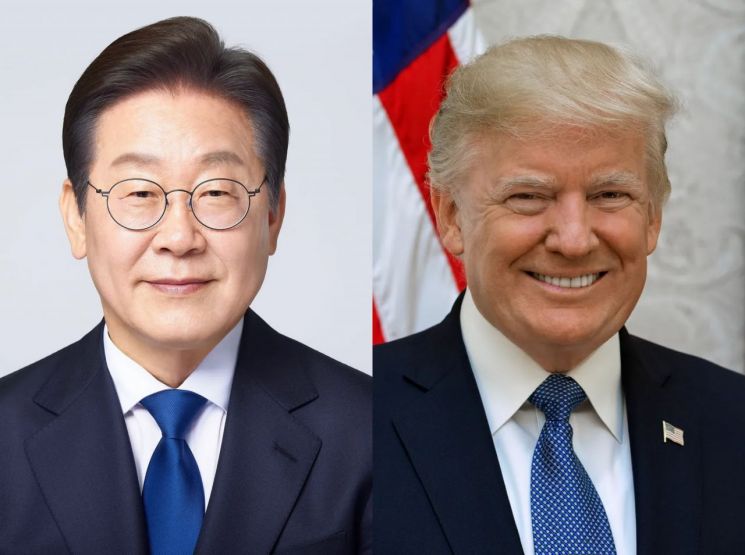
Meanwhile, when asked how far issues such as the modernization of the Korea-U.S. alliance and the reduction of U.S. Forces Korea might be discussed at the Korea-U.S. summit, Minister Cho said, "Working-level consultations and negotiations are currently underway," and refrained from providing details, saying, "It would be inappropriate to comment on specifics." Regarding the possibility of U.S.-North Korea dialogue, he commented, "This is a time when President Trump's leadership in creating something new is needed." On the possibility that North Korea may demand recognition as a nuclear-armed state as a precondition for talks, Minister Cho said, "So far, the United States has maintained its position that North Korea cannot possess nuclear weapons," and added, "I think some push-and-pull will be necessary between the U.S. and North Korea." In this context, it is noteworthy that Kim Yo-jong, Deputy Director of the Workers' Party of Korea, has downplayed the Lee administration's measures to ease tensions with North Korea.
© The Asia Business Daily(www.asiae.co.kr). All rights reserved.


















