Citizens’ History Museum to Be Established at Former Textile Factory Site
UNESCO Memory of the World Registration Sought for “Lee Geumju Records”
Memorial Tower for Veterans to Be Built at Sangmu Citizens’ Park
To commemorate the 80th anniversary of Liberation, Gwangju City is set to launch a series of initiatives to honor the spirit of national merit and preserve historical memory. The main projects include: the establishment of the Citizens’ History Museum on Forced Mobilization under Japanese Rule; efforts to register the records of the late Lee Geumju, president of the Gwangju Association of Bereaved Families of Pacific War Victims, as UNESCO Memory of the World; and the designation of a site for the construction of a Memorial Tower for Veterans.
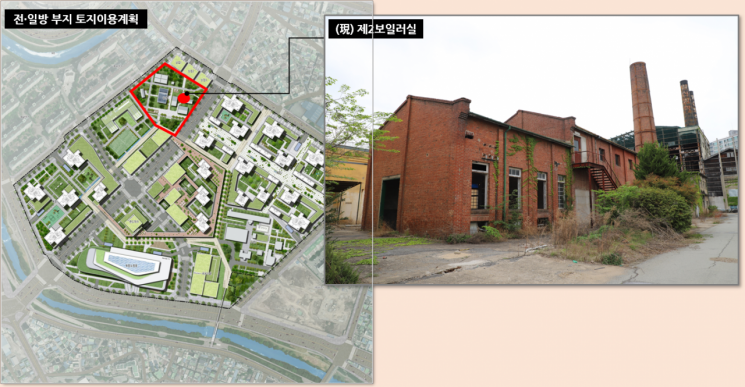
According to the city on August 13, in order to carry on the spirit of resistance against Japanese colonial rule and forced mobilization, a (tentatively named) Citizens’ History Museum on Forced Mobilization under Japanese Rule will be established within the historical and cultural park at the former Jeonbang and Ilsin Textile sites in Im-dong, Buk-gu. The museum will display records left by the late Lee Geumju, known as the “matriarch of forced mobilization victims,” among other materials.
The historical and cultural park, where the museum will be located, is home to the only remaining industrial facility from the Japanese occupation era in Gwangju: the Second Boiler Room of the former Jeonam Plant of Jongyeon Spinning, the predecessor of Jeonbang and Ilsin Textile in the 1930s. Operated by a Japanese textile company, the Jongyeon Spinning Jeonnam Plant was the largest of its kind in Korea, with 35,000 spindles, 1,440 looms, and 3,000 employees. Most of the factory facilities were destroyed during the Yeosu-Suncheon Incident and the Korean War, and only four structures remain today: the power plant, Boiler Rooms 1 and 2, and an elevated water tank.
The city is also working to have the records left by the late Lee Geumju, president of the Gwangju Association of Bereaved Families of Pacific War Victims, registered as UNESCO Memory of the World. Lee devoted her life to fighting against the Japanese government, leaving behind 1,670 items documenting the reality of forced mobilization and Japanese atrocities, including testimonies from victims, lists of those mobilized, original lawsuits filed against the Japanese government, and video materials. The collection also includes photographs and videos of the activities of the Gwangju Association of Bereaved Families of Pacific War Victims, as well as the records of 1,273 victims who participated in the “Lawsuit of 1,000” against the Japanese government.
The National Archives of Korea has also recognized the historical value of these records, receiving thousands of items between 2023 and 2024 and undertaking digitization efforts. The city plans to use the international registration of these records to widely promote Gwangju’s spirit of resistance and historical identity to the global community.
On July 17, Mayor Kang Gijung met with Lee Gukun, president of the Citizens’ Group for Forced Mobilization under Japanese Rule; Kim Jeongho, former head of the Gwangju-Jeonnam branch of Lawyers for a Democratic Society; Ahn Jongcheol, researcher at the Korea Institute of Contemporary Society (former head of the UNESCO registration task force for 5·18 records); and Noh Seongtae, director of the Namdo History Research Institute, to discuss the establishment of the Citizens’ History Museum on Forced Mobilization under Japanese Rule and the UNESCO registration of the records of the late Lee Geumju.
The city also plans to build a Memorial Tower for Veterans to honor the noble sacrifices of those who served the nation. The site is Sangmu Citizens’ Park in Chipyeong-dong, Seo-gu.
Mayor Kang Gijung stated, “On the 80th anniversary of Liberation, we will further elevate our respect and support for national merit recipients and their families. By establishing the Citizens’ History Museum on Forced Mobilization under Japanese Rule, registering the records of the late Lee Geumju as UNESCO Memory of the World, and constructing the Memorial Tower for Veterans, we will create meaningful spaces to pass on the spirit of patriotism to future generations.”
© The Asia Business Daily(www.asiae.co.kr). All rights reserved.

















