The U.S. Department of Commerce imposed a countervailing duty rate on POSCO, claiming that "Korea's electricity rates are supplied at low prices and therefore constitute a subsidy." However, the U.S. Court of International Trade (CIT) has ruled in favor of Korea on this issue.
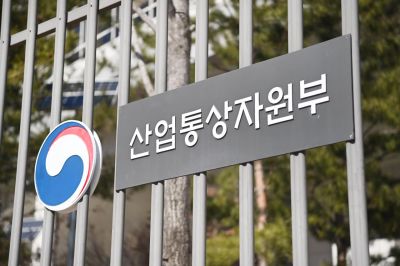
On August 11 (local time), the Ministry of Trade, Industry and Energy announced that the CIT had issued a preliminary ruling in favor of Korea regarding the specificity of electricity rates in a lawsuit where POSCO was the plaintiff and the Korean government participated as a third party.
In December 2023, the U.S. Department of Commerce determined that Korea's electricity rates were being supplied at low prices, constituting a subsidy. It grouped together the semiconductor, steel, and petrochemical industries, reasoning that these three sectors consumed an excessively high proportion of electricity. On this basis, it concluded that specificity existed and imposed a countervailing duty rate of 0.87% on POSCO.
In response, the Korean government, together with POSCO, filed a lawsuit with the CIT in February last year, challenging the Department of Commerce's determination regarding electricity rates. An official from the Ministry explained, "After filing the lawsuit, the Korean government actively developed new defense arguments through close consultation with relevant companies, domestic and international law firms, and external advisors," adding, "During the CIT oral arguments, representatives from both POSCO and the Korean government were present in person."
The CIT accepted the Korean government's arguments, ruling that "the steel industry's high electricity consumption alone does not establish disproportionality, and furthermore, a reasonable logical basis must be presented to group the three industries together." This CIT decision on disproportionality is significant because it cites the precedent set in December last year, when the Korean government won a similar case regarding general thick steel plates at the CIT, once again ruling in favor of Korea on the issue of disproportionality. Previously, in December last year, Korea achieved a preliminary victory in a case filed by Hyundai Steel regarding the specificity of countervailing duties on electricity rates for general thick steel plates.
In addition to electricity rates, the CIT also accepted the Korean government's arguments regarding the carbon emissions trading scheme. Specifically, the court ruled that free allocation within the carbon emissions trading scheme does not constitute a waiver of government revenue, nor does it establish legal specificity, as it does not explicitly designate any particular industry for free allocation. The CIT ordered the Department of Commerce to reconsider its determination on this matter.
Following this ruling, the U.S. Department of Commerce must revise and resubmit its previous determinations regarding the specificity of electricity rates and the emissions trading scheme to the CIT within 60 days. The Ministry of Trade, Industry and Energy plans to continue to respond with full effort to the issue of countervailing duty specificity on electricity rates in the subsequent proceedings.
© The Asia Business Daily(www.asiae.co.kr). All rights reserved.

















