Mold and Dead Insects Found Repeatedly
144 Complaints Filed by Residents
Strong opposition has arisen among some residents and owners after fungus gnats were discovered in a newly built apartment and officetel complex in Michuhol-gu, Incheon.
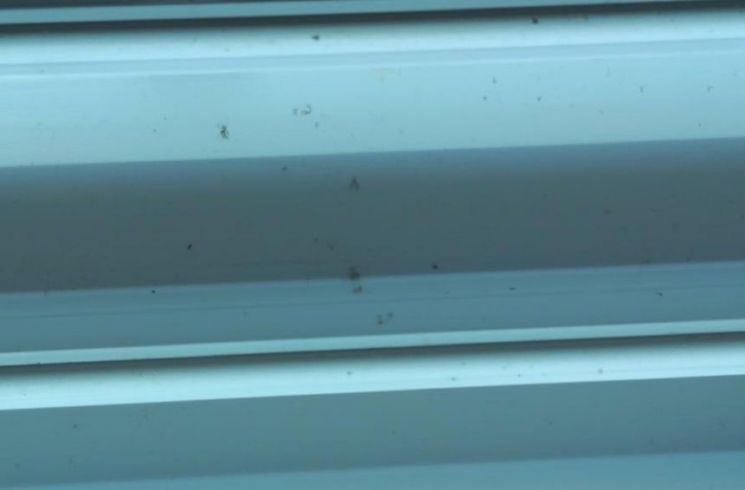
According to Yonhap News and residents of the complex on August 13, complaints have been filed since April that mold was found on built-in kitchen and vanity furniture, and dead fungus gnats were discovered on window frames in living rooms and bedrooms. The complex, which consists of approximately 1,800 apartment and officetel units, has recorded 144 fungus gnat-related complaints submitted to the construction company, with 35 households reported as affected.
Mr. A, a resident in his 50s who postponed moving in, told Yonhap News, "At first, I was told 'these are not fungus gnats,' but later the company acknowledged it and only replaced the film on the built-in kitchen furniture." He added, "Even after that, more than 50 dead insects would appear at once, so the construction company's measures were merely temporary solutions." Another resident, Ms. B in her 40s, said, "Because of the fungus gnats, I didn't want to spend a single day at home, so I paid for pest control myself," and reported, "A large amount of mold was found in the gaps of the built-in furniture."
The construction company stated, "We apologize for the inconvenience caused by the time taken to identify the cause," and explained, "We have conducted two rounds of professional pest control this month, and since the measures have proven effective, we are not considering replacing the furniture."
The local government of Michuhol-gu, which has jurisdiction over the area, requested the construction and development companies to submit their opinions for fact-checking after receiving defect complaints.
Fungus gnats are small flies measuring 0.6 to 2 mm in length and typically inhabit damp mold or decaying wood. While they do not transmit infectious diseases to humans, a large number of them indoors can cause discomfort and hygiene issues. They breed in moldy wooden furniture or moist construction material crevices, and in rare cases, inhalation through the respiratory tract can trigger allergic reactions or dermatitis.
© The Asia Business Daily(www.asiae.co.kr). All rights reserved.

















