Leavitt Briefing
"Legal Validity and Implementation Coordinated by Commerce Department"
"U.S.-Russia Summit Only on the 15th... Hopes for Trilateral Talks in the Future"
On August 12 (local time), the White House announced that it could expand its policy requiring Nvidia and AMD to pay 15% of their semiconductor sales to China to the U.S. government, to include other semiconductor companies. The White House also reaffirmed that the upcoming U.S.-Russia summit, scheduled to take place in Anchorage, Alaska on August 15, will be held as a bilateral meeting without the participation of Ukraine.
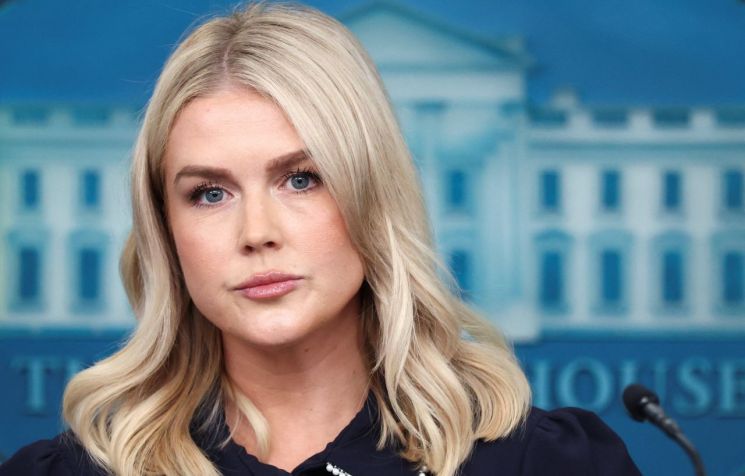
White House spokesperson Karoline Leavitt stated during a briefing that while the administration is currently working with Nvidia and AMD regarding the 15% levy on their semiconductor sales to China, the policy could be extended to other companies in the future.
Leavitt explained, "The legal validity and specific implementation details of this measure are being coordinated by the Department of Commerce," and added, "It would be best to consult the Department of Commerce for details on the actual implementation plan."
Previously, the Financial Times (FT) reported on August 10 that Nvidia and AMD had entered into an agreement with the U.S. government to pay 15% of their semiconductor sales to China in exchange for securing export licenses for the Chinese market. This fact was officially confirmed the previous day by U.S. President Donald Trump.
In Nvidia's case, when the previous Joe Biden administration restricted exports of AI semiconductors to China, the company released a lower-performance H20 chip exclusively for the Chinese market. However, in April of this year, President Trump banned exports of the H20 to China. After meeting with Nvidia CEO Jensen Huang, President Trump reauthorized exports earlier this month.
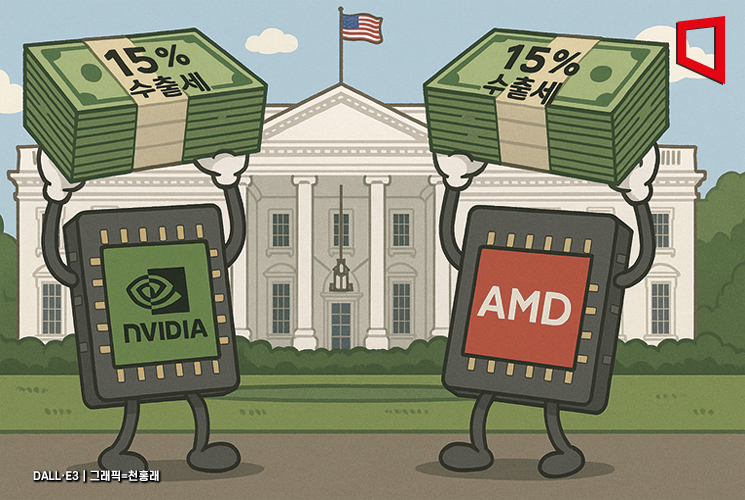
It is unprecedented for the government to effectively impose an "export tax" as a condition for exporting specific items. As the Trump administration considers expanding this measure to other companies, concerns are growing that the export tax on semiconductors to China could be broadened across the board. Criticism is mounting that President Trump is trading national security for money, and that the introduction of an export tax, which is prohibited by the Constitution, should be invalidated.
Leavitt also announced that the U.S.-Russia summit scheduled for August 15 will take place in Anchorage as a bilateral meeting between President Trump and Russian President Vladimir Putin only. Previously, Ukrainian President Volodymyr Zelensky had raised concerns about being excluded from ceasefire negotiations, and Vice President J.D. Vance had hinted at the possibility of a trilateral summit. However, the United States ultimately dismissed the possibility of a three-way meeting.
When asked why President Zelensky was not invited, Leavitt responded, "This meeting is being held at President Putin's request." She added, however, that President Trump hopes to hold a trilateral summit including President Zelensky in the future.
She further stated that the goal of the upcoming U.S.-Russia summit is to deepen understanding of ceasefire options, and that President Trump also plans to visit Russia in the future. Regarding possible responses if President Putin does not engage sincerely in ceasefire negotiations, she said, "I will not make any assumptions," but added, "I am very confident that President Trump will be satisfied with this meeting."
© The Asia Business Daily(www.asiae.co.kr). All rights reserved.


















